
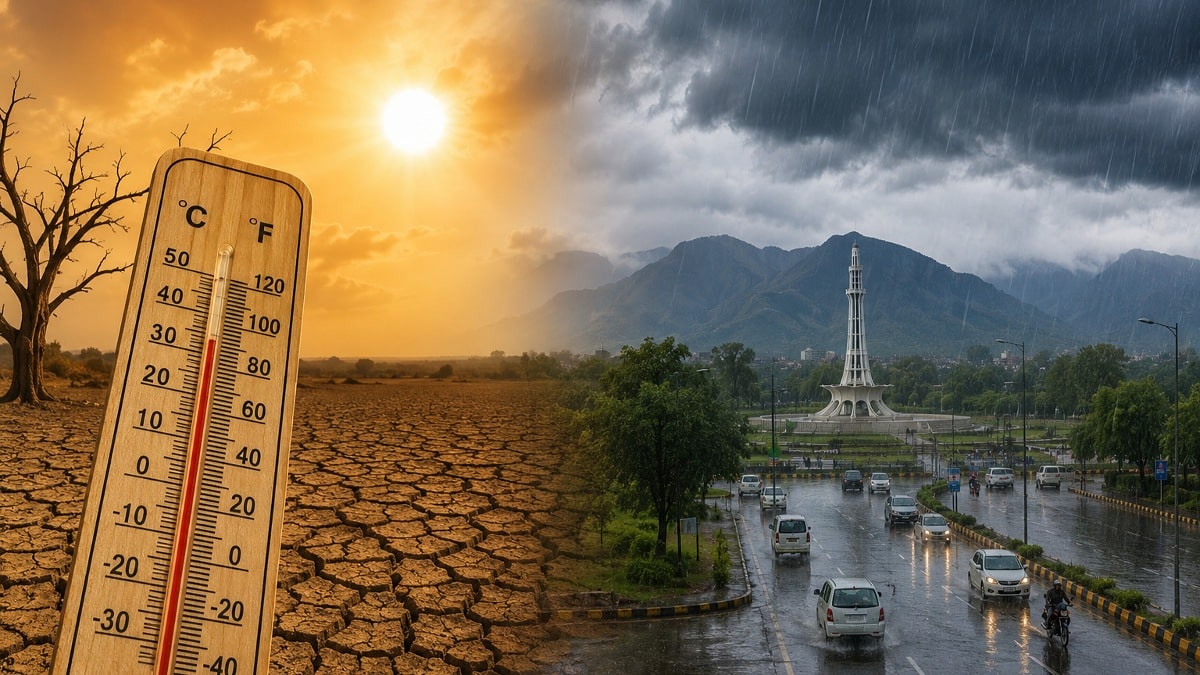
The Pakistan Meteorological Department recently issued a critical PMD weather forecast indicating below-normal rainfall and elevated temperatures through September 2026. These atmospheric shifts signify a structural challenge for the nation’s resource management and agricultural stability. Consequently, Pakistan must calibrate its response to mitigate risks involving water scarcity and intense heat stress across the structural heartlands of Punjab and Sindh. This data serves as a baseline for regional planners to anticipate economic volatility in the coming quarter.
Analyzing the Climate Catalyst: El Niño and Regional Shifts
Meteorological data identifies the development of El Niño conditions in the Pacific Ocean as the primary catalyst for this shift. While the Indian Ocean Dipole (IOD) moves toward a positive phase, its late development limits its ability to offset the rainfall deficit. Consequently, regions like Punjab and Balochistan will face dry conditions, while Gilgit-Baltistan may experience accelerated snowmelt. This creates a calibrated paradox where certain regions face drought while others encounter high-velocity glacial lake outburst floods.
The Translation: Decoding Technical Alerts into Next Gen Clarity
When the PMD predicts “below-normal rainfall,” they are describing a precision-level shortage that affects system efficiency. The convergence of El Niño and shifting sea surface temperatures means the monsoon, our primary water delivery system, will underperform. Furthermore, “above-normal temperatures” are not merely weather changes; they represent a thermal load that stresses both human biological limits and industrial cooling systems. This forecast warns of a systemic supply-demand gap in our national water reserves.
The Socio-Economic Impact: Pressure on the National Baseline
This PMD weather forecast directly impacts the daily lives of millions, particularly within the agricultural sector. Rice, cotton, and sugarcane crops require precise irrigation, yet the projected water shortage increases structural demand. For the urban professional, rising temperatures translate to higher energy costs and potential heat-related health risks. Furthermore, the convergence of dust storms and hailstorms threatens the safety of rural households, demanding immediate systemic resilience to prevent a spike in dengue outbreaks and crop damage.
The Forward Path: A Momentum Shift Toward Climate Adaptation
In my professional assessment, these developments represent a “Stabilization Move” rather than a momentum shift toward progress. Pakistan’s current infrastructure must transition from reactive disaster management to proactive precision engineering. We need better water storage systems and climate-resilient crop varieties to maintain national advancement. This PMD weather forecast serves as a catalyst for architects and policy-makers to prioritize structural cooling and efficient irrigation as non-negotiable pillars of our future economy.








