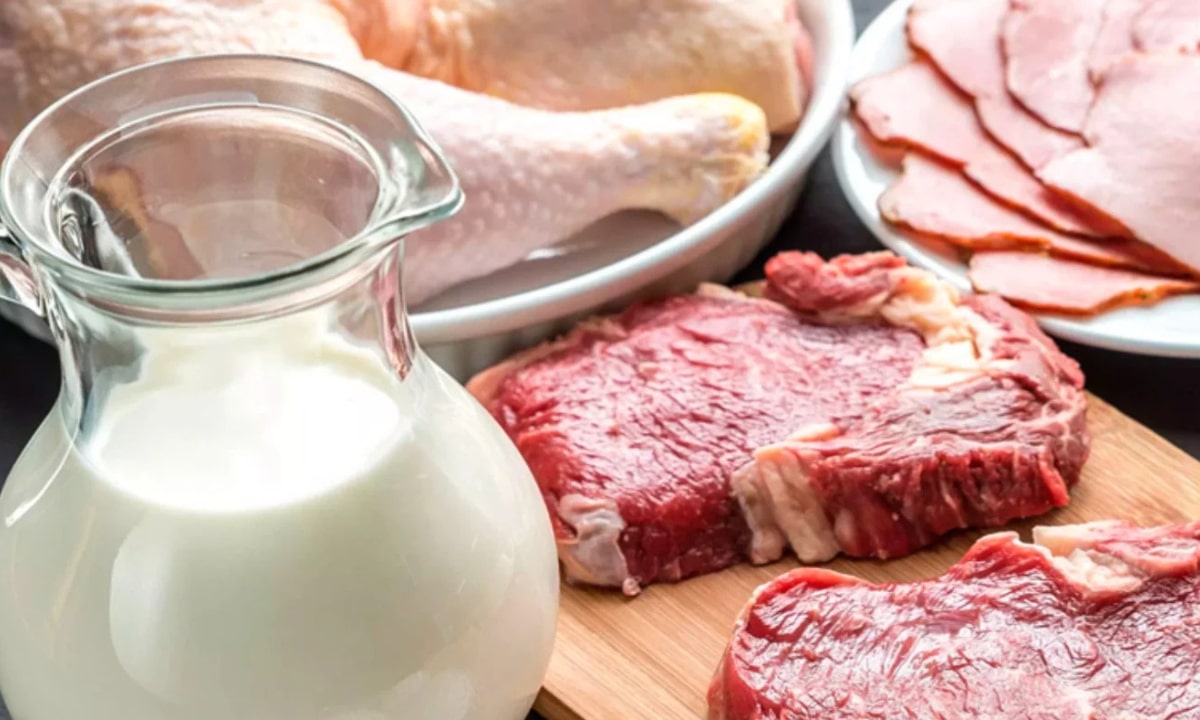
Economic stability depends on a precise alignment between regulatory policy and market execution. Currently, the decoupling of milk and meat prices from government-notified rates signals a structural breakdown in retail oversight. Consequently, urban households face significant inflationary pressure as essential commodities drift beyond calibrated fiscal baselines, leaving citizens to navigate a volatile open market alone.
The Calibrated Disconnect: Milk and Meat Prices vs. Official Mandates
Data from various city sectors confirms a systemic failure to stabilize the cost of essential proteins. While the district administration maintains an official rate of Rs170 per liter for milk, vendors have recalibrated their pricing to between Rs220 and Rs250. This represents a massive deviation from the established baseline. Furthermore, yogurt prices have ascended to Rs270 per kilogram, rendering the government’s official price list virtually obsolete in the eyes of retailers.

The meat industry reflects a similar upward trajectory. Mutton, a staple for many households, now commands a premium of Rs3,500 per kilogram. These milk and meat prices are not merely numbers; they represent a significant drain on the disposable income of the average Pakistani professional. Consumers now demand that the district administration transition from passive observation to active precision enforcement to protect the public interest.

The Situation Room Analysis
The Translation (Clear Context)
The current crisis is a result of “administrative decoupling.” This occurs when the government sets prices based on theoretical economic models without accounting for the logistical realities or the lack of ground-level enforcement. In simple terms, the price lists are effectively suggestions rather than laws. Retailers exploit this gap to maximize margins, citing rising operational costs that the government has yet to factor into official rates.

The Socio-Economic Impact
This surge creates a direct threat to national nutritional standards. When milk and meat prices inflate beyond the reach of the middle and lower classes, the immediate casualty is the protein intake of children and students. Furthermore, the erosion of purchasing power forces households to divert funds from education and healthcare to cover basic caloric needs, stalling the socio-economic advancement of the urban population.
The Forward Path (Opinion)
This development represents a Stabilization Move that has stalled. Setting price caps is a temporary fix; the long-term solution requires a digital, data-driven supply chain tracking system. We believe the administration must implement a “precision monitoring” framework that penalizes profiteering in real-time. Without a structural shift toward transparency, the open market will continue to operate with zero accountability.