
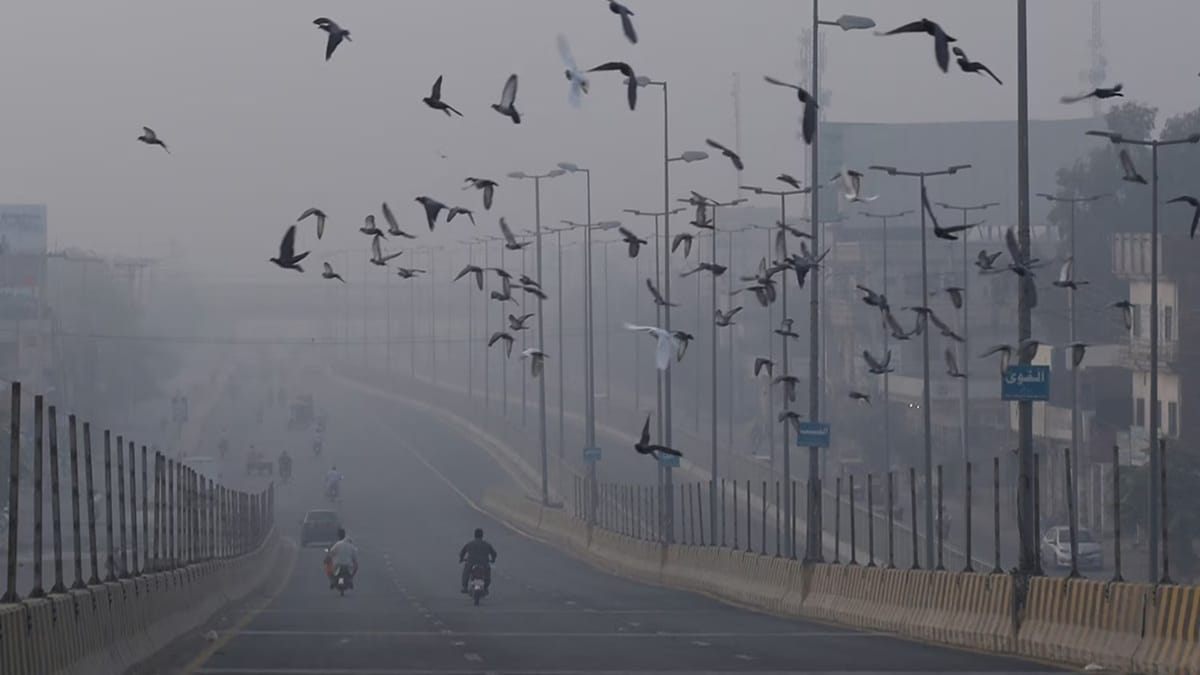
The structural integrity of Pakistan’s environment hit a historic baseline in 2025, as Pakistan ranked as the world’s most polluted country. This systemic Pakistan air pollution crisis now causes nearly 22,000 deaths annually, according to the IQAir World Air Quality Report cited in the Pakistan Economic Survey 2025-26. Data reveals that the population-weighted annual average PM2.5 concentration reached 67.3 micrograms per cubic meter, a level 13 times higher than the World Health Organization’s safety guidelines.
The Translation: Deciphering the PM2.5 Crisis
In technical terms, PM2.5 refers to fine particulate matter that measures less than 2.5 micrometers in diameter. Because these particles are microscopic, they bypass the body’s natural filters and enter the bloodstream directly. Consequently, a concentration of 67.3 µg/m³ represents a high-density toxic load for the respiratory system. Pakistan currently hosts four of the ten most polluted cities globally, with Faisalabad recording a precision-measured peak of 98.8 µg/m³. Other critical zones include Lahore, Rahim Yar Khan, and Sukkur, where the atmosphere has effectively become a catalyst for chronic disease.
Analyzing Regional Pollution Drivers
Industrial emissions, vehicle exhaust, and construction dust serve as the primary structural causes of this decline. Seasonal shifts also play a calibrated role in worsening the air quality. For instance, Karachi experienced a 57% spike in pollution during November compared to the previous year. April and May dust storms further intensified the baseline pollution levels across the country.

The Socio-Economic Impact: A National Baseline
How does this change the daily life of a Pakistani citizen? Beyond the tragic loss of 22,000 lives every year, Pakistan air pollution acts as a massive drain on national productivity. Families face rising healthcare costs, while students frequently lose academic hours due to smog-related school closures. For the average household, this environmental failure translates into reduced life expectancy and a persistent strain on the domestic economy. In urban centers, the air quality has moved from a seasonal nuisance to a permanent structural threat to public health.
Strategic Mitigation and Precision Enforcement
Authorities have initiated several calibrated measures to stabilize the atmosphere. These include:
- Over 150,000 industrial and vehicular inspections in Punjab.
- Fines totaling more than Rs. 687 million for environmental violations.
- Deployment of thermal night-vision drones for stubble-burning surveillance.
- Implementation of “zig-zag” technology in brick kilns within motorway zones.
- Usage of fog cannons in Lahore to reduce localized particulate matter.
The Forward Path: Momentum Shift or Stabilization?
The 2025 ranking serves as a stark catalyst for radical systemic change. While the deployment of drones and super seeders represents a strategic technological pivot, the progress remains a “Stabilization Move” rather than a true “Momentum Shift.” Globally, only 14% of cities meet WHO standards, but Pakistan’s position at the bottom of the index suggests that current enforcement is not yet sufficient. To move forward, Pakistan must transition from reactive mitigation to a structural overhaul of its energy and transport sectors. Without immediate, precision-driven policy changes, the air quality crisis will remain the most significant threat to our national advancement.








