
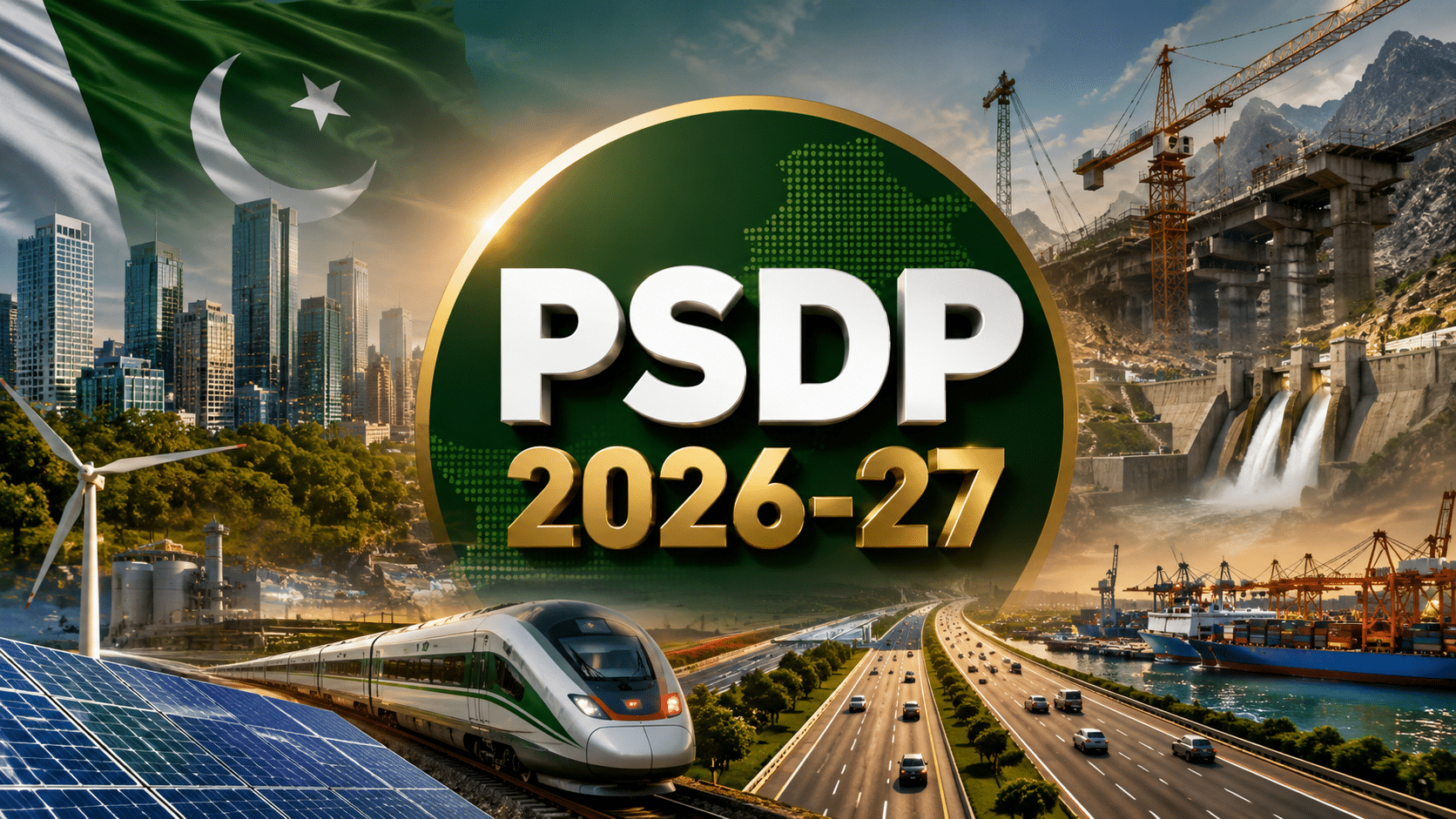
National advancement requires a calibrated fiscal foundation to ensure long-term stability. Consequently, the federal government has proposed a FY27 development budget of Rs. 1,000 billion, a strategic blueprint designed to catalyze nationwide growth. This Public Sector Development Program (PSDP) prioritizes structural modernization through targeted investments in infrastructure, energy, and digital transformation to enhance system efficiency across the country.
Strategic Infrastructure and Energy Allocations
The government is prioritizing physical connectivity as a baseline for economic momentum. The National Highway Authority (NHA) has secured a massive share of Rs. 224.51 billion for primary transport corridors. Furthermore, the Ministry of Communications will manage an additional Rs. 224 billion for diverse infrastructure projects. To address the energy deficit, the Water Resources Division and the Power Division have been allocated Rs. 103.80 billion and Rs. 88 billion, respectively.
- National Highway Authority: Rs. 224.51 Billion
- Water Resources Division: Rs. 103.80 Billion
- Power Division (NTDC/PEPCO): Rs. 88 Billion
- Cabinet Division: Rs. 64.80 Billion
Investment in Human Capital and Technology
Education and technology remain central to the FY27 development budget strategy for future-proofing the workforce. The Higher Education Commission (HEC) will receive Rs. 46 billion to drive academic excellence. Simultaneously, the IT and Telecom Division is set to utilize Rs. 19.58 billion to accelerate digital governance. These precise allocations aim to bridge the digital divide and foster innovation within Pakistan’s growing tech ecosystem.
- Higher Education Commission: Rs. 46 Billion
- Vocational Training: Rs. 36.31 Billion
- IT and Telecom: Rs. 19.58 Billion
- Health Services: Rs. 16.60 Billion
The Situation Room: The Translation
In “Next Gen” terms, the PSDP is not merely a spending list; it is a capital investment roadmap. The logic behind these numbers suggests a pivot from consumption-based growth to asset-based development. By dedicating nearly 45% of the federal share to transport and energy, the state is attempting to lower the cost of doing business, which currently hampers industrial output.
The Situation Room: Socio-Economic Impact
How does this change the daily life of a Pakistani citizen? For students, the HEC funding translates into better research facilities and digital access. For urban professionals, the massive NHA and Railway (Rs. 40.65 billion) allocations promise reduced commute times and more efficient logistics. In rural and merged districts (Rs. 56.07 billion), these funds represent a critical lifeline for basic services and regional integration.
The Situation Room: The Forward Path
This development represents a Momentum Shift. While the total outlay of Rs. 1 trillion is ambitious, the heavy leaning toward infrastructure suggests a desire to build the physical backbone necessary for CPEC Phase-II. Success now depends on the precision of execution and the transparency of the bidding processes to ensure these funds act as a true catalyst for progress.








