
The Precision Mechanics of Agricultural Inputs
Pakistan’s agricultural foundation faces a calibrated challenge as fluctuating fertilizer bag prices now dictate the financial stability of millions. According to the Economic Survey 2025-26, farmers spend approximately Rs. 1,200 billion annually on these critical inputs. This scale of expenditure creates a baseline where every Rs. 100 increase in fertilizer bag prices imposes a staggering Rs. 20 billion burden on the national farming community.
Fertilizer remains the most vital catalyst for crop yield, contributing between 30% and 50% to overall output improvements. Consequently, it accounts for 10% to 15% of the total production cost for major crops. These figures demonstrate that even minor price movements significantly influence farm profitability and national food production efficiency.
Market Dynamics and Nutrient Offtake
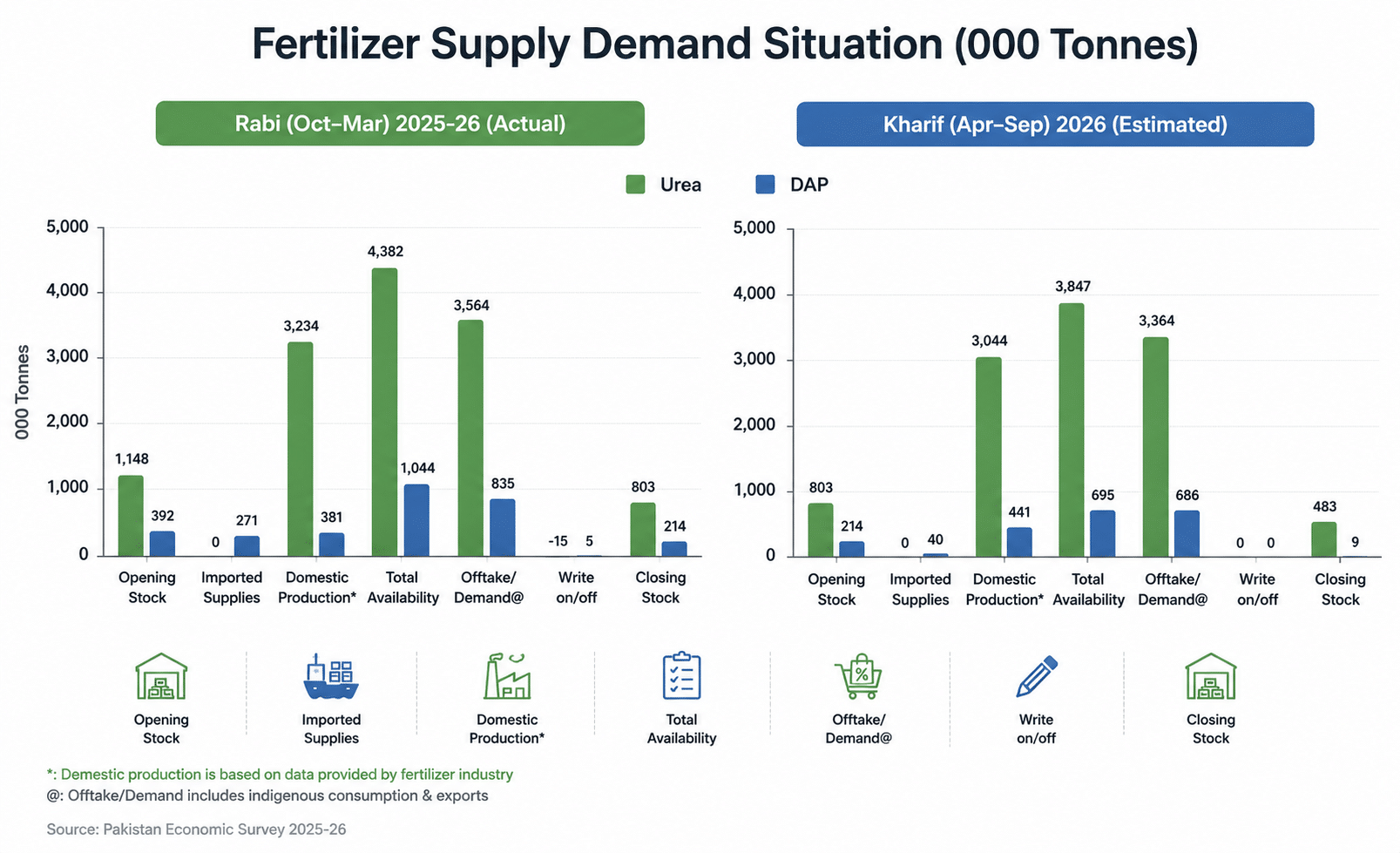
Despite significant cost pressures, the demand for soil nutrients continues to rise. Total fertilizer nutrient offtake reached 3.795 million tons during July-March FY2026, marking an 11.4% increase over the previous year. Nitrogen consumption surged by 14.8%, while potash usage grew by 26.2%. However, the high cost of phosphate fertilizers led to a 1.9% decline in their offtake, reflecting a strategic pivot by farmers toward more affordable options.
Urea vs. DAP: A Calibrated Price Shift
Market data reveals a divergence in pricing trends across different nutrient types. While phosphate-based fertilizers like DAP and NP saw price hikes of 18.3% and 16.6% respectively, nitrogen-based fertilizer bag prices showed signs of stabilization. Ample supplies and buffer stocks exceeding 300,000 tons helped reduce Urea prices by 4.5%, providing a brief reprieve for many households.
The Translation (Clear Context)
In technical terms, the “offtake” refers to the actual amount of fertilizer purchased and used by farmers. The data suggests that while farmers are trying to maximize their yields by using more nitrogen, the rising price of phosphate is forcing them to skip essential nutrients. This imbalance can lead to long-term soil degradation, even if short-term yields remain high. The system is essentially trading future soil health for current survival.
The Socio-Economic Impact
For the average Pakistani citizen, these statistics translate directly to the kitchen table. When fertilizer bag prices rise, the cost of producing wheat, rice, and vegetables increases. This creates a ripple effect: farmers earn less profit, which reduces rural purchasing power, while urban consumers face higher food inflation. For a student in an urban center or a professional in a rural district, this means a higher percentage of the monthly budget is consumed by basic necessities.
The Forward Path (Opinion)
This development represents a Stabilization Move rather than a Momentum Shift. While the increase in nitrogen offtake shows farmer resilience, the decline in phosphate use is a warning sign of structural imbalance. To achieve true agricultural precision, Pakistan must decouple its fertilizer supply chain from global price volatility. This requires a strategic shift toward domestic production efficiency and a transition to precision farming technologies that minimize waste.








