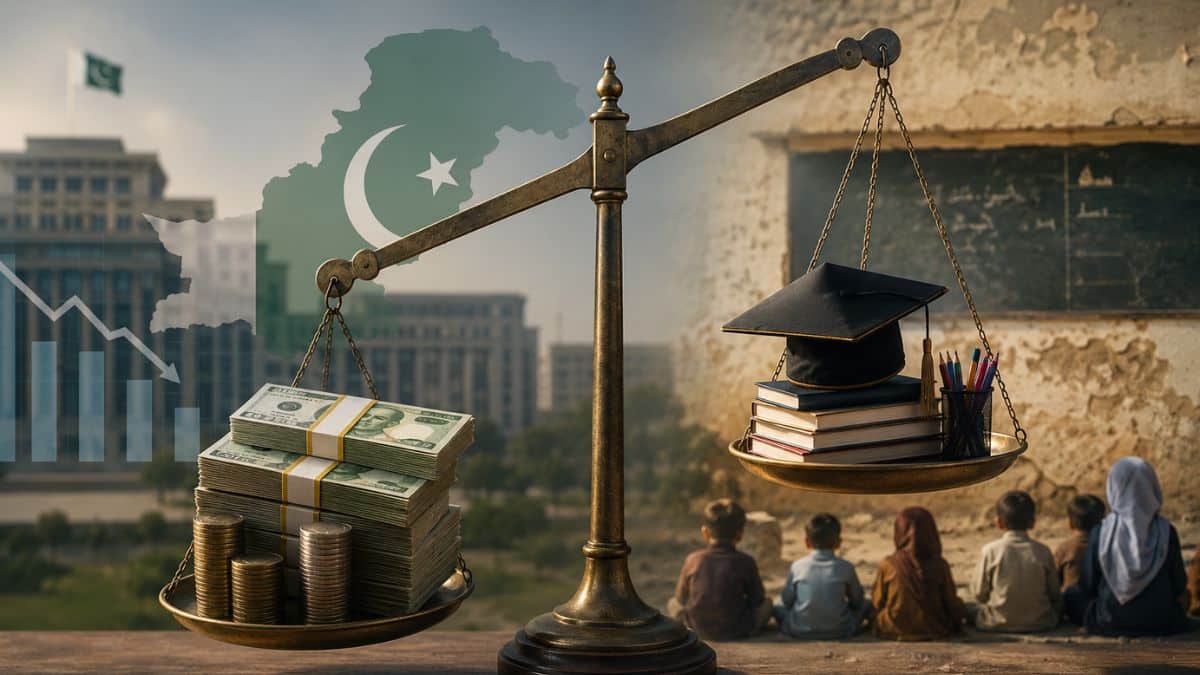
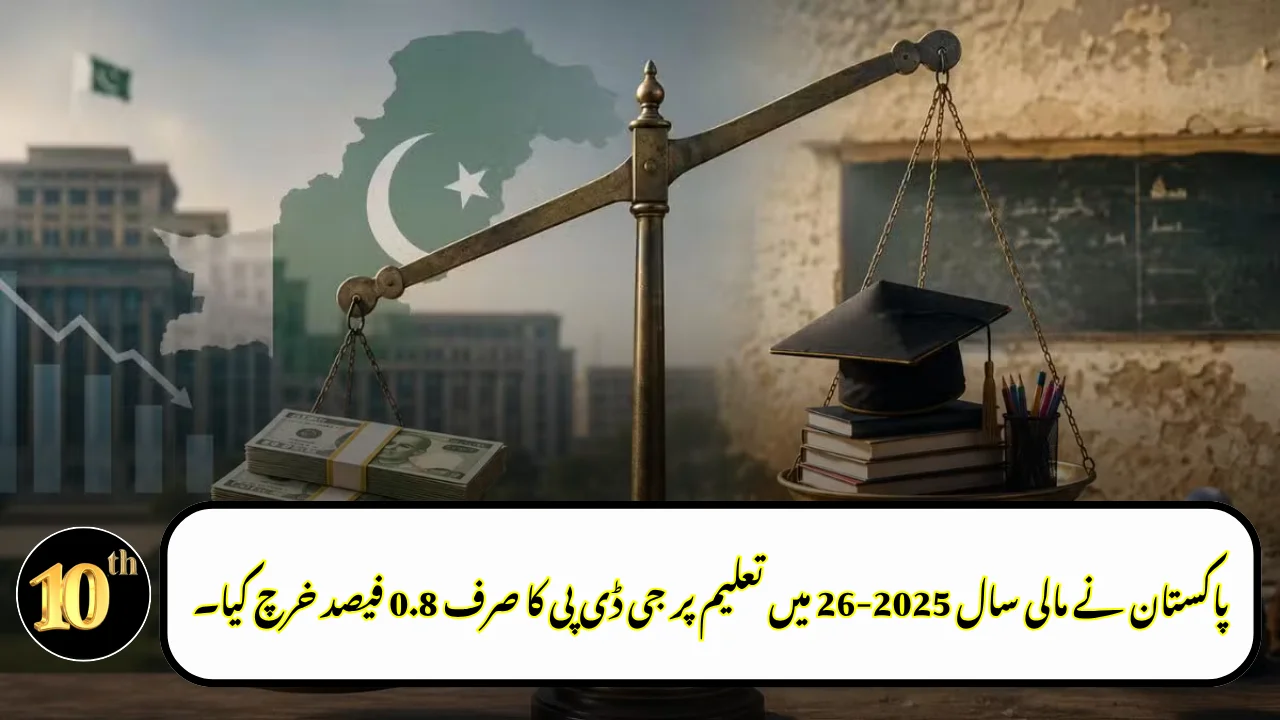
The Pakistan Economic Survey 2025-26 reveals a critical structural deficit: Pakistan education spending stalled at just 0.8% of GDP during FY2025. While federal and provincial governments collectively deployed Rs. 962.0 billion, the total investment failed to cross the 1% threshold. Consequently, this financial baseline highlights a persistent funding gap that threatens the nation’s human capital development. As the federal government prepares to present the Budget 2026-27, calibrated fiscal intervention remains the only catalyst for systemic improvement.
The Translation: Decoding the 0.8% Fiscal Baseline
In technical terms, the 0.8% figure represents the “Resource Ceiling” that the state allocates to intellectual infrastructure. Although the government allocated Rs. 34.905 billion to the Higher Education Commission (HEC) for 147 development projects, the broader sector remains underfunded. These projects included 129 ongoing initiatives and 12 new strategic starts. However, the current Pakistan education spending levels indicate that the state prioritizes immediate stabilization over long-term cognitive growth. The data confirms that our current spending velocity cannot keep pace with the growing population demand.
The Socio-Economic Impact: Precision Analysis
How does this fiscal reality affect the average Pakistani household? Primarily, low spending creates a “Digital Divide” and physical infrastructure decay in public schools.
- Student Literacy: Stagnant funding slows the reduction of out-of-school children, currently at critical levels.
- Teacher Calibration: Without strategic investment, teacher training programs lack the precision required for modern STEM curricula.
- Institutional Access: Urban and rural universities face restricted research capacities due to the Pakistan education spending shortfall.
Consequently, the quality of human capital entering the workforce remains suboptimal, hindering national competitiveness in the global digital economy.
The Forward Path: Momentum Shift or Stabilization?
From a STEM-driven perspective, this development represents a “Stabilization Move” rather than a true “Momentum Shift.” While the HEC continues to manage 129 ongoing projects, the overall lack of aggressive fiscal expansion suggests a defensive posture. For Pakistan to achieve a strategic advantage, the upcoming Budget 2026-27 must pivot toward an “Architectural Overhaul.” We must treat education not as a recurring expense, but as the primary catalyst for structural economic resilience. Without a precision-focused increase in Pakistan education spending, the gap between our current baseline and global standards will continue to widen.