Infrastructure Recalibration: The Karachi Yellow Line BRT
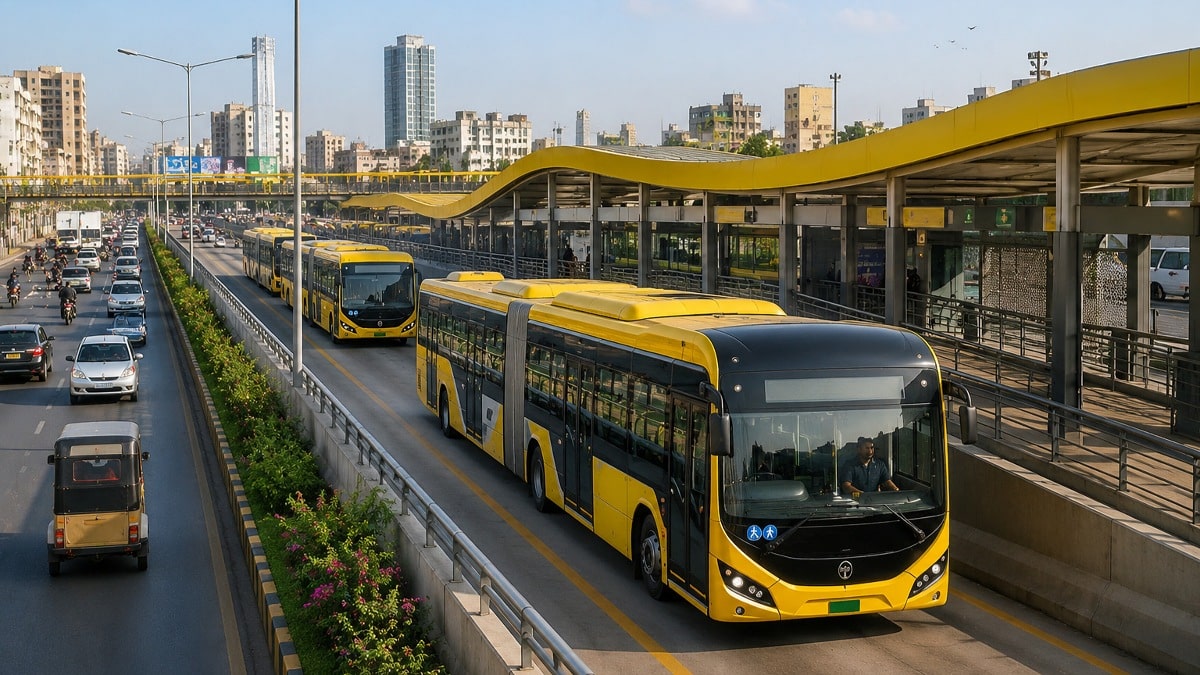
Karachi is currently recalibrating its urban mobility baseline through the Karachi Yellow Line BRT, a strategic infrastructure catalyst featuring a fleet of 256 zero-emission electric buses. This World Bank-backed project aims to facilitate up to 300,000 daily commuters across a precise 21-kilometer corridor, significantly reducing transit times and urban congestion. By integrating this system into the Karachi Breeze Network, the city establishes a structural foundation for sustainable public transportation.
Furthermore, the dedicated corridor stretches from Dawood Chowrangi to Numaish, connecting seamlessly to the common corridor leading to Tower. The route incorporates 28 strategically placed stations, including 22 at-grade and six underground facilities to optimize passenger flow. Consequently, officials project an annual ridership of nearly 78 million commuters, representing a massive scale-up in system efficiency.
The Fleet Composition: A Precision-Engineered Transit Mix
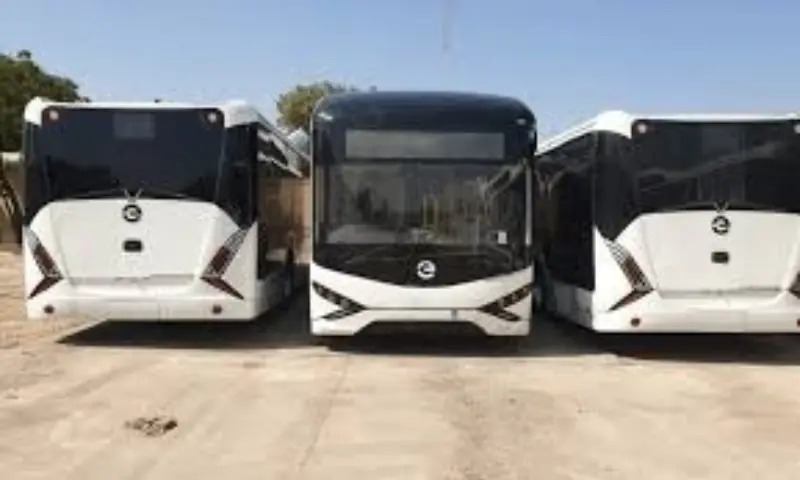
The planned fleet is not merely a collection of vehicles but a calibrated response to urban density requirements. Specifically, the procurement includes 19 buses of 9 meters, 133 buses of 12 meters, and 104 articulated buses measuring 18 meters. To ensure operational continuity, engineers have factored in an 8 percent reserve capacity to mitigate technical downtime.

Notably, the network will operate through six direct routes and three feeder routes. This tiered architecture improves access to the main corridor for passengers residing in surrounding urban sectors. Therefore, the system bridges the gap between suburban residential zones and the city’s economic core.
The Situation Room: Analysis of the Karachi Yellow Line BRT
The Translation (Clear Context)
The “Karachi Yellow Line BRT” represents more than just new buses; it is a transition from fragmented, low-speed transit to a “Breeze Network” integration. By using articulated buses (large, jointed vehicles) and dedicated lanes, the system bypasses traditional traffic. This allows buses to maintain average speeds of 21 to 26 kilometers per hour, doubling the current city baseline of less than 10 kilometers per hour.
The Socio-Economic Impact
For the average Pakistani professional or student, this development transforms the daily “time-tax” of commuting. Faster transit speeds directly correlate to increased economic productivity and reduced fuel expenditure for households. Additionally, the shift to electric buses significantly lowers the urban carbon footprint, improving the air quality and public health of Karachi’s densely populated neighborhoods.
The Forward Path (Opinion)
This development constitutes a definitive Momentum Shift. While previous transit attempts were often localized, the integration of 256 electric buses within a World Bank-funded framework suggests a level of structural discipline previously missing. If execution matches the calibrated plans, the Yellow Line will serve as the precision catalyst Karachi needs to modernize its chaotic transportation landscape.