
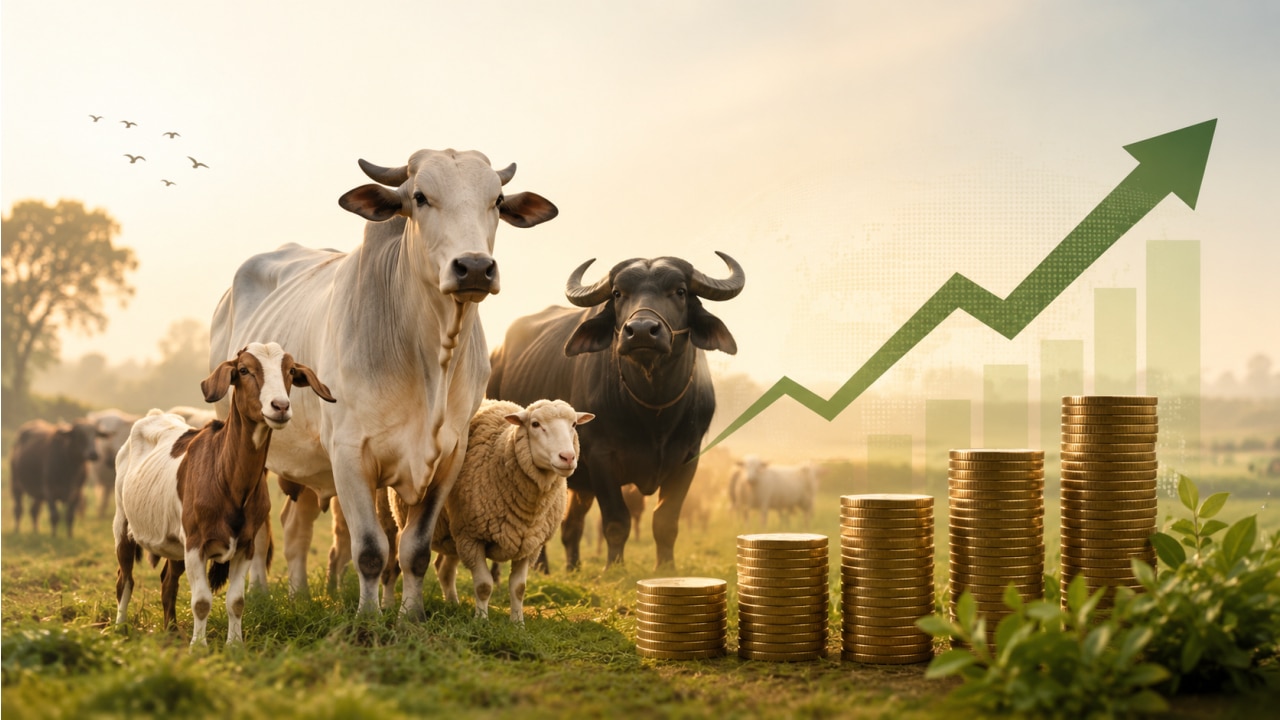
Pakistan’s agricultural landscape is currently undergoing a strategic structural recalibration. According to the Pakistan Economic Survey 2025-26, the Pakistan livestock sector has officially emerged as the primary catalyst for national growth. During FY2026, the sector contributed a dominant 62.4% to total agricultural value addition and 14.6% to the national GDP.
Consequently, the sector expanded by 3.75% during this fiscal cycle. This growth rate significantly outpaced the broader agricultural baseline of 2.89% and the modest 1.44% increase in the crop sector. For over 8 million rural families, livestock remains a precision tool for financial stability, providing 35% to 40% of their total household income.
The Economic Precision of the Pakistan Livestock Sector
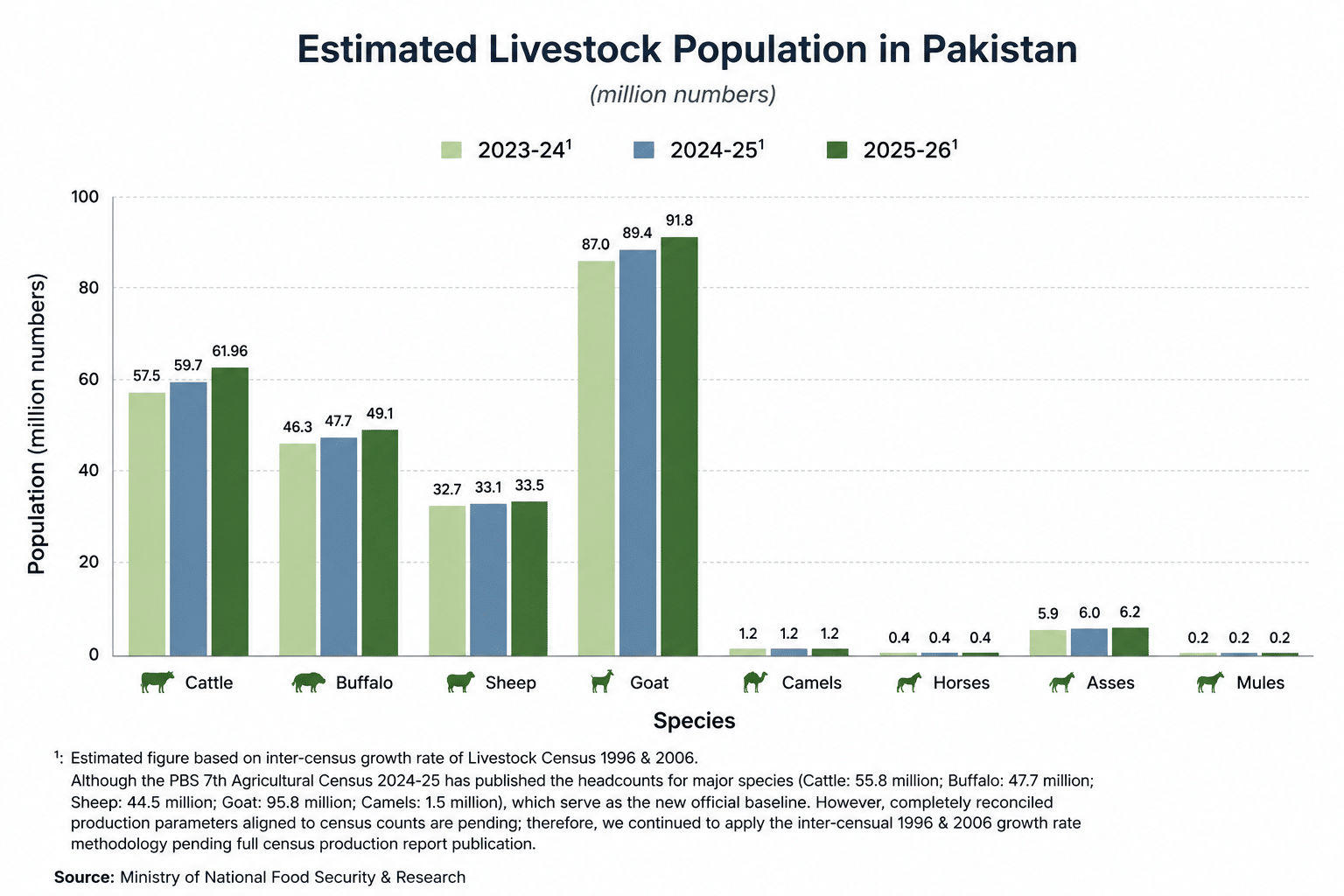
Data indicates that gross value addition from livestock ascended from Rs. 6,004 billion in FY2025 to Rs. 6,229 billion in FY2026. This steady expansion occurred despite calibrated challenges such as feed shortages and localized disease outbreaks. Furthermore, animal populations reached record levels to meet increasing domestic and international demand:
- Cattle: Increased to 61.96 million heads.
- Buffalo: Rose to 49.1 million heads.
- Goats: Reached 91.8 million, maintaining their status as the largest livestock category.
- Sheep: Scaled to 33.5 million heads.
Scaling the Pakistan Livestock Sector for Global Export Markets
The government is currently repositioning the Pakistan livestock sector as an export-led growth engine. Meat exports have successfully transitioned from $196 million in 2015 to over $500 million in FY2025. Under the new National Meat Transformation and Export Council, authorities aim to hit a $700 million export target by 2028.
To achieve this, the state is implementing a rigorous reform agenda focused on systemic efficiency. Key initiatives include:
- Implementing Embryo Transfer Technology and In Vitro Fertilization.
- Establishing disease-free zones for international compliance.
- Strengthening cold chain infrastructure and traceability systems.
- Developing a new slaughterhouse in the Gwadar Free Zone for specialized donkey meat exports to China.
The Translation (Clear Context)
While traditional crops like wheat and rice ensure food security, they are no longer the primary engines of economic expansion. The shift toward livestock represents a transition from “subsistence farming” to “commercial asset management.” By focusing on high-yield breeds and sanitary standards, Pakistan is converting its massive animal population into a liquid, exportable commodity that stabilizes the national balance of payments.
The Socio-Economic Impact
How does this affect the average citizen? For the rural population, the Pakistan livestock sector acts as a decentralized bank. Unlike seasonal crops, livestock provides daily cash flow through milk sales and serves as an insurance policy against climate shocks. In urban centers, this growth ensures a calibrated supply of protein, though the focus on exports will require a careful balance to maintain domestic price stability for households.
The “Forward Path” (Opinion)
This development represents a Momentum Shift. Pakistan is finally moving beyond the “green revolution” crops and into high-value animal husbandry. However, for this to be a permanent structural victory, the government must move faster on disease surveillance and genetic optimization. If we successfully establish disease-free zones, the livestock sector could become the single most important catalyst for Pakistan’s economic recovery over the next decade.








