
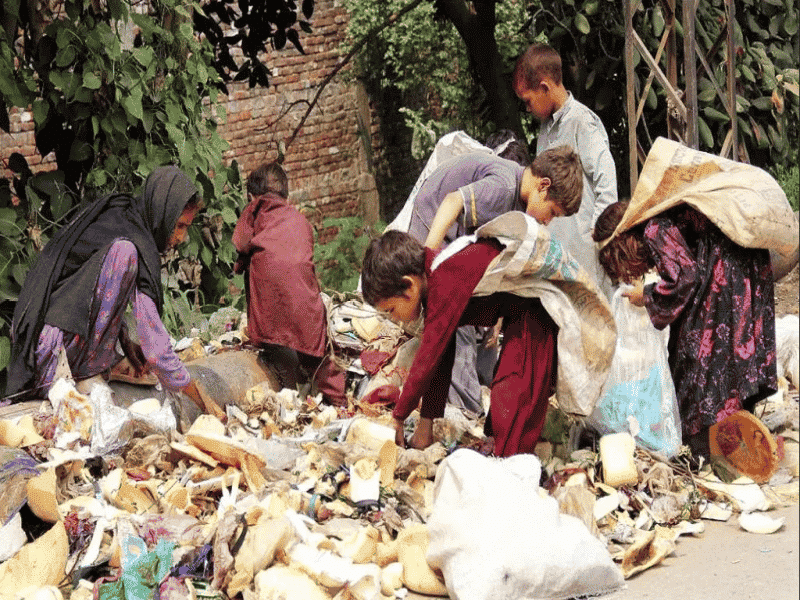
National advancement requires a precise understanding of household baseline metrics. The Pakistan Economic Survey 2025-26 reveals that the Pakistan poverty rate has ascended to 28.9% for the 2024-25 fiscal year. Consequently, nearly three out of every ten citizens now reside below the poverty threshold. This structural shift highlights the persistent friction between macroeconomic stabilization and the actual cost of living for the average household.
Strategic Analysis of the Rising Pakistan Poverty Rate
Despite recorded improvements in macroeconomic stability, the survey indicates that external shocks have calibrated the poverty trajectory upward. Specifically, the rural landscape faces a heightened challenge, with poverty levels reaching 36.2%. In contrast, urban centers maintain a lower baseline at 17.4%. This widening delta suggests that economic gains are not yet penetrating the agrarian and semi-urban systems with sufficient velocity.
Furthermore, income distribution has become increasingly uneven. The Gini coefficient, a standard measure of inequality, rose from 28.4 to 32.7 during this period. This data point confirms that while the system is generating wealth, the distribution mechanisms require strategic recalibration to reach the lower-income deciles.
The Translation: Jargon vs. Reality
Technically, the increase in the Gini coefficient signifies that a smaller percentage of the population is capturing a larger share of the nation’s total income. The “Macroeconomic Stability” mentioned in reports refers to stabilized currency and reserves. However, for the citizen, the “Economic Adjustments” translate into higher utility costs and reduced purchasing power. The survey clarifies that these stabilization measures, while necessary for the system, have temporarily strained household liquidity.
The Socio-Economic Impact: Daily Life in Pakistan
The Pakistan poverty rate directly affects the daily resource allocation of millions. For rural households, the 36.2% poverty metric often means prioritizing basic caloric intake over advanced education or healthcare. Conversely, the urban population benefits from better infrastructure, but rising inflation continues to erode their middle-class security. Interestingly, social indicators like internet access and school attendance recorded gains, suggesting that Pakistanis are investing in digital literacy even under financial duress.
- Social Protection: The government allocated Rs722.5 billion to the Benazir Income Support Programme (BISP) to mitigate these impacts.
- Infrastructure: Sanitation and cleaner energy access showed marginal improvements across both sectors.
- Expenditure: Pro-poor spending reached a calibrated total of Rs4.66 trillion to buffer vulnerable groups.
The Forward Path: Architect’s Opinion
This development represents a Stabilization Move rather than a momentum shift. The government has successfully prevented a total systemic collapse through rigorous fiscal measures, but the human cost is evident in the current Pakistan poverty rate. For Pakistan to transition into a growth phase, the focus must shift from purely balancing books to enhancing the productivity of the rural labor force. We must view these welfare allocations as a baseline, not a permanent solution. Real progress will only manifest when the Gini coefficient trends downward alongside rising GDP.








