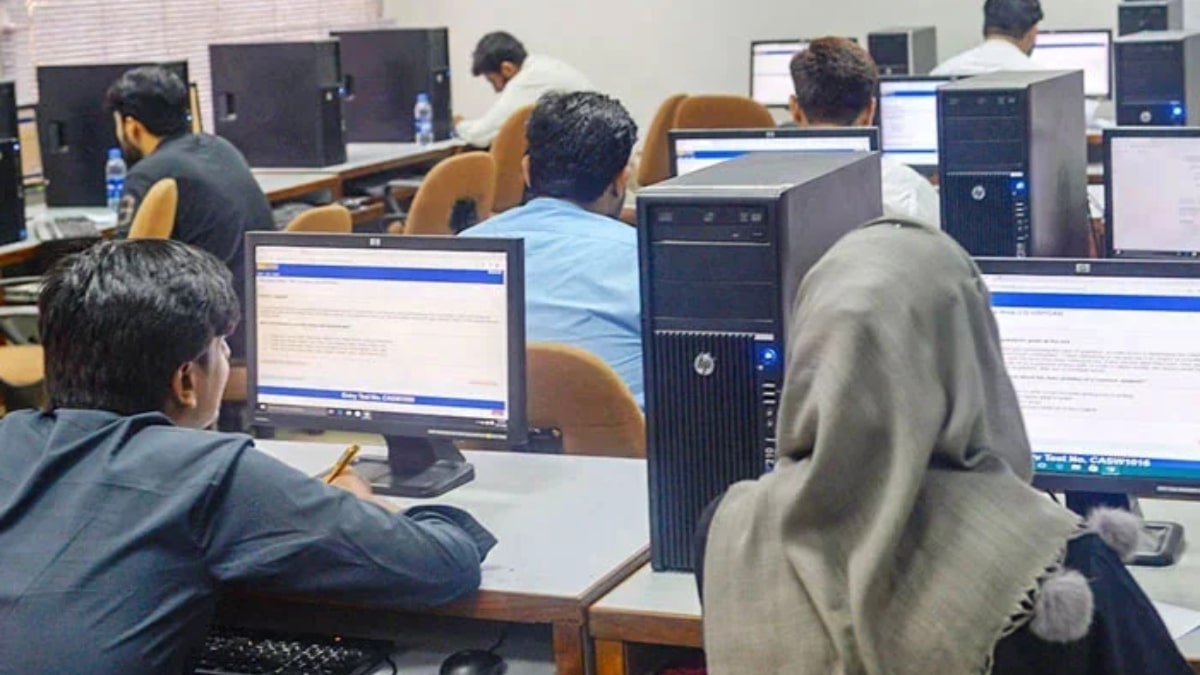
The baseline for Pakistan’s digital future requires a strategic recalibration after the National IT Skills Test revealed that only 0.4% of university graduates achieved high-performance scores. Consequently, this data underscores a structural disconnect between academic theory and the precision demands of the global tech economy. Prime Minister Muhammad Shehbaz Sharif, during a high-level review of higher education standards, expressed deep dissatisfaction with these results. Furthermore, he emphasized that the current curriculum fails to align with modern technological market demands.
Analyzing the National IT Skills Test Metrics
The Higher Education Commission (HEC) calibrated this assessment to determine if IT graduates possess the expertise required for modern job markets. Specifically, 33,038 students from 190 institutions participated under strict monitoring. However, the outcomes indicate a significant competency deficit. While a mere 0.4% scored above 80 percent, 61% of participants fell below the 50 percent threshold. This alarming data serves as a catalyst for immediate systemic reform across Pakistan’s educational infrastructure.
The Translation: Beyond the Numbers
In “Next Gen” terms, these results suggest that our universities are producing degree holders rather than skilled architects of the digital age. Most institutions emphasize rote memorization over the application of emerging technologies. Consequently, graduates struggle to transition from a theoretical classroom environment to high-stakes tech roles. We must shift the focus from traditional pedagogy to strategic proficiency in Artificial Intelligence, Data Science, and Robotics.

Socio-Economic Impact: The Cost of the Gap
How does this structural gap impact the daily life of a Pakistani citizen? For the average student, it means facing unemployment despite having a four-year degree. For the household, it represents a wasted investment in education that does not yield a livable wage in the global remote-work economy. If Pakistan fails to upgrade its human capital, our youth will remain sidelined while other nations lead the next industrial revolution. Therefore, enhancing digital literacy is not just an academic goal; it is an economic necessity.
The Forward Path: Momentum Shift or Stabilization?
This development represents a critical Momentum Shift. Prime Minister Shehbaz Sharif has already ordered a third-party audit of IT education programs to ensure transparency. This move signals a transition from passive reporting to active accountability. By synchronizing training with international standards, we can transform our youth from passive consumers into global innovators. Ultimately, the roadmap for educational reform must be precise, data-driven, and focused on future-proofing the national economy.