
Xiaomi has officially released MiMo Code V0.1.0, a high-precision AI coding agent engineered for complex, long-running software projects. This terminal-based assistant provides a structural solution to the “context loss” problem that plagues many contemporary models. Consequently, the tool is now available as an open-source resource, allowing developers globally to access high-tier AI capabilities without cost barriers.
Solving the Memory Bottleneck in Software Engineering
Most existing AI coding tools struggle with “context window” limitations. As a project expands, the AI often loses track of earlier architectural decisions. However, MiMo Code utilizes a calibrated background subagent to manage and store context continuously. This subagent automatically condenses active work into structured summaries. Therefore, the main agent maintains precision even as the codebase grows significantly.
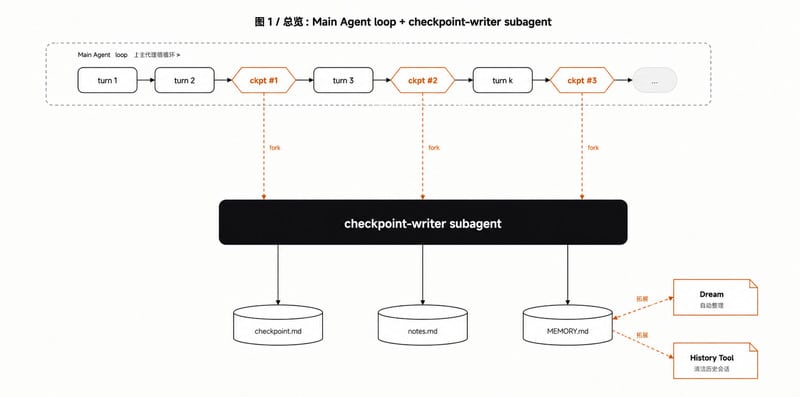
Furthermore, Xiaomi integrated a unique “/dream” feature. This automated maintenance agent reviews old sessions every seven days to remove duplicate data and compress long-term memory. This ensures the AI coding agent remains efficient during multi-week development cycles. Consequently, developers can focus on innovation rather than context management.
Benchmarking Performance: Surpassing Claude Code
In terms of raw output quality, MiMo Code has demonstrated superior performance in rigorous testing environments. Specifically, it scored 62% on SWE-Bench Pro and 73% on Terminal Bench 2. These metrics place the Xiaomi model approximately five percentage points ahead of Claude Code. Since both tools use similar base models, Xiaomi’s structural advantage lies in its Harness system and optimized workflow orchestration.
Additionally, the “Compose mode” allows users to initiate entire workflows by simply pressing the Tab key. Users provide a rough project goal, and the agent executes planning, design, and testing. This architectural approach aims to produce industrial-grade finished products rather than simple code snippets.
The Situation Room: Strategic Analysis
The Translation (Clear Context)
While standard AI models act like talented assistants who forget everything after an hour, MiMo Code acts like a seasoned lead developer. It uses a “dual-brain” architecture: one brain writes code while the second brain maintains an organized digital diary of every decision made. This prevents the “memory fog” that typically causes AI to hallucinate or break existing features in large applications.
The Socio-Economic Impact
For the Pakistani tech sector, this represents a massive catalyst for efficiency. Local developers and startups can now access an “industrial-grade” AI coding agent for free, drastically lowering the cost of software R&D. By utilizing open-source tools that outperform paid rivals, Pakistani engineers can compete more effectively in the global freelance and outsourcing markets, boosting the national digital economy.
The “Forward Path” (Opinion)
This development is a clear Momentum Shift. Xiaomi is not just releasing a model; they are providing a complete terminal-based ecosystem under the MIT license. By prioritizing memory persistence over simple context size, Xiaomi has established a new baseline for what developers should expect from autonomous agents. This move effectively commoditizes high-end AI development tools.
Implementation and Accessibility
Installing MiMo Code is designed for maximum efficiency. On macOS and Linux systems, a single terminal command completes the setup. Windows users can integrate the tool via npm. Notably, the free MiMo-V2.5 channel does not require account registration, ensuring immediate access for developers focused on privacy and speed.









