
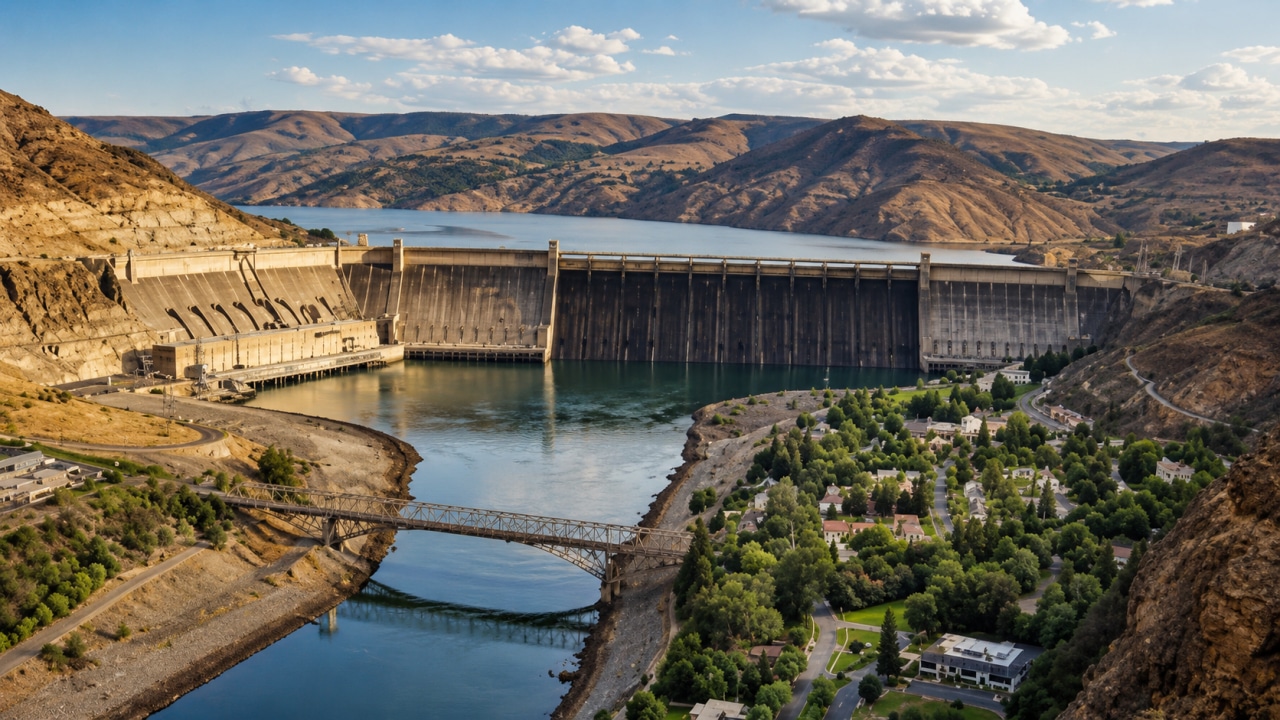
National progress demands a calibrated alignment between fiscal expenditure and physical infrastructure development. The Gaj Dam project currently represents a significant deviation from this precision, as the Federal Constitutional Court recently scrutinized a staggering Rs. 36 billion budget overrun. Despite these massive payments, construction remains under 50% complete, signaling a critical systemic bottleneck in Sindh’s water management strategy.
The Fiscal Calibrations of the Gaj Dam Project
Chief Justice Amin ud Din Khan headed the two-member bench during Monday’s proceedings. The court examined how the original 2011 estimate of Rs. 26 billion ballooned into a total payment of approximately Rs. 62 billion. Consequently, the contractor received a 138% increase over the baseline budget without delivering the expected structural output.
WAPDA’s legal counsel emphasized that the contractor failed to meet multiple deadlines previously set by the Sindh High Court. In contrast, the contractor’s representative, Masood Khan, argued that the Supreme Court acknowledged funding shortages as the primary catalyst for the delay in 2019. Furthermore, work has remained entirely suspended since early 2024 due to the total non-availability of federal and provincial funds.
The Situation Room Analysis
The Translation (Clear Context)
In technical terms, this project suffers from “cost-completion decoupling.” While the budget increased by 138%, the physical progress stayed below the 50% threshold. This discrepancy usually stems from a mix of inflationary pressures, procurement delays, and intermittent funding cycles. Essentially, the money spent did not purchase the labor and materials needed to finish the dam; it merely sustained a stalled operation.
The Socio-Economic Impact
This delay directly affects the daily lives of the Sindh populace. For the average Pakistani citizen, a stalled dam translates to missed opportunities in agricultural productivity and water security. Specifically, small-scale farmers lose the irrigation stability required for crop rotation, while urban households face continued vulnerability to unregulated water flows. This fiscal inefficiency effectively taxes the future of the region’s food security.
The Forward Path (Opinion)
This development represents a Stabilization Move. The court’s intervention is not yet a momentum shift toward progress; rather, it is a necessary audit to stop fiscal leakage. To transition into a momentum shift, the government must establish a precision-funded escrow for the remaining work. Without structural accountability for the additional Rs. 36 billion, the Gaj Dam project risks becoming a permanent monument to inefficiency rather than a catalyst for regional growth.








