
The Anatomy of a Critical Infrastructure Failure
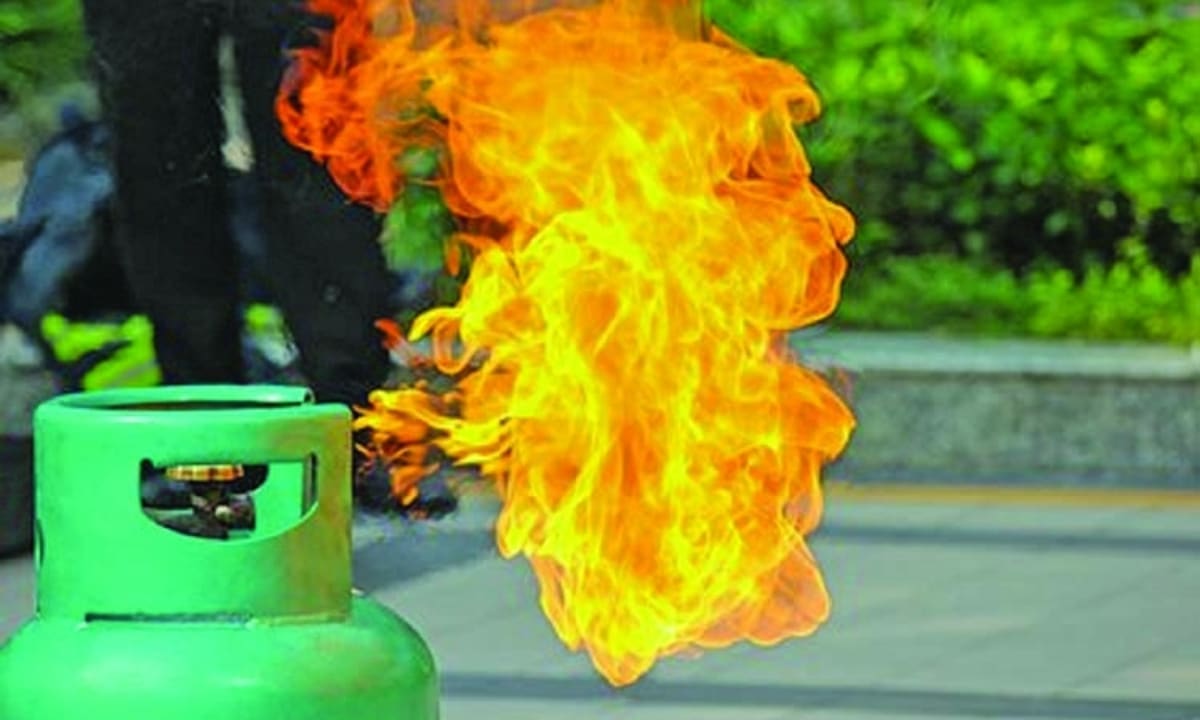
A high-intensity cylinder explosion Punjab recently devastated a prominent pizza outlet in Hujra Shah Muqim, highlighting significant gaps in commercial safety protocols. The initial blast triggered a sequence of secondary explosions, which rapidly accelerated the thermal spread across the facility. Consequently, three personnel from the “Suthra Punjab” cleanliness initiative sustained severe injuries while operating in the vicinity. This event serves as a grim catalyst for re-evaluating the baseline safety standards governing high-pressure gas usage in urban commercial hubs.
Rescue 1122 units calibrated a rapid response, deploying multiple fire tenders to contain the blaze within the structural perimeter. Although the thermal intensity threatened adjacent properties, tactical firefighting prevented a wider systemic collapse. The injured individuals were extracted from the debris and transferred to local medical facilities for precision trauma care. Furthermore, the establishment’s financial baseline was decimated, with assets worth hundreds of thousands of rupees incinerated in the combustion cycle.
The Translation: Deconstructing the Mechanics
In technical terms, this incident was not merely an accident; it was a failure of containment and pressure regulation. A gas cylinder explosion occurs when the internal pressure exceeds the structural integrity of the vessel, often due to thermal exposure or mechanical flaws. In this context, the “Suthra Punjab” workers were collateral victims of a localized industrial failure. This highlights why the integration of automatic shut-off valves and thermal sensors is a strategic necessity, not a luxury, for high-traffic food outlets.
Socio-Economic Impact: The Human and Fiscal Cost
This disaster directly impacts the local economy by disrupting the livelihood of small-scale service workers and business owners. For the average Pakistani citizen, such events increase the perceived risk of public spaces. Key impacts include:
- Economic Disruption: Immediate loss of commercial assets and local employment opportunities.
- Civic Strain: Injuries to public service workers reduce the efficiency of municipal cleanliness programs.
- Public Risk Perception: Frequent safety failures lower consumer confidence in the urban dining sector.
Consequently, these recurring safety breaches necessitate a more rigorous regulatory framework to protect the urban workforce and stabilize commercial insurance premiums across the province.
The Forward Path: Momentum Shift or Stabilization?
This incident represents a critical Momentum Shift toward the urgent need for enforced safety benchmarks. We cannot maintain a status quo where commercial expansion outpaces safety infrastructure. Precision enforcement of building codes and mandatory fire suppression systems must become the new baseline for Punjab’s commercial sector. We view this as a vital call to transition from reactive rescue operations to proactive, system-wide risk mitigation to ensure the safety of every citizen.








