

The global computing architecture is shifting as Asus debuts the world’s first RTX Spark laptops and Mini PCs, integrating NVIDIA’s powerhouse superchip for local AI workloads. This hardware milestone, calibrated for precision, enables creators to run massive language models and high-fidelity graphics directly on-device. Consequently, professionals can now bypass cloud latency and maintain full data sovereignty during intensive production cycles.
The Translation: Superchip Architecture
The NVIDIA RTX Spark represents a catalyst for technical efficiency, merging a 20-core Grace CPU with a Blackwell-based GPU architecture. This system utilizes the NVLink C2C interconnect, allowing the CPU and GPU to communicate with unprecedented speed. Furthermore, the platform supports up to 128GB of unified memory. Unlike traditional configurations where memory is segmented, this unified approach allows the GPU to access the entire pool for massive 3D scenes and local AI agents.

Revolutionizing Workflow with RTX Spark Laptops
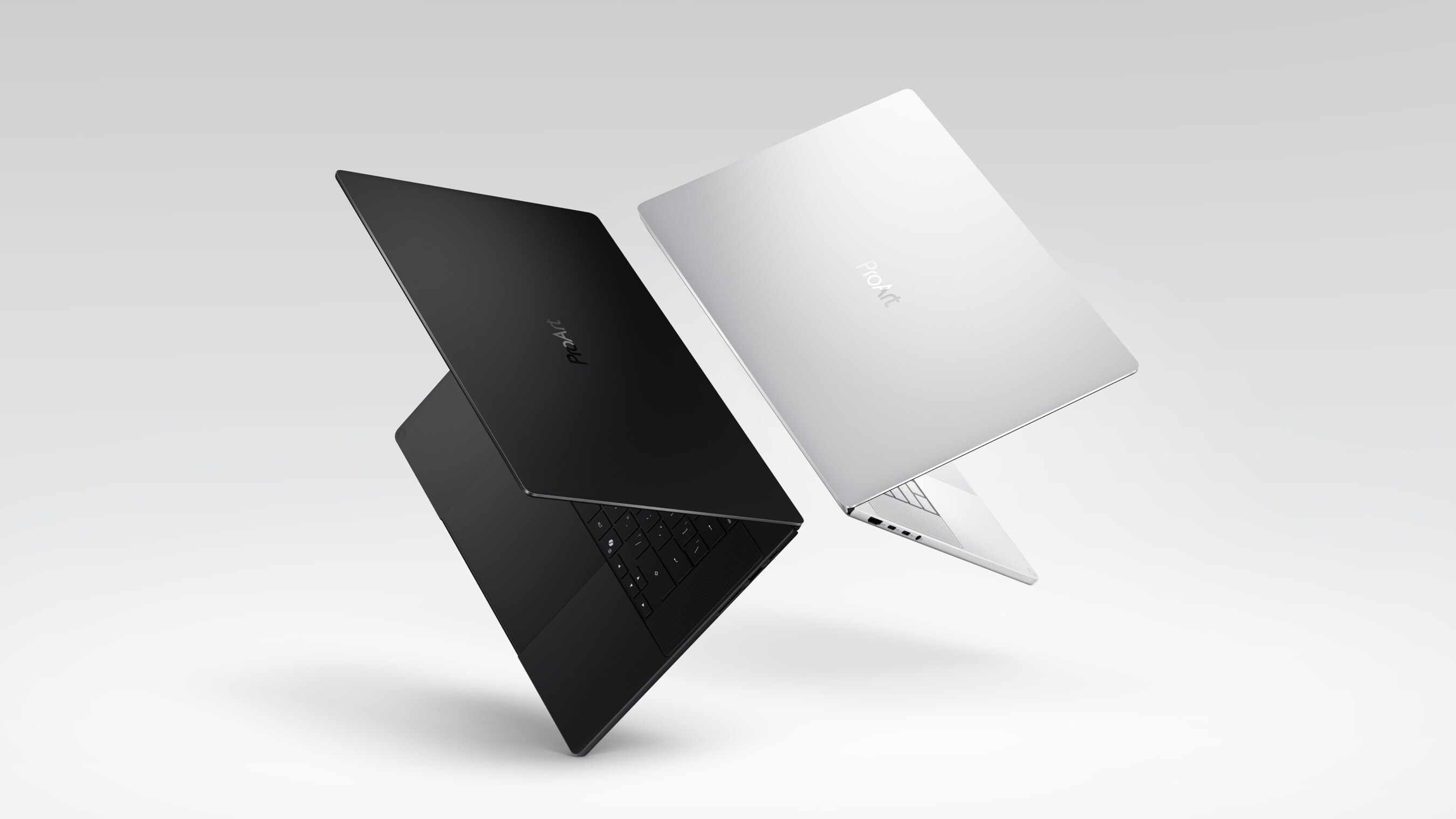
Asus has engineered the ProArt P16 and P14 to serve as mobile benchmarks for performance. These RTX Spark laptops deliver a staggering 1 petaflop of AI compute, capable of handling large language models (LLMs) with 120 billion parameters. In contrast to previous generations, the ProArt P16 is 13% thinner and 16% lighter, utilizing a CNC-milled chassis for structural integrity. The 4K Lumina Pro OLED displays ensure color precision, while the 99.9Wh battery supports sustained creative sessions.
- AI Capability: Run models with 1 million token context windows.
- Visual Precision: Lumina Pro OLED with Delta E < 1 color accuracy.
- Software Synergy: Adobe is optimizing Photoshop and Premiere specifically for the Spark chip.

The ProArt Mini PC: Desktop Precision
Simultaneously, Asus introduced the ProArt Mini PC for edge AI environments and studio workstations. Despite its compact 150mm frame, the device maintains 140W of thermal headroom to prevent performance throttling during long rendering tasks. It mirrors the laptops’ 1 petaflop performance, making it a strategic asset for developers specializing in generative AI and high-speed 10GbE networking environments.
The Socio-Economic Impact
For Pakistan’s burgeoning freelance economy and digital startups, these RTX Spark laptops represent a structural shift in competitive capacity. Access to local 12K video editing and on-device AI training allows Pakistani professionals to deliver global-standard projects without relying on expensive, high-latency cloud servers. This democratizes high-end compute, potentially increasing the national output of high-value digital exports from Karachi to Islamabad.
The Forward Path
This development constitutes a Momentum Shift for the hardware industry. By integrating the Grace CPU and Blackwell GPU into a consumer-available chassis, Asus and NVIDIA have recalibrated the baseline for “professional” gear. While pricing remains unannounced for the fall 2026 release, the shift toward local, high-parameter AI execution is now irreversible. We expect this architecture to become the standard for all STEM-driven creative hubs within the next 24 months.








