
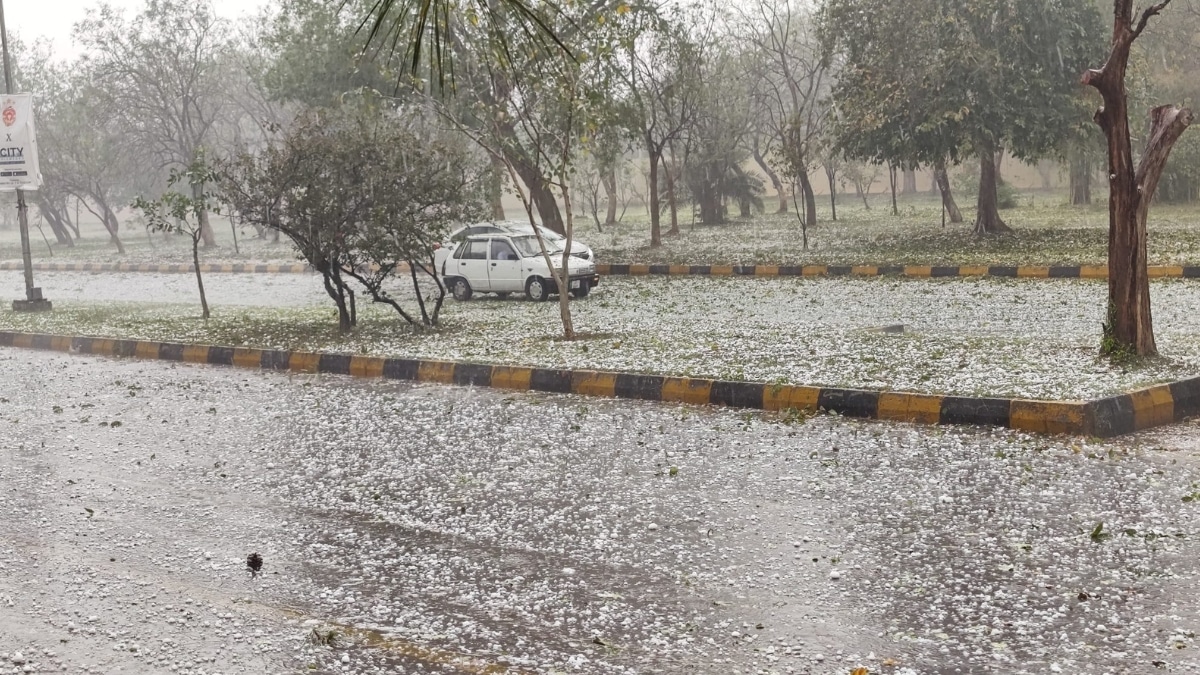
The Pakistan Meteorological Department (PMD) identifies a potent westerly wave approaching the country’s upper regions. This atmospheric catalyst will trigger a significant Pakistan heavy rainfall event and intense hailstorms from June 2nd through June 5th. Consequently, urban centers and agricultural belts must prepare for strategic shifts in daily operations as the system traverses the nation.
The Translation: Decoding the Westerly Wave
A westerly wave represents an extratropical cyclone originating from the Mediterranean, carrying high moisture levels. As this system interacts with local thermal conditions, it creates vertical instability. Consequently, this is not a standard monsoon pattern but a calibrated meteorological surge. This interaction results in heavy falls and hailstorms rather than consistent light precipitation. Understanding this logic allows for better structural preparation against sudden environmental volatility.
Regional Impact and System Distribution
The weather system will manifest across the following provinces with varying degrees of intensity:
- Punjab and Islamabad: Heavy rainfall and hailstorms will impact Islamabad, Lahore, Faisalabad, and Multan. This system will persist with occasional gaps through June 5th.
- Kashmir and Gilgit-Baltistan: Scattered rain and thunderstorms will affect Neelum Valley and Muzaffarabad. Activity in Gilgit-Baltistan will extend from June 4th to 6th.
- Khyber-Pakhtunkhwa: Regions from Swat and Abbottabad to Peshawar will experience thunderstorms and hailstorms.
- Sindh and Balochistan: Upper Sindh, including Sukkur and Larkana, alongside Northeastern Balochistan, will face dust-storms and rain until June 4th.
The Socio-Economic Impact: Precision Planning
This Pakistan heavy rainfall forecast fundamentally alters the baseline for several sectors. For the urban professional, the cooling effect serves as a catalyst for reduced energy consumption, providing a temporary reprieve from the national power grid strain. However, for the agricultural community, hailstorms present a high-risk scenario for standing crops. Households must anticipate logistical delays. Furthermore, the hailstorms may test the structural integrity of older residential infrastructure in rural areas.
The Forward Path: Momentum Shift
We categorize this development as a Stabilization Move. While the rainfall provides essential moisture and temperature regulation, it is a cyclical event rather than a permanent solution to climate challenges. Pakistan must continue to evolve its drainage and disaster management frameworks to transform these atmospheric shifts into consistent gains for national water security and system efficiency.








