
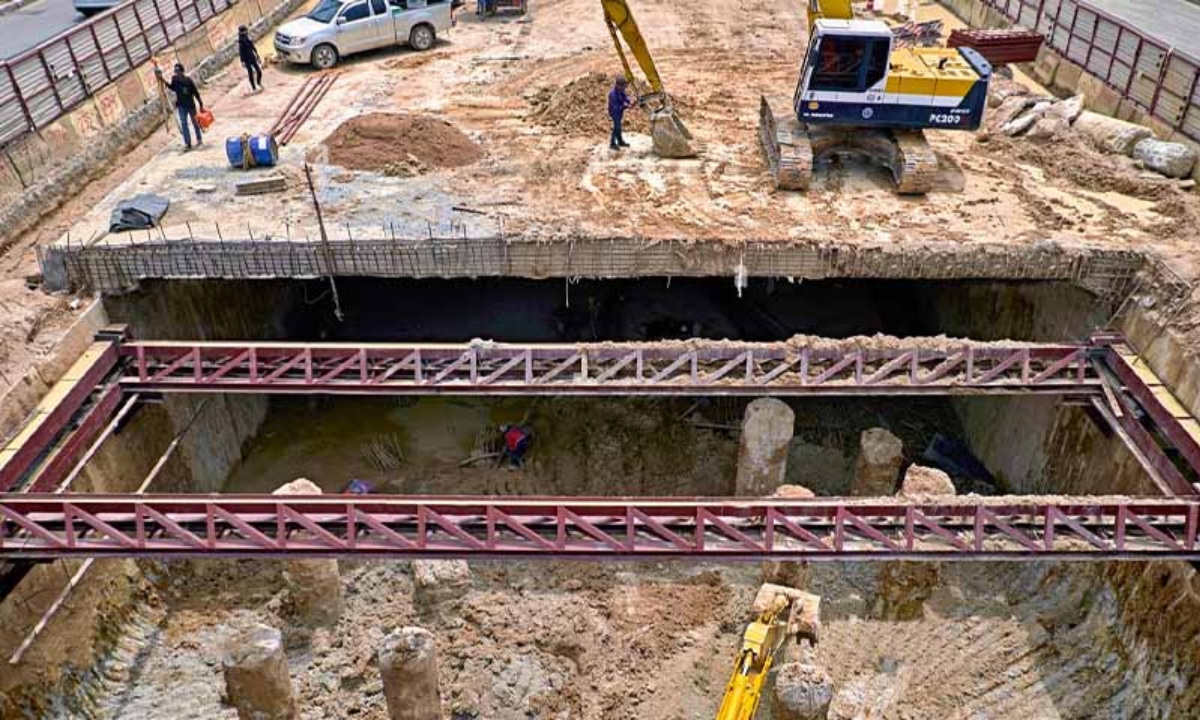
Rawalpindi’s urban efficiency hinges on the structural integrity of its transit corridors. Currently, the Rawalpindi underpass project faces a critical timeline calibration as the monsoon season approaches. Despite logistical challenges, authorities are accelerating groundwork to ensure the 25-kilometer signal-free corridor remains a catalyst for regional mobility.
The Logistics of the Peshawar Road Corridor
Construction on three strategic underpasses—Race Course Park, Army Graveyard, and Chairing Cross—is scheduled for a full-scale launch within the next 14 days. These nodes are vital components of the 25-kilometer signal-free corridor. Consequently, this infrastructure aims to optimize transit between the Islamabad Expressway and Motorway Chowk. The project is designed to reduce travel time to a precise 15 to 20-minute window.
Engineers have already completed utility relocation. This includes the recalibration of gas pipelines, telephone lines, and electrical infrastructure from Race Course to Qadir Motors Stop. Furthermore, the district administration is focusing on service roads to maintain traffic flow during the primary excavation phase.
Calibrating for the Rawalpindi Underpass Project
Construction experts express concern regarding the Rawalpindi underpass project and its proximity to the monsoon season. Heavy precipitation typically leads to hydraulic accumulation in open excavation sites. Such delays often increase project costs and disrupt machinery operations. Therefore, authorities are prioritizing drainage improvements and alternative road networks near Qasim Market.
- Transit Camp Road: Currently undergoing repairs to serve as a primary diversion.
- Bakery Chowk: Scheduled for surface improvements to handle increased load.
- APS-Chairing Cross Link: Designated as a high-flow alternative route.
The Translation
In technical terms, this project represents a shift from reactive road patching to systemic traffic management. The “signal-free” designation is not merely about speed; it is about structural throughput. By removing physical intersections, the city reduces the carbon footprint of idling vehicles and eliminates the mechanical inefficiencies of stop-and-go traffic.
The Socio-Economic Impact
How does this change the daily life of a Pakistani citizen? For the average professional or student in Rawalpindi, this infrastructure represents a precision baseline for daily scheduling. Reduced transit times directly translate to increased economic productivity. Furthermore, improved drainage integrated into these underpasses will mitigate the traditional flooding issues that plague Peshawar Road during the rainy season.
The Forward Path
This development represents a Momentum Shift. While the seasonal timing is aggressive, the proactive completion of utility relocation and the Kutchery Chowk remodeling indicates a disciplined approach to project management. If the authorities maintain this pace, the project will serve as a structural blueprint for future urban interventions in Punjab.








