
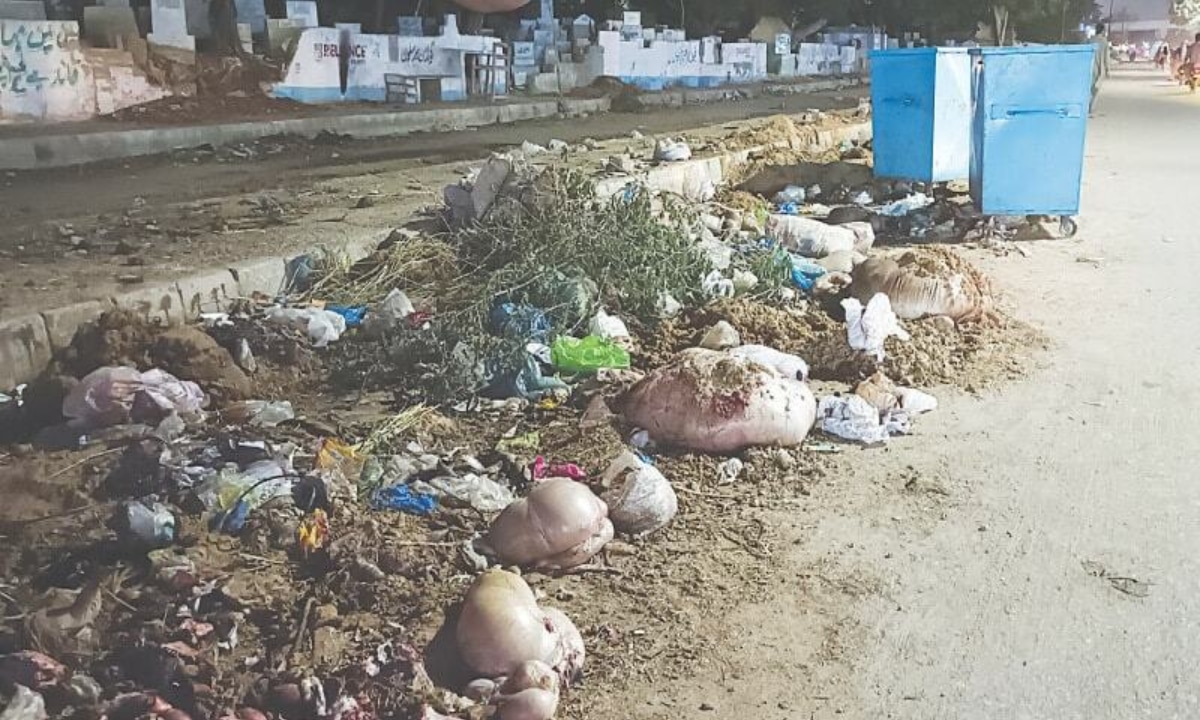
The Karachi sanitation crisis reached a critical baseline during the three days of Eid-ul-Azha. Consequently, animal waste and poor civic management left several neighborhoods submerged in filth across the metropolis. Although the Sindh Solid Waste Management Board (SSWMB) attempted collection efforts, citizens reported that multiple areas remained affected by accumulated offal. Extreme heat and humidity catalyzed the decomposition of waste, which spread an unbearable stench through residential sectors.
Structural Drivers of the Karachi Sanitation Crisis
Political leadership remains divided over the failure of the waste management machinery. Specifically, Hafiz Naeem ur Rehman of Jamaat-i-Islami accused the provincial government of precision-level corruption and persistent inefficiency. He highlighted that Karachi residents pay for basic sanitation services that the system fails to deliver. Furthermore, the MQM-Pakistan identified significant lapses in Landhi, Korangi, Malir, and North Nazimabad. These areas faced widespread public distress as municipal bodies failed to ensure proper cleanliness arrangements during the peak holiday period.

Quantifying the Logistical Challenge
Despite the visible distress, Mayor Barrister Murtaza Wahab defended the operations. He maintained that civic teams worked continuously to manage waste disposal across the city. The SSWMB released data showing they collected over 142,816 tons of waste during the operation. This total included:
- 64,000 tons of animal offal.
- 78,700 tons of general household waste.
- Utilization of 99 collection points and nine dedicated trenches at landfill sites.
The board also implemented disinfectant spraying and road washing to mitigate the odor. However, the disconnect between these statistics and the ground reality in suburban localities suggests a strategic gap in the logistical deployment.
The Translation (Clear Context)
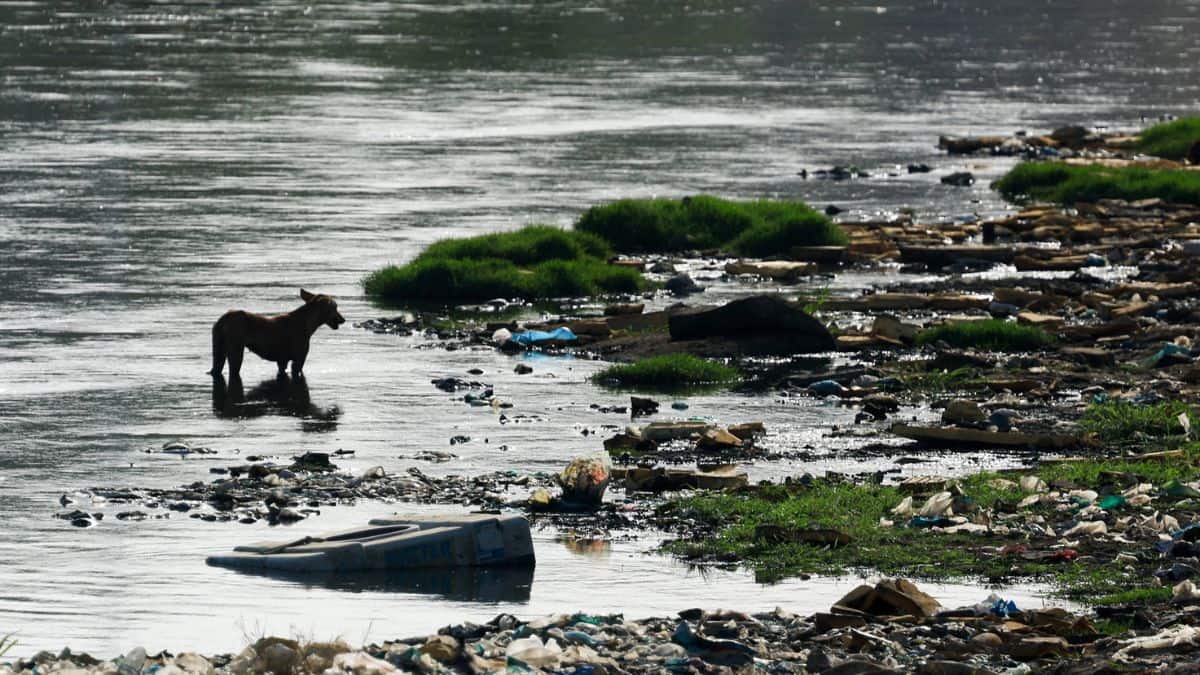
The sanitation crisis is not merely a failure of garbage pickup; it is a breakdown of the urban metabolic cycle. When a city of 20 million people increases its organic waste output by 1000% in 72 hours, the system requires a calibrated, decentralized response. The current centralized model under the SSWMB creates bottlenecks, where primary roads are cleared while secondary residential arteries remain blocked by decomposing matter.
The Socio-Economic Impact
For the average Pakistani citizen in Karachi, this mismanagement translates into a public health emergency. Decomposing organic matter in high humidity is a primary catalyst for waterborne diseases and respiratory distress. Beyond health, the foul environment stagnates local economic activity in markets and reduces the quality of life for households, particularly in lower-income districts where official cleaning crews arrive last.
The “Forward Path” (Opinion)
This development represents a Stabilization Move that failed to achieve its baseline. While the collection of 142,000 tons shows a massive effort, the remaining filth indicates that Karachi’s waste infrastructure is not yet scalable for peak demand. We must shift from reactive cleaning to a structural, technology-driven waste-to-energy model. Until the city decentralizes its waste management to the union council level, the Karachi sanitation crisis will remain a seasonal certainty rather than a solved problem.








