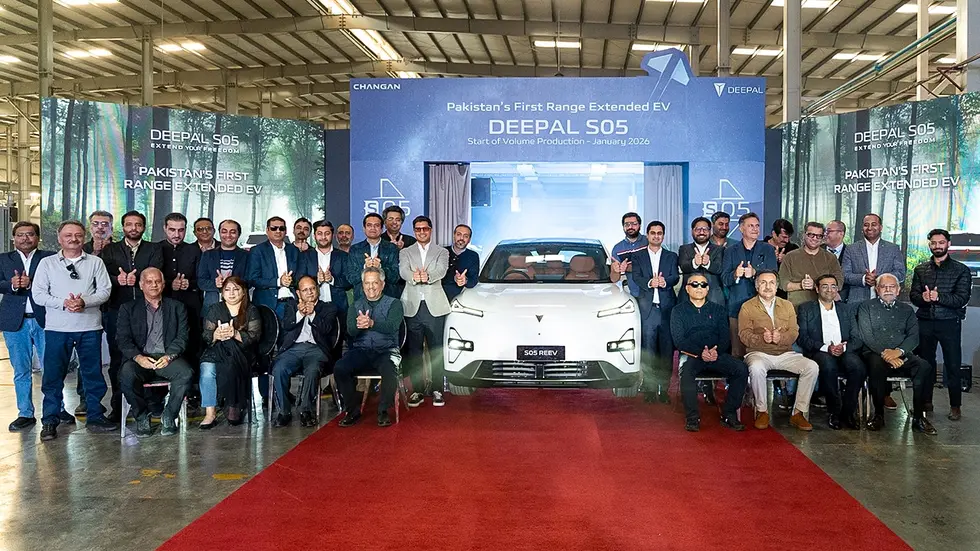
Pakistan’s automotive landscape is undergoing a structural transformation as 23 new cars Pakistan expects will launch by December 2026. This surge, documented by the Arif Habib Limited (AHL) Tracker, represents a strategic shift toward electrified mobility. The data confirms a calibrated pipeline featuring nine Electric Vehicles (EVs), 11 Plug-in Hybrids (PHEVs), and only three traditional petrol models. This transition signals a baseline shift in the national transportation infrastructure.
The Strategic Roadmap for New Cars Pakistan (June – December 2026)
Phase 1: Mid-Year Momentum (June – July)
The second half of 2026 begins with a heavy volume of releases. In June, Changan introduces the UNI-S petrol model, while GWM debuts the Cannon Alpha PHEV. MG expands its footprint with the IM5 and IM6 electric models. Furthermore, Jetour launches the T1 and T2 petrol variants, alongside Omoda’s C7 PHEV. By July, the focus shifts to range-extended technology. Jaecoo introduces the J8 PHEV, while Nevo and Deepal debut the Q05 and G318 REEV models respectively.
Phase 2: The Autumn Pivot (August – October)
August brings three precision-engineered arrivals. Ora prepares the O5 EV, Deepal introduces the Hunter K50 REEV, and Avatr launches the 11 EV. Consequently, September maintains this pace with the Chery QQ3 EV and the Deepal S09 REEV. By October, the market sees a focused entry from Changan with the Lumin EV, reinforcing the trend toward compact, efficient urban mobility.
Phase 3: Year-End Conclusion (December)
The year concludes with six major launches in December. Denza introduces the B5 and B8 PHEVs, while global leader BYD launches the Sealion 6 PHEV. Nevo adds the Q07 PHEV to its lineup. Simultaneously, Avatr and Aion finalize the year’s expansion with the 07 and ES electric models. These launches represent a significant volume of new cars Pakistan will integrate into its growing smart-grid ecosystem.
The Situation Room Analysis
The Translation (Clear Context)
The automotive industry is moving away from “Combustion-First” logic. While “Petrol” was the previous baseline, the new standard is “Electrified.” REEV (Range Extended Electric Vehicle) and PHEV (Plug-in Hybrid) models act as a bridge. They utilize small engines to charge batteries, solving the “range anxiety” often associated with pure EVs in regions with developing charging infrastructure.
The Socio-Economic Impact
For the average Pakistani citizen, this shift acts as a catalyst for reduced monthly energy expenditures. By transitioning from volatile fuel prices to electricity-based mobility, households can stabilize their transportation costs. Additionally, the influx of 23 new cars Pakistan is adopting will likely drive competition, leading to more accessible price points for middle-class professionals and students.
The “Forward Path” (Opinion)
This development represents a definitive Momentum Shift. Pakistan is no longer merely reacting to global trends; it is actively calibrating its market for a post-oil future. The dominance of EV and PHEV models in the 2026 pipeline suggests that the private sector has identified green mobility as the primary driver of systemic efficiency. This is a strategic leap forward for national progress.