
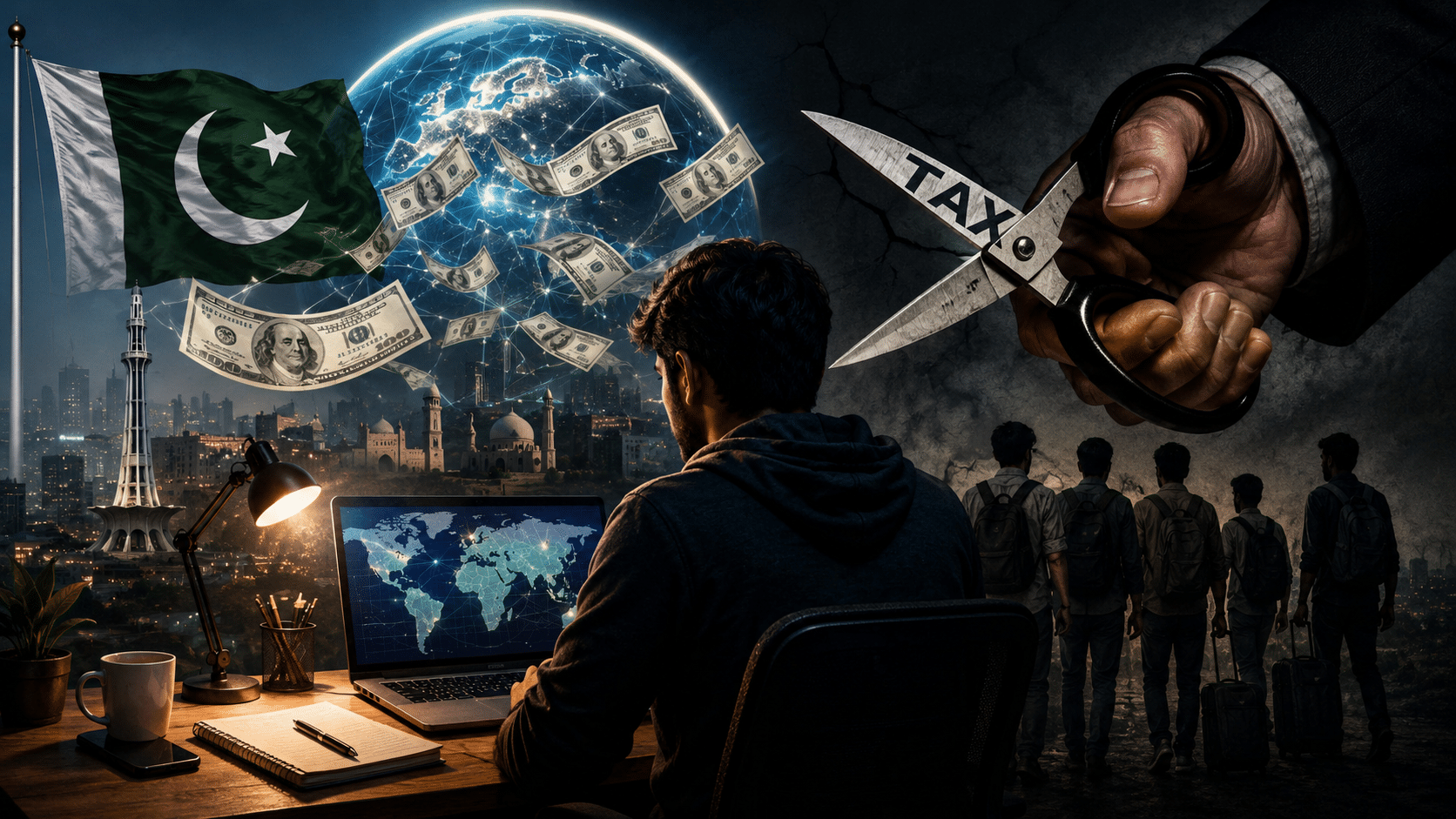
The architectural stability of Pakistan’s digital export economy hinges on a calibrated regulatory environment. Consequently, the Pakistan Freelancers Association (PAFLA) has issued a critical warning against any aggressive freelancer tax policy shifts. This strategic intervention follows recent industry debates regarding tax loopholes, aiming to preserve the structural integrity of Pakistan’s most agile economic sector.
The $1 Billion Digital Export Trajectory
Pakistan’s freelance and remote work community has emerged as a primary catalyst for foreign exchange. Specifically, this sector contributed nearly $900 million in the first nine months of the current fiscal year. Industry experts now project that annual earnings for IT and digital services exports will surpass the $1 billion milestone. This growth represents a significant baseline shift from the $450 million recorded in 2022.
Several critical factors have accelerated this expansion over the last few years:
- Improved Banking Access: Streamlined financial pathways for international payments.
- Strategic Policy Engagement: Collaborative efforts between public and private stakeholders.
- Ecosystem Development: Targeted awareness initiatives for digital service providers.
Structural Integrity of the Freelancer Tax Policy
PAFLA warns that introducing complex compliance measures without the necessary infrastructure will yield counterproductive results. Excessive regulatory pressure often weakens trust in formal banking systems. Consequently, such moves might push freelancers toward informal channels, reducing documented foreign exchange inflows. Furthermore, heavy taxation could trigger talent migration, slowing Pakistan’s momentum in the global digital market.
The Situation Room Analysis
The Translation (Clear Context)
The core of this conflict lies in the tension between immediate revenue collection and long-term sector growth. While some entities initially suggested closing a 0.25% tax “loophole,” PAFLA identifies this as a necessary incentive rather than a gap. In “Next Gen” clarity: the current low-tax regime acts as a precision tool that encourages independent workers to bring their dollars into the official Pakistani banking system rather than keeping them in offshore digital wallets.
The Socio-Economic Impact
For the average Pakistani citizen, this debate is about more than just numbers; it is about household stability. Freelancing provides high-yield employment for urban and rural youth who might otherwise face a stagnant local job market. These $1 billion inflows help stabilize the national balance of payments, which indirectly protects the purchasing power of every Pakistani household against inflation.
The Forward Path (Opinion)
This development represents a Momentum Shift. The digital economy is Pakistan’s most promising frontier for rapid expansion. Any policy shift must be collaborative rather than coercive. We recommend a framework where the Ministry of IT and the FBR prioritize “Ease of Earning” over “Ease of Collection” to ensure the $1 billion baseline becomes a $5 billion future.








