

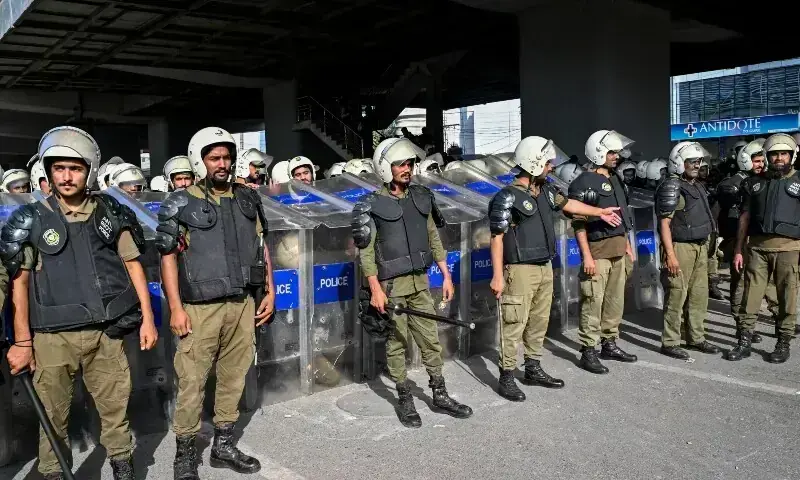
The structural integrity of public safety serves as the baseline for national prosperity. Consequently, Punjab Police security operations have reached a new milestone with the strategic deployment of over 4,000 officers for the Eid al-Adha season. This massive mobilization secures 222 cattle markets across the province, including six primary hubs in Lahore, to protect both traders and citizens.
Punjab Inspector General of Police, Abdul Kareem, issued precise directives to enforce strict security protocols at all approved venues. He explicitly warned that the administration will not tolerate illegal cattle markets or unauthorized sale points. Furthermore, Police Response Units (PRU) and patrolling teams have increased their frequency of surveillance to deter criminal activities such as fraud and pickpocketing.
Strengthening Punjab Police Security Across Cattle Markets
The deployment strategy is calibrated according to regional needs to ensure maximum efficiency. For instance, the police force has distributed personnel across the following key regions:
- Lahore: Over 600 officers securing major trade hubs.
- Gujranwala: 525 personnel monitoring 44 markets.
- Faisalabad: 538 officers overseeing 19 markets.
- Multan: 480 personnel protecting 20 markets.
- Rawalpindi: 340+ officers deployed across 22 markets.
- Sheikhupura: 150 personnel managing 23 locations.
Advanced Monitoring and Civil Protection
Chief Minister Maryam Nawaz recently presided over a high-level meeting to finalize administrative arrangements for Chand Raat and Eid prayer venues. She mandated the installation of metal detectors and walkthrough gates at 38,507 prayer locations across Punjab. Additionally, the Safe City system will provide real-time monitoring to enhance the Punjab Police security baseline.
The Chief Minister also emphasized the strict enforcement of a ban on sacrificial hide collection by proscribed organizations. District police officers will personally oversee these operations to maintain law and order during the festive period.
The Translation
In “Next Gen” terms, this is not just a routine patrol; it is a full-scale system calibration. The deployment utilizes data-driven logistics to place personnel where the highest volume of financial transactions occurs (cattle markets). By integrating walkthrough gates and Safe City surveillance, the government is moving from reactive policing to a preventative security architecture.
The Socio-Economic Impact
For the average Pakistani citizen, this level of security directly impacts economic stability. Cattle traders, often carrying large sums of cash, can operate without the immediate threat of theft. For urban families, the presence of metal detectors and increased patrolling at prayer venues provides the psychological safety necessary for social cohesion and peaceful religious observance.
The Forward Path
This development represents a Stabilization Move. While the deployment is massive and technologically integrated, it remains a seasonal response to a recurring event. For a true Momentum Shift, we must see these “Safe City” integrations and high-density patrolling patterns become the permanent standard for urban policing in Pakistan, rather than just an Eid-specific protocol.








