
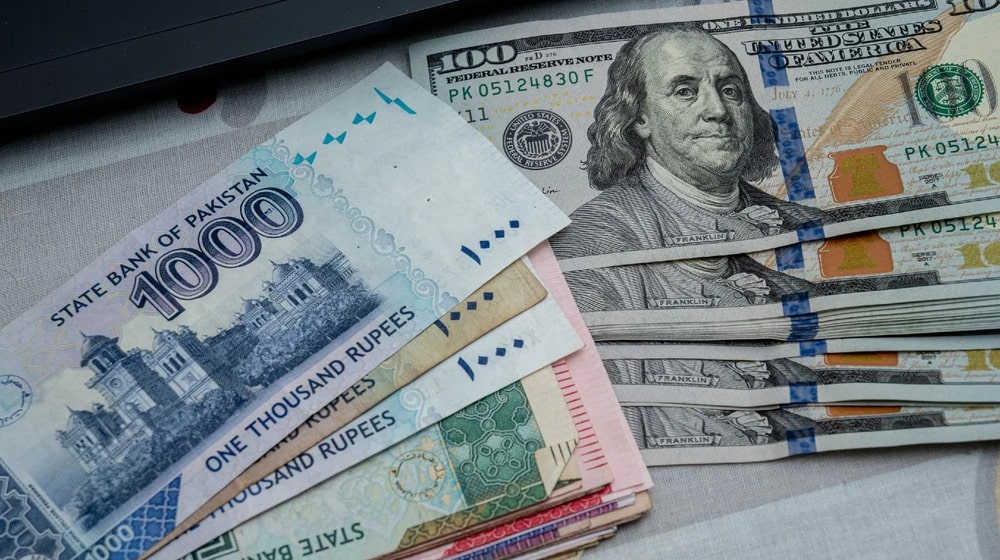
Building a resilient economic architecture requires more than just stabilization; it demands a calibrated trajectory toward growth. Pakistan Per Capita Income is projected to exceed the $2,000 threshold by FY27, signaling a strategic recovery in national productivity. Topline Securities indicates that nominal income will reach $2,022, provided global oil prices stabilize and regional geopolitical tensions dissipate. This milestone represents a critical baseline for structural economic maturity following the fiscal volatility witnessed in FY23.
Analyzing the Baseline for Pakistan Per Capita Income
The data highlights a systematic climb after a period of significant contraction. In FY23, the figure dropped to $1,551 but recovered to $1,680 in FY24. Projections for FY25 and FY26 sit at $1,812 and $1,901, respectively. Consequently, the crossing of the $2,000 barrier serves as a vital psychological and economic catalyst for the nation. This recovery reflects a gradual improvement in macroeconomic stability and economic activity under recent stabilization policies.

Strategic Comparison with Regional Peers
While the upward trend is positive, precision requires context. Both India and Bangladesh surpassed the $2,000 mark nearly seven years ago. Rapid population growth and political instability acted as structural inhibitors for Pakistan for decades. Nevertheless, the current momentum suggests a closing gap through calibrated fiscal policies. The transition toward this target is contingent on a reduction in tensions related to regional conflicts and a moderation in global energy prices.
The Translation (Clear Context)
In technical terms, “Per Capita Income” represents the average economic output per citizen. It serves as a precision metric to evaluate the relative standard of living and national efficiency. When this figure crosses $2,000, it typically indicates a shift from a low-income to a lower-middle-income status. This development makes the country a more attractive destination for high-value foreign direct investment.
The Socio-Economic Impact
How does this change the daily life of a Pakistani citizen? For the average household, this growth translates into improved purchasing power and expanded credit access. Students and professionals will likely see a more robust job market as the economy scales to meet new productivity demands. Furthermore, a stabilized per capita income reduces the volatility of the national currency, which directly protects household savings and stabilizes the cost of imported goods.
The Forward Path (Opinion)
This development represents a Momentum Shift. While the path has been arduous, the transition toward the $2,000 threshold demonstrates that stabilization measures are beginning to yield structural results. To maintain this trajectory, Pakistan must prioritize population management and energy security. These steps are essential to prevent future stagnation and ensure that this growth is inclusive for all citizens.








