
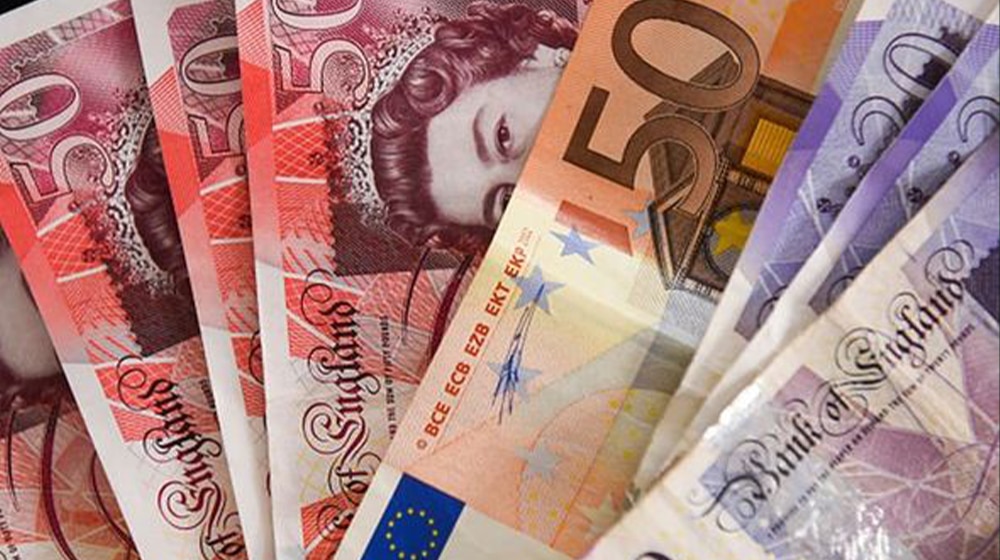
The Pakistani Rupee gains sustained momentum this week, reinforcing a disciplined 166-day streak of stability against the US Dollar. Consequently, the currency closed Friday at 278.52, demonstrating a strategic baseline for national fiscal planning. This precision performance extends beyond the USD, as the PKR also calibrated its value upward against the Euro and British Pound.
Structural Drivers Behind Pakistani Rupee Gains
Specifically, the PKR appreciated by three paisas against the USD in today’s session. Meanwhile, the British Pound saw a significant 51-paisa decline against the Rupee, settling at 373.98. Furthermore, the Euro weakened by 42 paisas, and the Canadian Dollar fell by 31 paisas. While the Australian Dollar showed a slight 16-paisa gain, the overall trend highlights a structural consolidation of the PKR’s value across multiple trade corridors.
- USD Closing: 278.52 (Gained 3 paisas)
- GBP Closing: 373.98 (Gained 51 paisas)
- EUR Closing: 323.28 (Gained 42 paisas)
- AED/SAR Closing: Gained 1 paisa respectively
Currency Performance Benchmark (May 2026)
| Currency | 20-May | 21-May | 22-May | Net Change |
|---|---|---|---|---|
| USD | 278.5602 | 278.5515 | 278.5235 | 0.0280 |
| EUR | 322.7955 | 323.7047 | 323.2822 | 0.4225 |
| GBP | 372.7831 | 374.4986 | 373.9874 | 0.5112 |
| CAD | 202.3097 | 202.2960 | 201.9823 | 0.3137 |
| AED | 75.8462 | 75.8459 | 75.8362 | 0.0097 |
The Situation Room: Strategic Analysis
The Translation
A 166-day streak represents more than just market luck; it signals a calibrated stabilization of the foreign exchange ecosystem. Effectively, the PKR is trading within a high-precision range. This suggests that the current monetary policy has successfully matched supply with demand. Consequently, the currency is now more resilient against external shocks that previously caused aggressive volatility.
The Socio-Economic Impact
For the average Pakistani citizen, these Pakistani Rupee gains translate into predictable pricing for essential commodities. Stable exchange rates act as a catalyst for lower imported inflation. This specifically impacts energy costs, transport, and imported raw materials. Households can expect a baseline of cost stability in their monthly budgets, providing a necessary reprieve from previous inflationary cycles.
The Forward Path
This development represents a Stabilization Move. While a three-paisa gain appears marginal, the duration of the trend is the critical indicator of system health. To convert this into a total Momentum Shift, Pakistan must now leverage this stability to increase high-value exports. Structural reforms in the energy sector will be the next precision target to ensure this stability becomes a permanent fixture of our economic architectural framework.








