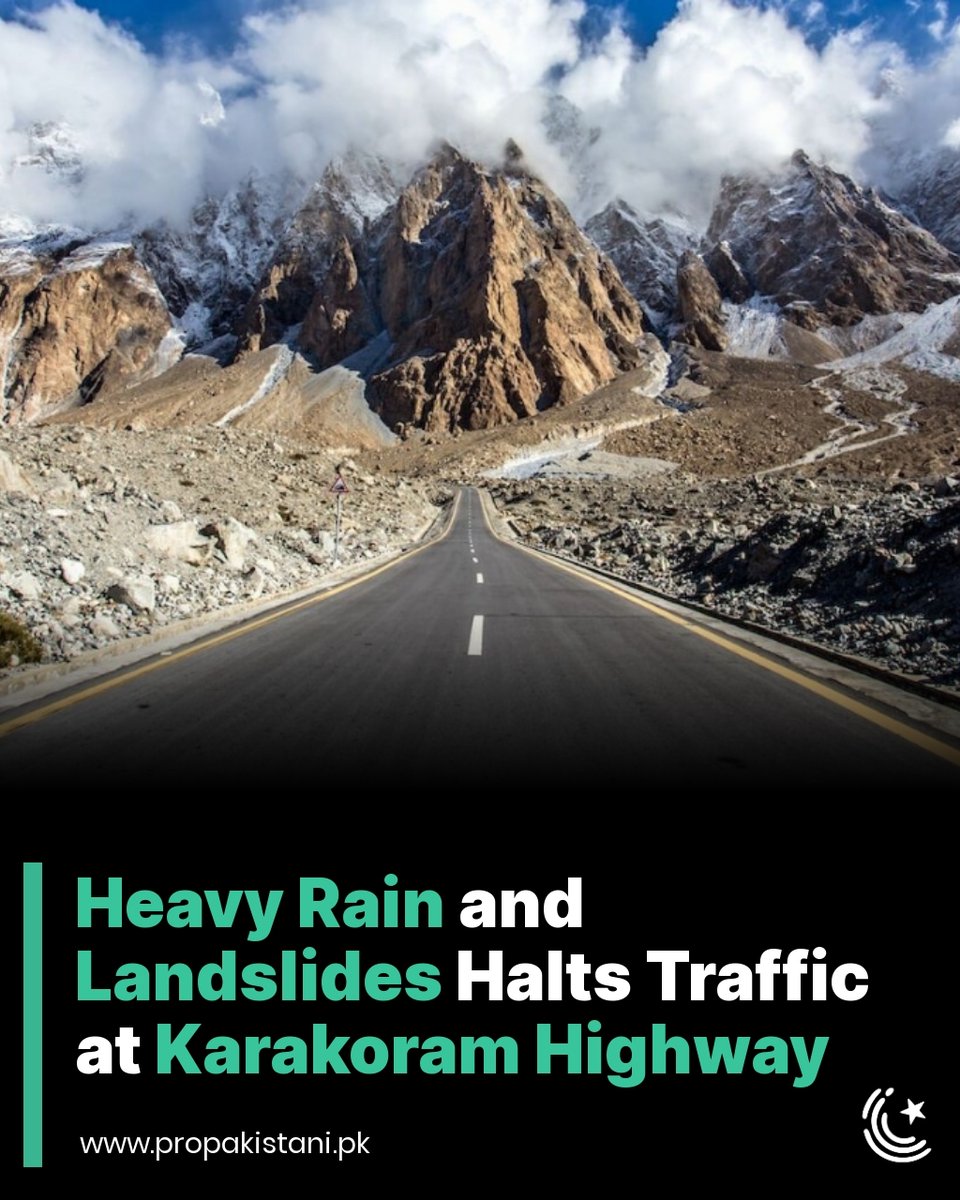
Heavy rainfall recently triggered significant Karakoram Highway landslides, effectively severing a critical artery in Pakistan’s logistics network. Consequently, authorities suspended traffic at multiple strategic nodes within the Shangla district. This systemic disruption occurred as local streams overflowed, rendering the infrastructure impassable for commercial and private transit.
Structural Impact on the Karakoram Frontier
The National Highway Authority reported severe blockages at Jeejal and Patan. In these zones, hydraulic pressure from overflowing streams compromised the road surface. Furthermore, the Khidarnala and Sablomor sectors experienced direct debris flows. These landslides damaged several vehicles, though emergency responders have prioritized clearing the transit baseline to prevent further economic stagnation.
The Translation: Technical Context
While we often view these events as mere weather occurrences, they represent a critical failure of slope stabilization under high hydraulic stress. The Karakoram Highway landslides demonstrate the vulnerability of our mountain corridors to precision rainfall. When local catchments exceed their volumetric capacity, the resulting runoff carries geomorphic weight that older retaining structures cannot withstand. Therefore, we must view this not just as a “road closure,” but as a call for calibrated geological reinforcement.
The Socio-Economic Impact
For the average Pakistani citizen, this closure triggers immediate supply chain volatility. Students in northern regions face educational delays, while households experience sudden price hikes for perishable goods. In contrast to urban centers, these mountain communities rely on the KKH for 90% of their essential caloric and medicinal intake. This suspension effectively places thousands of professionals and families in a state of logistical isolation until the baseline is restored.

The Forward Path: Strategic Analysis
Next Generation Pakistan views this development as a Stabilization Move. While the NHA’s rapid mobilization is a tactical success, the structural baseline requires a strategic shift. We must evolve beyond reactive clearing and move toward predictive landslide mitigation technologies. Investing in climate-resilient engineering is no longer an option; it is a catalyst for national security and economic stability. Travelers should remain stationary and monitor official channels for a verified momentum shift in road safety.