

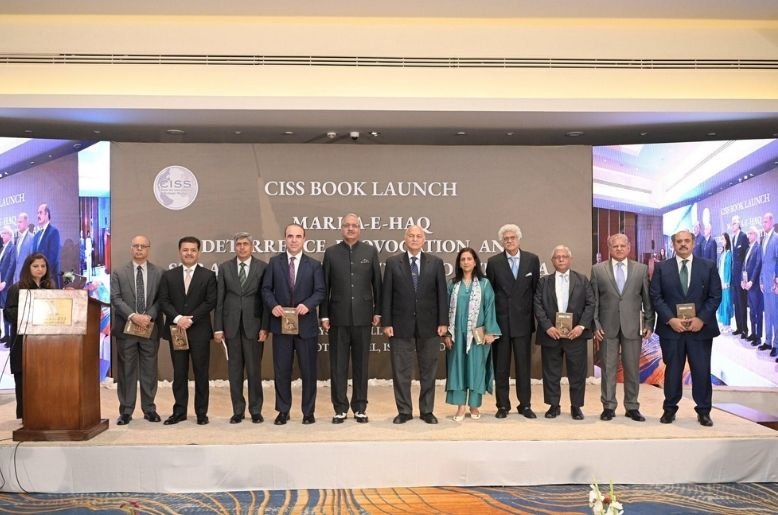
Maintaining regional equilibrium requires a calibrated understanding of evolving threats. The Center for International Strategic Studies (CISS) recently addressed this by launching “Marka-e-Haq: Deterrence, Provocation, and Strategic Maturity in South Asia.” This publication marks the first anniversary of Operation Bunyan-um-Marsoos. Leading strategists and military experts warn that Strategic Stability South Asia faces increasing fragility due to rapid technological shifts and disinformation campaigns.
Architecting a Resilient Defense Framework
The event gathered prominent scholars and retired military officials to examine the evolving regional security dynamics. Ambassador Ali Sarwar Naqvi, Executive Director of CISS, highlighted that India’s bellicose posture creates a volatile environment. Consequently, Pakistan must prioritize responsible statecraft and credible deterrence to preserve regional peace.
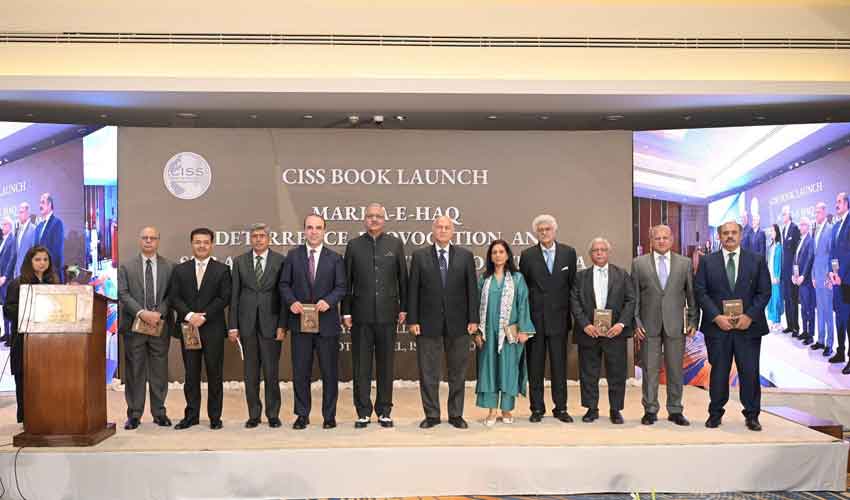
General Zubair Mahmood Hayat (Retd.) delivered the keynote address, emphasizing institutional preparedness. He observed that future conflicts will integrate hybrid warfare and cyber capabilities alongside conventional military means. This shift requires a baseline of cognitive resilience and narrative manipulation awareness.
The Translation: Converting Jargon to Clarity
The term “Strategic Stability South Asia” refers to a state where no nuclear-armed nation perceives an advantage in initiating conflict. The experts use “limited warfare under a nuclear overhang” to describe India’s attempt to engage in small-scale military actions without triggering a full-scale nuclear response. Pakistan’s “strategic maturity” is the disciplined refusal to react impulsively, instead choosing calibrated signaling to de-escalate crises while maintaining strength.
- Hybrid Warfare: Using digital disinformation and economic pressure as weapons.
- Compressed Timelines: Modern technology reduces the time leaders have to make critical defense decisions.
- Deterrence Stability: The balance that prevents a neighbor from attempting an attack.
The Socio-Economic Impact: Why Security Matters
For the average Pakistani citizen, strategic stability is the foundation of economic predictability. Persistent border tensions and hybrid warfare disrupt trade routes and divert national resources toward defense. By maintaining a Strategic Stability South Asia focus, the state ensures a safer environment for students and professionals to pursue innovation. When deterrence is credible, the “Risk Premium” on the country decreases, potentially encouraging foreign investment and infrastructure growth.
Addressing Emerging Resource Insecurities

Dr. Rizwana Abbasi highlighted a critical catalyst for future tension: the weaponization of water. Unresolved disputes, coupled with resource scarcity, heighten nuclear risks. Therefore, strategic communication and political resolve are now as vital as hardware capabilities in the modern defense matrix.
The Forward Path: A Momentum Shift
The launch of “Marka-e-Haq” represents a Momentum Shift in Pakistan’s strategic discourse. Rather than merely reacting to external aggression, this scholarly effort documents and codifies a sophisticated doctrine of restraint and precision. This intellectual baseline will serve as a structural guide for future policy-makers. To ensure progress, Pakistan must continue fostering informed debate within its think tanks and academic institutions to counter disinformation effectively.








