Global travel infrastructure requires a calibrated response to biological anomalies to ensure systemic stability. A suspected hantavirus outbreak aboard the MV Hondius cruise vessel currently challenges standard maritime health frameworks. Three passengers recently lost their lives during a voyage from Argentina to Cape Verde. Consequently, the World Health Organization (WHO) has initiated a precision investigation to stabilize the situation and prevent further transmission.
Health authorities have confirmed one case, while five additional passengers remain under rigorous medical observation. Laboratory teams are currently analyzing samples to identify the infection source. Furthermore, these experts aim to determine if a structural failure in rodent control or a rare human-to-human transmission event occurred. This development necessitates a strategic review of health protocols in enclosed maritime environments.
Analyzing the Mechanics of the Hantavirus Outbreak
Hantaviruses comprise a group of pathogens typically hosted by rodent populations. Humans generally contract the virus by inhaling aerosolized particles from dried droppings, urine, or saliva. Specifically, these particles enter the respiratory system when people disturb contaminated areas. Although rodent bites can transmit the virus, such instances remain statistically secondary to environmental inhalation.
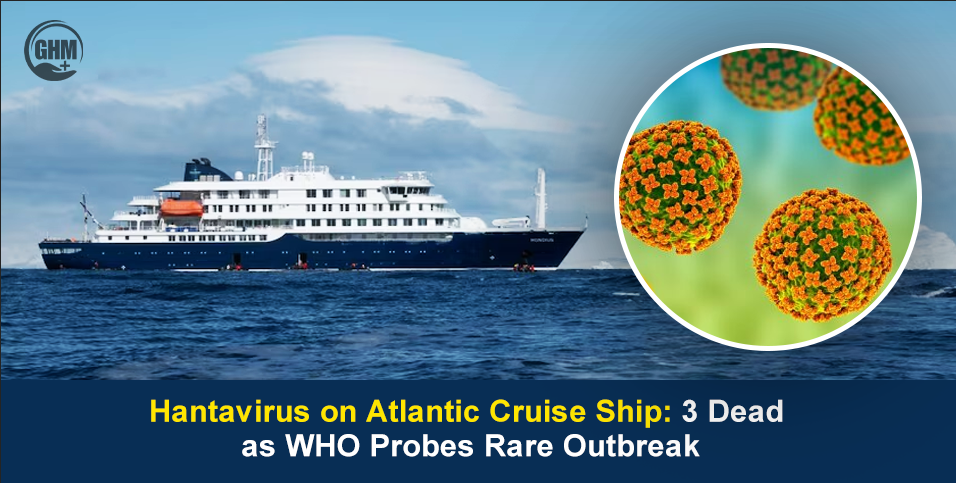
The virus manifests in two distinct, high-severity clinical paths. Hantavirus Pulmonary Syndrome (HPS) initiates with fever and muscle fatigue but rapidly progresses to severe respiratory distress. Conversely, Hemorrhagic Fever with Renal Syndrome (HFRS) targets kidney function, often leading to internal bleeding or renal failure. Because no specific antiviral catalyst exists, medical teams must rely on high-precision supportive care, including mechanical ventilation and dialysis.
The Translation: Deciphering the Viral Logic
In “Next Gen” terms, the hantavirus outbreak represents a breach in the bio-security perimeter of a controlled environment. While the virus is usually confined to rural rodent-human interactions, its presence on a luxury vessel indicates a failure in environmental baseline management. The WHO is not merely looking for a disease; they are auditing the ship’s internal ecosystem to find where the containment failed.
The Socio-Economic Impact: Implications for Pakistan
This incident directly affects the security of the global Pakistani traveler and the maritime professional. As Pakistan expands its footprint in international trade and tourism, the risk of “exported” pathogens increases. For the average household, this highlights the necessity of strict hygiene standards and professional pest management in urban centers. System efficiency in our public health sector must include monitoring global maritime alerts to protect domestic borders from external biological threats.
The Forward Path: Strategic Expert Opinion
This development represents a Momentum Shift in global bio-surveillance. We are moving beyond reactive medicine into an era of proactive environmental architecture. The MV Hondius incident serves as a catalyst for integrating real-time pathogen sensors within large-scale transportation vessels. For Pakistan, adopting these precision technologies will be vital for maintaining national health resilience in an interconnected global economy.