

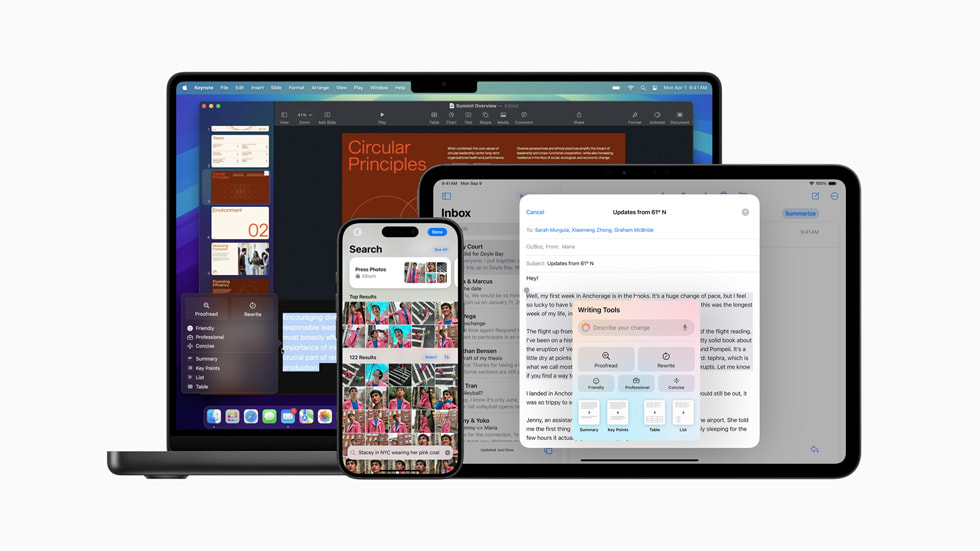
Digital precision is reaching a new baseline as Apple prepares to unveil iOS 27 on June 8 at the Worldwide Developers Conference. This update serves as a strategic catalyst for mobile photography, introducing a suite of AI photo editing tools powered by the Apple Intelligence engine. Beyond mere aesthetics, these calibrated features integrate Google’s Gemini technology to enhance Siri while providing users with professional-grade structural control over their visual content.
Strategic Overhaul: The New Apple Intelligence Interface
Apple is reportedly designing a dedicated “Apple Intelligence Tools” section within the existing Photos app interface. This architectural shift aims to centralize four primary capabilities: Extend, Enhance, Reframe, and Clean Up. These tools provide the technical precision required to transform raw captures into high-fidelity assets without external software dependencies.
Precision Tools: Extend and Enhance
The “Extend” feature allows users to generate synthetic pixel data around an original frame. By dragging the edges of a photo, the system strategically populates the empty space with contextually accurate imagery. Simultaneously, the “Enhance” tool utilizes AI photo editing algorithms to auto-calibrate lighting, color balance, and dynamic range, ensuring a high-quality baseline for every shot.
Reframe and Spatial Visualization
Specifically engineered for the Apple Vision Pro ecosystem, the “Reframe” tool addresses spatial photos. It allows users to shift the viewing perspective post-capture, adding a layer of depth to 3D image formats. Furthermore, the “Clean Up” tool continues its role as a core component, enabling the surgical removal of unwanted objects from any frame.
Development Challenges and Calibration Issues
Despite the high-intent design, internal testing has revealed structural hurdles. Reports indicate that “Extend” and “Reframe” have faced reliability deficits during the beta phase. Consequently, Apple may choose to delay these features or launch them with reduced capabilities to maintain system stability. Additionally, users have noted that the current “Clean Up” tool occasionally produces visual artifacts or inaccurate details in complex environments.
The Translation: Contextualizing Generative Editing
In “Next Gen” terms, Apple is moving from simple filters to “Generative Reconstruction.” This means your phone no longer just adjusts pixels; it understands the geometry of the scene. When you “Extend” a photo, the AI predicts what was likely outside the original camera lens. This eliminates the need for expensive third-party desktop software for basic content expansion.
Socio-Economic Impact: Empowering Pakistan’s Digital Economy
For the thousands of Pakistani freelancers, content creators, and social media entrepreneurs, these AI photo editing capabilities represent a significant gain in system efficiency. High-quality visual production is often a barrier to entry due to the cost of equipment and software. By democratizing professional editing tools directly on mobile hardware, Apple is effectively lowering the overhead for digital talent in urban and rural Pakistan alike.
The Forward Path: Our Expert Analysis
This development represents a Momentum Shift for the smartphone industry. While the reliability issues with “Extend” suggest that the technology is still being calibrated, the integration of Google’s Gemini and localized Apple Intelligence indicates a move toward a more open, yet precise, AI ecosystem. For Pakistan, staying ahead of these updates is not just about technology; it is about maintaining a competitive edge in the global digital market.








