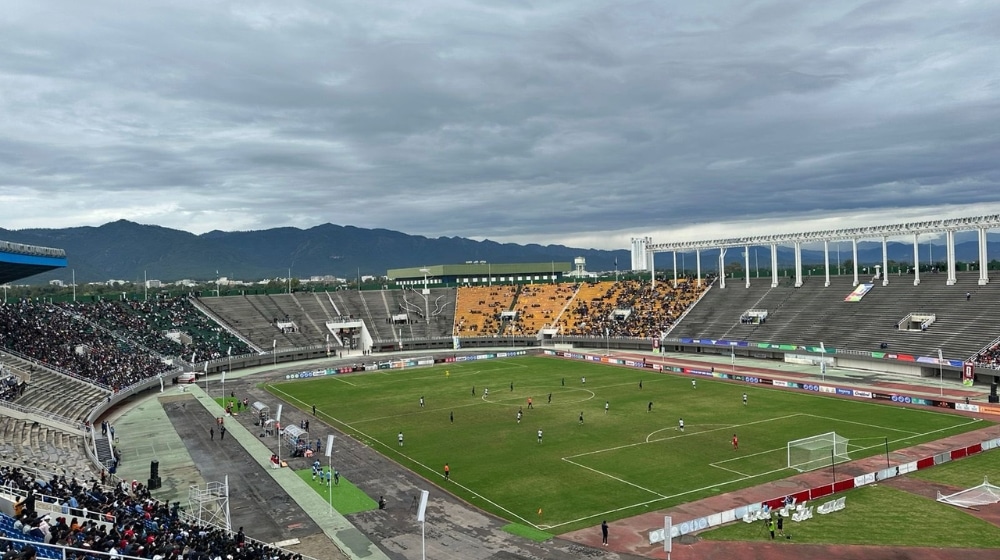
The Pakistan Football League (PFL) has successfully calibrated a landmark partnership with Dream Sports Group (DSG) to initiate a sustainable Pakistan football revival. This strategic collaboration focuses on resolving the critical deficit of FIFA-standard infrastructure by committing to the construction of 100 new sports grounds across the country by 2028. Consequently, this initiative establishes a precision-engineered pathway for grassroots talent to transition into the professional international arena.
The Infrastructure Blueprint for Pakistan Football Revival
Since the PFL launched in 2024, the primary obstacle to progress has been the systemic lack of modern facilities. PFL Chairman Farhan Ahmed Junejo emphasized that the absence of high-quality venues prevented the league from reaching its full operational baseline. To counteract this, the PFL and DSG will develop modern football academies adjacent to each of the 100 stadiums. These academies will serve as structural catalysts, providing aspiring players with calibrated training and professional exposure.

Strategically, this project aims to reignite national interest in the sport while addressing the dreams of millions of fans. DSG Chairman Qaiser Baryar described the agreement as a “game changer,” noting that the mission extends beyond physical construction to the building of dreams for young athletes. Furthermore, the PFL plans to reveal key leadership appointments and international expertise in the coming weeks to align with global best practices.
The Translation: Technical Clarity
In technical terms, the lack of “FIFA-standard” venues means Pakistan currently lacks fields with specific dimensions, drainage systems, and lighting required for official international matches. By building 100 of these facilities, the PFL is not just creating parks; they are installing a standardized industrial base for sports. This ensures that a player training in a rural district is practicing on the same precision surface as a professional in Europe, eliminating the technical disparity that currently hampers our national athletes.

The Socio-Economic Impact
This development will fundamentally alter the daily life of Pakistani citizens across urban and rural divides. Specifically, the construction phase will generate localized employment opportunities for engineers, architects, and laborers. For households, these stadiums represent safe, high-quality community hubs that promote physical health and social cohesion. For the professional class, the emergence of a standardized sports industry creates new markets in sports medicine, management, and digital broadcasting, providing a diverse economic boost to the national ecosystem.

The “Forward Path” (Opinion)
From a content strategist’s perspective, this initiative represents a definitive Momentum Shift for Pakistan. While previous attempts at football development were sporadic and lacked structural depth, the commitment to 100 facilities by 2028 provides a measurable baseline for success. This is not a mere stabilization move; it is an aggressive expansion of our national sporting capacity. If the PFL maintains this disciplined execution, Pakistan will transition from a sporting outlier to a regional football powerhouse within the decade.