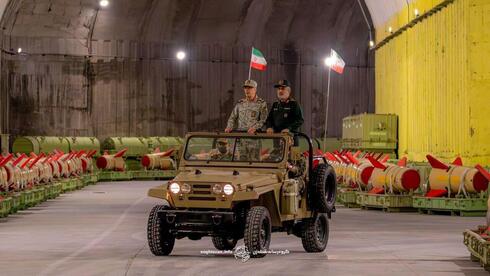
Understanding Iran’s Enduring Missile Capabilities
The calibrated assessment of regional defense postures is a critical element in maintaining strategic stability. Recent intelligence reports reveal that despite extensive interdictions, Iran retains substantial Iran missile capabilities and drone operational capacity, presenting a persistent factor in geopolitical calculations. These evaluations indicate that nearly 50% of its one-way attack drone assets and a significant portion of its missile launchers remain operational, underlining the complex challenge of regional security.
The Resilient Arsenal: An Overview
US intelligence assessments delineate Iran’s enduring military strength. Specifically, the nation still possesses roughly half of its total missile launchers and thousands of advanced attack drones. These assets persist even after weeks of intensive airstrikes executed by the United States and Israel. Furthermore, officials familiar with this intelligence, cited by CNN, confirm that while strikes have damaged Iran’s military infrastructure, they have not fully eliminated its capacity for regional missile and drone deployment.
A granular analysis suggests that approximately 50 percent of Iran’s lethal one-way attack drone capabilities endure. Correspondingly, a considerable number of missile launchers also remain intact. Some launchers, though potentially buried underground by recent airstrikes, are not categorized as fully destroyed. Consequently, their potential for redeployment requires continuous vigilance and strategic foresight.

The Translation (Clear Context)
Translating these intelligence findings clarifies the operational reality. When reports state “half of missile launchers operational,” it signifies a disruption, not a complete incapacitation. Iran has historically leveraged a robust network of underground tunnels and fortified caves, enabling it to protect mobile missile launchers and other crucial equipment. Therefore, merely striking sites does not guarantee the destruction of these assets; rather, it often prompts their relocation or deeper concealment.
Moreover, the distinction between “destruction of arsenal” and “reduction in attacks” is paramount. While US Central Command reports over 12,300 targets struck inside Iran and the elimination of senior Iranian leaders, this has primarily resulted in a significant drop in offensive operations. For instance, US Defense Secretary Pete Hegseth noted a 90% reduction in ballistic missile and drone attacks on US forces. However, this does not equate to the dismantling of Iran’s entire offensive capacity. The core Iran missile capabilities persist, albeit with a temporarily curtailed operational tempo.
The Socio-Economic Impact
The persistence of significant Iran missile capabilities has direct socio-economic implications for Pakistan. For students and professionals, continued regional instability translates into market volatility, particularly affecting global energy prices. Pakistan, as a net importer of oil, directly experiences the burden of price hikes, which impacts household budgets and the operational costs for businesses across urban and rural landscapes. Furthermore, the Strait of Hormuz, a vital oil transit route, remains vulnerable to threats from coastal defense cruise missiles and the Islamic Revolutionary Guard Corps’ naval forces. Any disruption here could severely impact Pakistan’s energy supply chain, leading to cascading economic effects.
Consequently, maintaining a robust regional security framework becomes a fiscal imperative. The allocation of resources towards defensive measures could divert investments from critical development sectors like education and infrastructure. This continuous state of heightened alert also introduces an element of uncertainty for foreign investors, potentially impeding economic growth and job creation within Pakistan.
The “Forward Path” (Opinion): A Stabilization Move with Persistent Challenges
This development fundamentally represents a “Stabilization Move” rather than a definitive “Momentum Shift” towards de-escalation. While the reduction in attack frequency is a positive short-term outcome, the core issue of Iran’s substantial, albeit degraded, Iran missile capabilities and drone arsenal remains unresolved. The strategic goal must transition from mere interdiction to systemic, verifiable disarmament or significant reorientation of these assets.
Structurally, this necessitates a multi-faceted approach involving calibrated diplomatic engagements alongside deterrent military postures. Future policy must focus on securing long-term regional stability, potentially through multilateral security agreements that transparently address these persistent threats. For Pakistan, maintaining a strong, independent foreign policy that prioritizes regional peace and economic integration is paramount to navigate these complex geopolitical currents effectively.