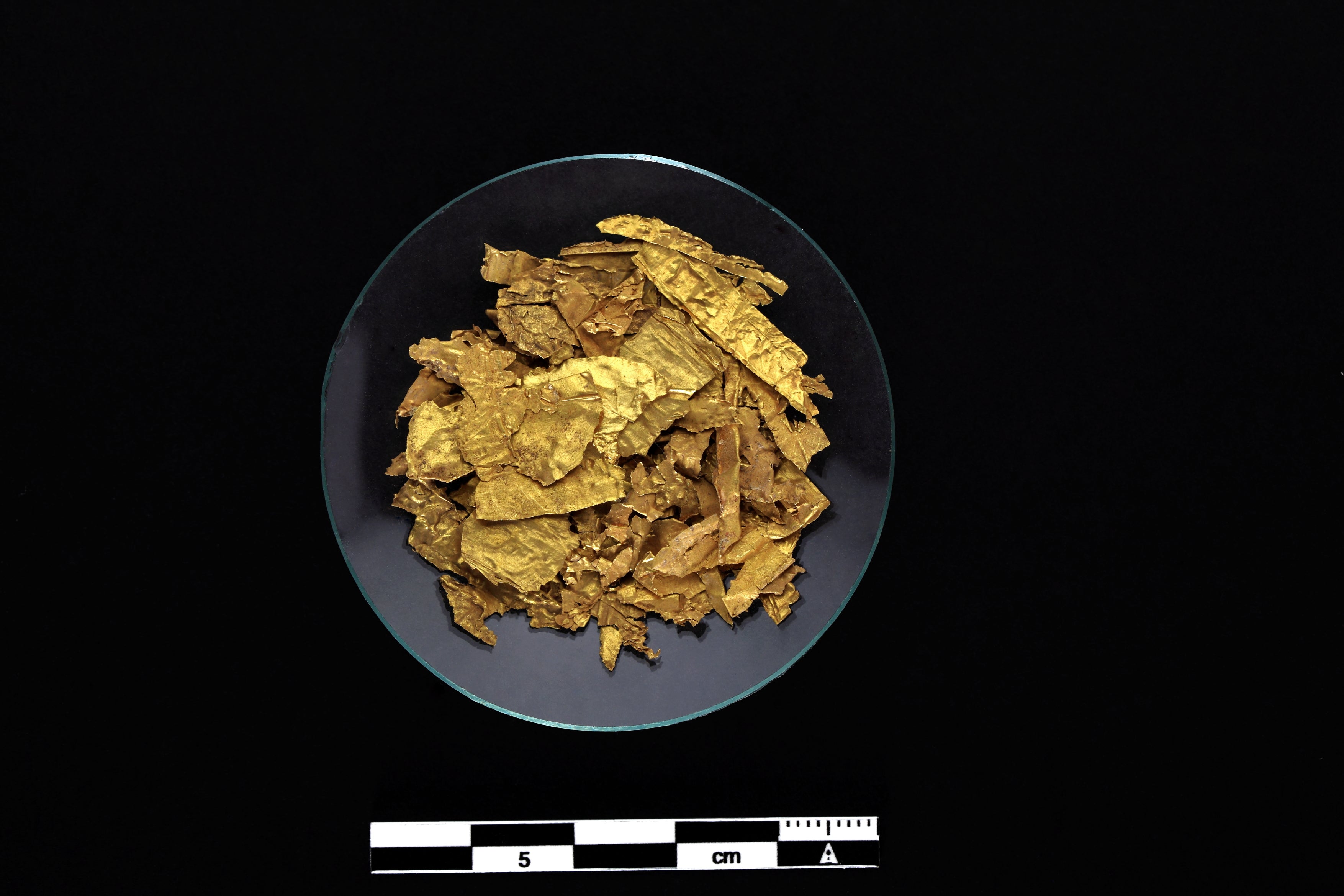
A foundational principle of chemistry has been challenged by a calibrated breakthrough: scientists working at CERN’s Large Hadron Collider have, quite unexpectedly, managed to turn lead into gold. This unprecedented atomic transmutation occurred during the ALICE experiment, where researchers simulated conditions akin to the early universe, yielding trace amounts of gold from lead nuclei. This discovery provides a new baseline for understanding fundamental particle interactions.
The Translation: Unpacking Atomic Transmutation
The breakthrough was not a deliberate attempt to create precious metals. Instead, the ALICE experiment aimed to study conditions mirroring those immediately following the Big Bang. Consequently, in the process, they produced approximately 29 trillionths of a gram of gold from lead. Fundamentally, this process hinges on atomic structure.
Lead and gold are distinct elements due to their differing proton counts. A gold atom, structurally, possesses exactly three fewer protons than a lead atom. Therefore, the removal of three protons from a lead nucleus effectively transforms it into gold. To achieve this, scientists accelerated lead nuclei to near light speed within the collider.
When these high-energy nuclei narrowly miss a head-on collision, they generate incredibly powerful electromagnetic fields. These fields are potent enough to destabilize and dislodge protons from the nuclei. In specific, rare instances, precisely three protons are stripped away, accomplishing the lead-to-gold conversion. Furthermore, this process can also yield other elements, such as mercury (two protons lost) and thallium (one proton lost).
Researchers estimate these collisions produce around 89,000 gold nuclei every second during lead beam operations. Intriguingly, the gold itself is not directly observed. Instead, specialized detectors, known as zero-degree calorimeters, count the dislodged protons. This calibrated data allows researchers to infer the formation of new elements, confirming the transmutation into gold.
The Socio-Economic Impact: Calibrating Future Frontiers
How does this change the daily life of a Pakistani citizen? While the immediate economic impact from trace amounts of gold is negligible, this scientific achievement holds significant long-term implications. This breakthrough directly enhances our fundamental understanding of matter and energy. Consequently, it informs advanced research in fields like material science and particle physics, which are critical for national advancement.
For students and professionals in Pakistan, this discovery serves as a potent catalyst for STEM engagement. It illustrates the profound potential of precision experimentation and theoretical physics, inspiring the next generation of innovators. Moreover, it underscores Pakistan’s interconnectedness with global scientific endeavors, showcasing the potential for our researchers to contribute to similar groundbreaking projects. This isn’t about monetary wealth, but about intellectual capital.
The Forward Path: A Momentum Shift in Particle Physics
This development undeniably represents a Momentum Shift. It moves beyond mere maintenance of existing scientific paradigms by experimentally validating predictions concerning atomic transmutation under extreme conditions. The precise control over proton stripping provides a structural blueprint for exploring exotic nuclear configurations. It pushes the baseline of our knowledge regarding the universe’s earliest moments.
The successful, albeit accidental, transmutation of lead into gold at CERN confirms advanced theoretical models. Furthermore, it opens new avenues for probing the strong nuclear force and the fundamental particles that constitute all matter. This precise observation is a critical step, affirming our capacity to manipulate and understand the very fabric of existence.