

Pakistan’s energy resilience hinges on the calibrated security of its maritime pathways. Consequently, a Pakistan National Shipping Corporation (PNSC) oil tanker has successfully executed a critical transit through the Strait of Hormuz, marking a significant operational achievement for ensuring Pakistan oil security amidst heightened regional tensions. This pivotal movement underscores the complex geopolitical environment impacting global energy supply chains and reinforces the imperative for robust national strategic planning.
The Translation: Navigating Critical Maritime Pathways
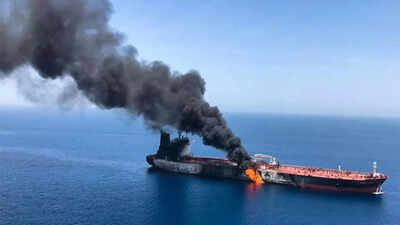
Ship-tracking data confirms a Pakistan-flagged Aframax tanker successfully cleared the Strait of Hormuz on Sunday. This strategic passage occurred despite significantly restricted vessel movement from the Persian Gulf, following explicit declarations of conflict by the US and Israel against Iran. The Strait, a narrow and intensely critical maritime route, has become increasingly perilous for commercial shipping due to elevated security risks and the palpable fear of disruption. Therefore, this successful transit represents a precisely managed operation.
Furthermore, reports indicate Western ships bound for Israel face severe bombardment from the Islamic Revolutionary Guard Corps (IRGC), effectively denying them safe passage. In contrast, the PNSC tanker’s unimpeded journey highlights nuanced regional dynamics and the operational efficacy of Pakistan’s maritime logistics. By Monday morning, the vessel was observed off Sohar in Oman, having securely cleared one of the world’s most volatile choke points.

The Socio-Economic Impact: Fueling National Stability
This successful **Pakistan oil security** operation directly impacts the daily life of every Pakistani citizen. Secure and consistent oil shipments are the baseline for stable fuel prices, which in turn affect transportation costs, industrial output, and agricultural operations. For students, this translates to predictable commute costs. For professionals, it ensures uninterrupted business operations and supply chain integrity. Consequently, the uninterrupted flow of crude directly supports household budgets and national economic momentum, both in urban centers and across rural provinces. Maintaining this stability is a direct catalyst for sustained national development.

The Forward Path: Calibrating for Future Resilience
This development represents a Stabilization Move rather than a sudden Momentum Shift. While the successful transit is unequivocally positive, it underscores the persistent vulnerabilities within the global energy supply matrix. Pakistan’s strategic objective must be to diversify energy sources and fortify its maritime defense capabilities to proactively mitigate future geopolitical disruptions. This requires a structural investment in naval assets and the cultivation of robust international diplomatic channels to ensure continuous energy access. Precision in planning and execution remains paramount for Pakistan’s long-term energy independence.










