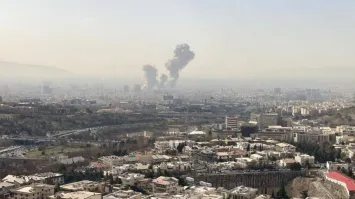
Calibrated Response: Analyzing the Abu Dhabi Explosions
The recent Abu Dhabi explosions represent a critical data point in the evolving geopolitical landscape of the Middle East. Multiple large explosions were reported as regional tensions escalated sharply. This rapid chain of military developments involved Israel, Iran, and the United States, underscoring the calibrated responses now defining regional security protocols. Consequently, understanding the structural implications of these events is paramount for national advancement.

The Translation: Deconstructing Regional Hostilities
Initially, Israel executed a series of missile strikes on Iran, with blasts heard in Tehran. Soon after, the United States, under President Donald Trump, confirmed a coordinated attack on Iran with Israel. In response, Iran reportedly launched a retaliatory operation. Claims suggest US military facilities within the UAE were among the intended targets. This sequence highlights a precise escalatory cycle. Furthermore, it indicates a shift in regional power dynamics that demands careful observation.
Witness Accounts and Strategic Alert Levels
Witness accounts and online reports detailed powerful blasts in the UAE capital. Concurrently, separate reports indicated missile interceptions over parts of the UAE and the wider Gulf region. Amidst this unfolding situation, the US mission in the UAE issued an advisory. This notice indicated heightened risk due to regional hostilities. For example, the U.S. Embassy in Abu Dhabi and the U.S. Consulate in Dubai instructed staff to shelter in place. American citizens in the UAE received similar advisories.

Beyond Abu Dhabi, unconfirmed claims of intercept activity emerged in Bahrain and near Saudi Arabia’s capital. This broader intelligence suggests a region-wide security alert. Moreover, it underscores the interconnectedness of Gulf security infrastructures. Such developments necessitate a strategic re-evaluation of defense postures across the region.
The Socio-Economic Impact: Daily Life in a Shifting Environment
These escalating tensions, marked by the Abu Dhabi explosions, directly impact the daily lives of Pakistani citizens residing and working in the UAE. Professionals may experience increased uncertainty regarding job stability and travel advisories. Students could face disruptions to educational programs if security conditions deteriorate. Households in urban centers, accustomed to stability, now confront a baseline of heightened alert. This necessitates a re-evaluation of personal security protocols. Consequently, remittances, a vital economic lifeline for many Pakistani families, could be affected by any sustained economic instability in the Gulf. This scenario demands resilient planning and proactive governmental advisories.

The Forward Path: Momentum Shift or Stabilization Move?
This development represents a Stabilization Move rather than a Momentum Shift. While the explicit attacks mark a significant escalation, the prompt defensive actions and advisories indicate an attempt to contain and manage the conflict. The involved entities are currently operating within established, albeit tense, strategic parameters. A true Momentum Shift would imply a wider, less predictable conflict initiation. Instead, this appears to be a calibrated exchange designed to re-establish deterrence. Pakistan must structurally prepare for prolonged regional uncertainty, emphasizing resilient economic and diplomatic strategies.