
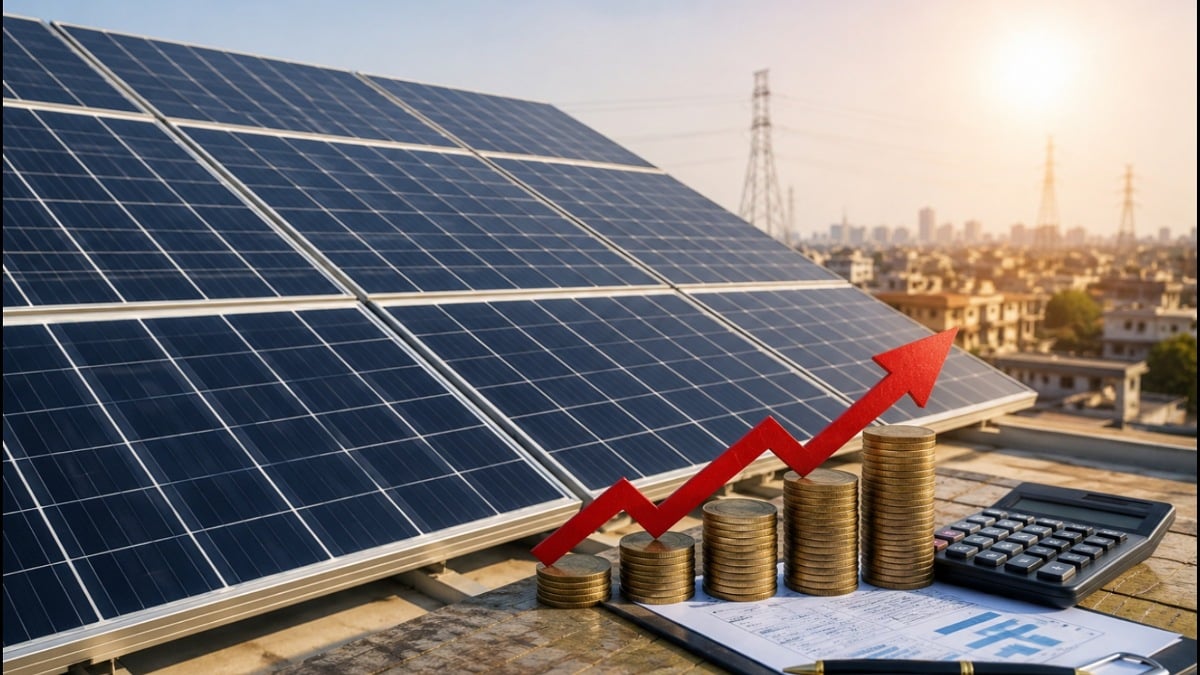
Solar system prices in Pakistan have undergone a rapid upward calibration, surging significantly just days before the federal budget announcement. Consequently, market data reveals that on-grid systems ranging from 5kW to 15kW are now commanding premiums of up to Rs. 200,000 over their previous baselines. This shift represents a strategic market reaction to fiscal uncertainty and potential policy adjustments in the upcoming renewable energy framework.
A Calibrated Look at Current Solar System Prices
The structural pricing for residential and commercial on-grid setups has shifted across all major categories. Notably, the 5kW capacity, a baseline for many middle-class households, has climbed by Rs. 150,000. Suppliers have adjusted these figures to mitigate risks associated with the impending fiscal year transition. Furthermore, larger systems are seeing even steeper hikes.
- 5kW System: Increased to Rs. 650,000 (up by Rs. 150,000).
- 7kW System: Increased to Rs. 825,000 (up by Rs. 200,000).
- 10kW System: Increased to Rs. 1.1 million (from Rs. 900,000).
- 12kW System: Current market price is Rs. 1.25 million.
- 15kW System: Increased to Rs. 1.45 million (from Rs. 1.3 million).

The Translation: Decoding Market Speculation
In “Next Gen” terms, this price volatility is a classic speculative hedge. Vendors are anticipating new taxes or import duties in the federal budget. By raising solar system prices now, the market is pricing in future “uncertainty.” It is critical to distinguish that these figures apply strictly to on-grid systems. Off-grid configurations, which require chemical battery storage, will inevitably demand higher capital expenditure due to separate hardware costs.
The Socio-Economic Impact: Pressure on the Digital Frontier
This development directly impacts the “payback period” for Pakistani professionals and households. As electricity tariffs remain a primary concern, the sudden capital barrier of an extra Rs. 200,000 may delay the transition to energy independence for many. Specifically, for urban families, this hike represents a 15-20% increase in the initial investment, potentially stalling the momentum of decentralized power generation across the country.

The Forward Path: Momentum Stabilization
We categorize this current trend as a Stabilization Move—a temporary friction point before a new fiscal baseline is established. While the price surge is a hurdle, the long-term logic of solar remains the most efficient catalyst for individual economic resilience. Investors should monitor the budget announcement closely, as it will determine whether these prices represent a permanent structural shift or a temporary market anomaly.








