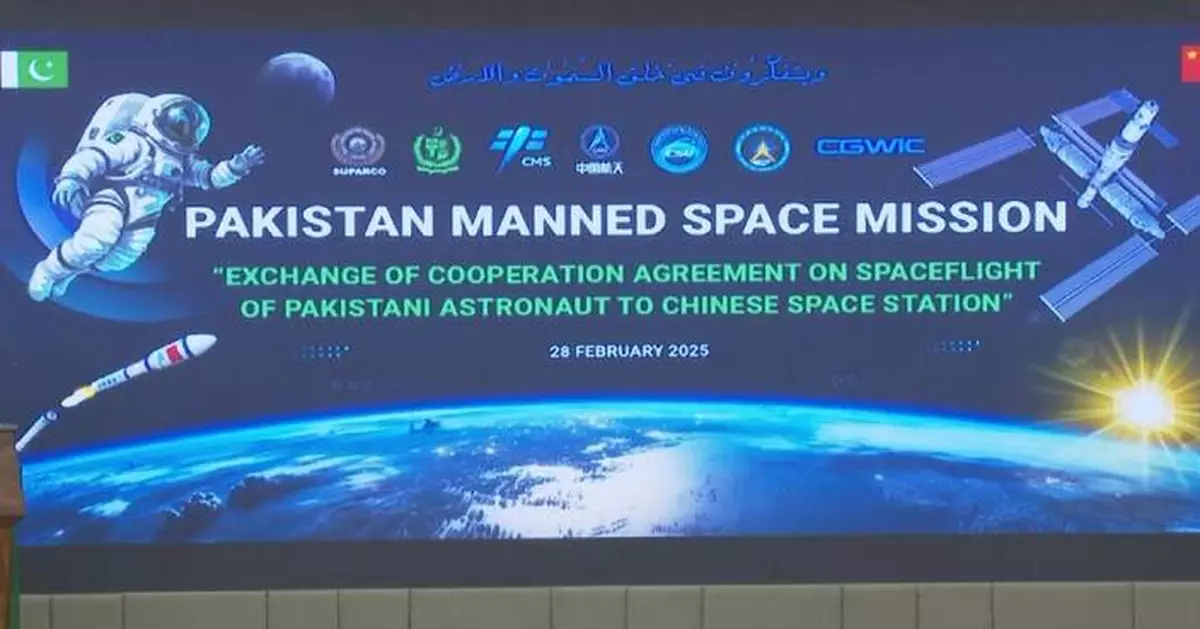
The global space race recently welcomed a calibrated entry as two Pakistani astronauts earned selection for China’s elite manned space program. This strategic milestone represents a structural shift in Pakistan’s technical ambitions, placing the nation within a select group of global players capable of human spaceflight. Candidates Muhammad Zeeshan Ali and Khurram Daud will soon transition to the Astronaut Centre of China for advanced training protocols.
The Strategic Launch of Pakistani Astronauts
Pakistan’s Space and Upper Atmosphere Research Commission (SUPARCO) officially confirmed that the two candidates represent the vanguard of the nation’s Manned Space Mission Program. This partnership with the China Manned Space Agency (CMSA) functions as a precision catalyst for national development. Following rigorous training, one candidate will serve as a payload specialist during a 2026 flight to the China Space Station (Tiangong).
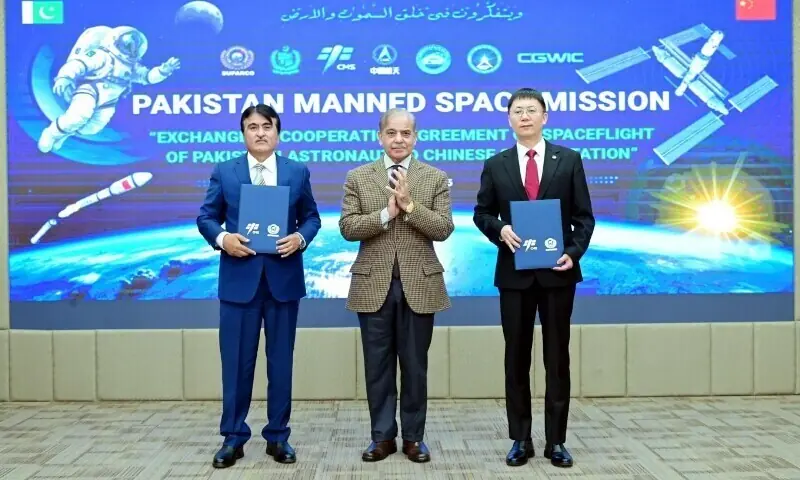
By integrating into this mission, Pakistan secures its status as the first foreign nation to send an astronaut to China’s independent orbital outpost. This development follows a systematic cooperation agreement signed in early 2025, ensuring that the selected Pakistani astronauts undergo the same elite training as their international counterparts.
Precision Training and Scientific Calibration
The mission objectives extend beyond symbolic presence. During their tenure in microgravity, the astronauts will execute critical experiments across multiple scientific disciplines. These operations will target advancements in fluid physics, biotechnology, and material science—sectors vital for industrial innovation in Pakistan.

SUPARCO engineers designed these experiments to provide baseline data for climate resilience and food security. The mission leverages the unique environment of low-earth orbit to test technological solutions that are impossible to replicate on the ground. Consequently, these results will directly influence Pakistan’s agricultural and industrial frameworks.

The Translation: Decoding the Manned Space Mission
While the headlines focus on the journey, the logic behind this mission is “Scientific Sovereignty.” By sending Pakistani astronauts to a space station, Pakistan is essentially renting a laboratory in orbit. This allows SUPARCO to skip decades of hardware development and go straight to high-level research. The “payload specialist” role means our personnel are there to conduct specific, Pakistan-centric science, not just to observe.
Socio-Economic Impact: Beyond the Stratosphere
For the average Pakistani citizen, this development acts as a catalyst for the STEM economy. It creates a “trickle-down” effect of technical knowledge. The biotechnology experiments in space could lead to heat-resistant crops for local farmers, while material science breakthroughs may enhance local manufacturing precision. Furthermore, the psychological impact on the youth serves as a powerful recruitment tool for the next generation of engineers and scientists.
The Forward Path: A Momentum Shift in National Capability
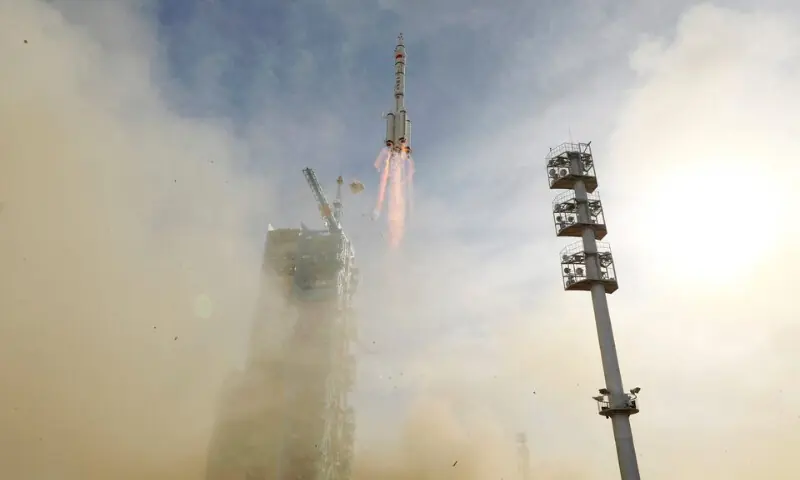
This development represents a clear Momentum Shift. Pakistan is moving from a passive observer of space technology to an active participant in human exploration. This is not a maintenance move; it is a strategic expansion of the national frontier. As the 2026 launch window approaches, the focus must remain on the structural integration of the data gathered in orbit into our domestic industries.