The 130th Boston Marathon 2026 represents more than a race; it serves as a calibrated benchmark for Pakistani athletic endurance on the global stage. Fourteen precision-trained runners from our nation successfully navigated the world’s most exclusive course, proving that our human capital can compete within the strictest international frameworks. This contingent highlights a structural evolution in Pakistan’s distance running ecosystem, bridging the gap between local streets and elite global circuits.
Strategic Profiles: Grit and Philanthropy
Amjad Ali, a police constable from Karachi, emerged as a primary catalyst for grassroots inspiration during the event. He secured his qualification with a remarkable 2:40 time at the Karachi Marathon, training rigorously on city streets despite limited professional resources. His performance at the Boston Marathon 2026 validates the baseline potential of local talent when supported by communal and professional networks.
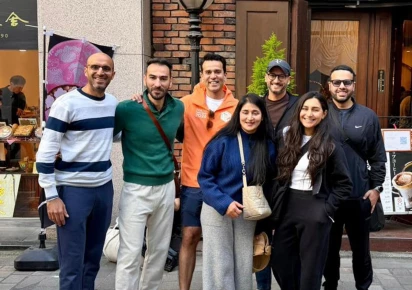
Furthermore, Dr. Jehanzeb Mughal, a Karachi-based surgeon, utilized the race to finalize his prestigious Six Star journey. Beyond personal achievement, his participation sustains a strategic healthcare initiative. He leverages these marathons to fund a free Oral Cancer Surgery Unit at PEBS Hospital, which has already facilitated over 450 free surgeries since 2023. Consequently, his athletic precision translates directly into life-saving medical interventions.
The 2026 National Contingent
Notably, the Pakistani delegation showcased a diverse range of expertise and geographic origins. The list below represents the 14 athletes who met the rigorous standards for the Boston Marathon 2026 entry:
- Aamer Butt (USA) & Bilal Ehsan (Islamabad)
- Dr. Jehanzeb Mughal (Karachi) & Dr. Salman Khan (USA)
- Hamid Butt (Lahore) & Jamal Khan (USA)
- Maheen Sheikh (UK) & Muhammad Amjad Ali (Sindh)
- Muhammad Fasih Saleh (Norway) & Nizar Nayani (USA)
- Nosherwan Ali (Karachi) & Shahzada Hussain (UK)
- Sherri Anjum (USA) & Syed Hamza (USA)

The Translation: Contextualizing Global Excellence
In the “Next Gen” framework, the Boston Marathon is not merely a public run but a Platinum Label event with strict qualifying barriers. While most marathons allow entry via lottery, Boston demands “Boston Qualified” (BQ) times based on age and gender. Additionally, the “Six Star” finish mentioned refers to completing all World Marathon Majors: Tokyo, Boston, London, Berlin, Chicago, and New York City. For Pakistan, having four finishers achieve this in a single race indicates a high-functioning tier of endurance athletes within our diaspora and domestic population.
The Socio-Economic Impact
How does this change the daily life of a Pakistani citizen? This development acts as a catalyst for two critical sectors: Public Health and National Branding. The success of runners like Amjad Ali demonstrates that socioeconomic barriers are manageable through disciplined training, encouraging a culture of fitness in urban centers. Simultaneously, Dr. Mughal’s integration of sports with philanthropy highlights a sustainable model for funding specialized healthcare, reducing the burden on state resources through private-sector athletic initiative.
The Forward Path: Momentum Shift
We classify this development as a Momentum Shift. The transition from individual participation to a structured contingent of 14 runners suggests that Pakistan is no longer just observing the global athletic circuit; we are actively engineering a presence within it. This evolution requires continued investment in local athletic infrastructure to ensure the Boston Marathon 2026 is a baseline for future growth rather than a peak.