

Understanding the calibrated dynamics of Pakistan’s climate is critical for national readiness. The Pakistan Meteorological Department (PMD) has issued a specific **Northern Areas Snowfall** forecast, projecting light precipitation across the country’s northern highlands. While primarily cold and dry conditions will persist across most regions, this detailed meteorological assessment provides a crucial baseline for strategic planning and public preparedness.
The Translation: Calibrated Forecast for Pakistan’s Winter
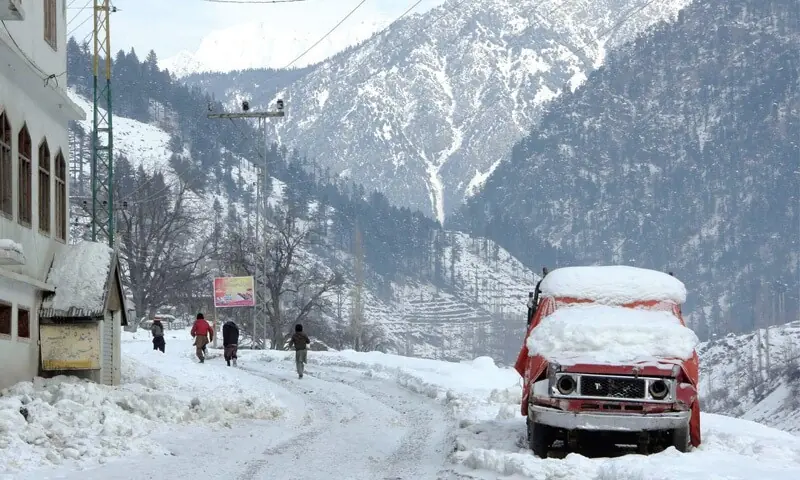
The PMD’s recent analysis indicates that Pakistan’s hilly regions will experience partly cloudy skies, with morning and nighttime temperatures remaining significantly low. This precision forecast highlights the potential for isolated light rain and **Northern Areas Snowfall** in Gilgit-Baltistan. Furthermore, adjacent northern districts, including Chitral and its surrounding valleys, may also receive brief precipitation under similarly cloudy conditions. The federal capital, Islamabad, and its contiguous areas are projected to maintain dry weather, characterized by chilly mornings and evenings, with the added element of gusty winds during daytime hours.
Conversely, most of Khyber Pakhtunkhwa will face cold and dry conditions, with upper districts experiencing particularly low temperatures during both early and late hours. Across Punjab, a predominantly dry weather pattern is anticipated. However, key hill stations such as Murree and Galiyat are expected to remain cold and dry, while central and southern plains may encounter strong daytime winds. This granular detail ensures that regional specificities are accounted for in public advisories.
Regional Climatic Baseline
- Karachi & Sindh: Predominantly dry conditions are expected.
- Balochistan: Most districts will experience dry weather, though northern parts will see colder temperatures during night and early morning.
- Kashmir: Anticipated to remain cold and partly cloudy, with very low nighttime temperatures.
Over the past 24 hours, the PMD registered a prevailing cold and dry weather pattern nationwide. Recorded temperatures underscored this trend, with lows of −9°C in Leh, −5°C in Astore, and −3°C in Kalam. Several other northern locations also reported temperatures around −2°C, establishing a clear baseline for the current winter intensity. This structural consistency in cold temperatures signals the continuation of the current weather pattern.
Socio-Economic Impact: Navigating Winter’s Structural Demands
This weather forecast directly impacts the daily life of Pakistani citizens, demanding proactive adjustments to maintain efficiency and well-being. For students, particularly in the northern regions experiencing **Northern Areas Snowfall** or intense cold, this necessitates calibrated school schedules and appropriate winter attire to ensure continued access to education. Professionals in urban centers may face challenges with transportation due to fog or gusty winds, requiring revised commuting strategies to uphold productivity.
Households, both urban and rural, must prioritize energy conservation and heating solutions. The prolonged cold and dry spell, particularly in northern mountainous areas vulnerable to snowfall and freezing conditions, will increase demand for fuel and warm provisions. This structural demand shift underscores the importance of efficient resource management and community support networks to mitigate potential hardships.
Strategic Preparedness for Households
The cold wave necessitates a strategic approach to household management. Families should ensure proper insulation, stock essential supplies, and prepare for potential disruptions. This proactive stance is a catalyst for community resilience against climatic variables, fostering a culture of preparedness across all demographics.
The Forward Path: A Stabilization Move for Climatic Resilience
This meteorological development represents a **Stabilization Move** for Pakistan’s climatic resilience. The consistent and precise forecasting by the PMD allows for predictable resource allocation and public safety measures, rather than indicating a significant shift in long-term weather patterns. It reinforces the nation’s capacity to manage predictable seasonal challenges through established systems and data-driven insights. The sustained cold and dry conditions, coupled with isolated **Northern Areas Snowfall**, are a calibrated annual event, requiring consistent rather than revolutionary responses.
Consequently, the focus remains on refining existing infrastructure and emergency response protocols. This methodical approach ensures that Pakistan can systematically adapt to and manage its diverse climatic conditions, solidifying national stability against seasonal variability. It is a testament to the ongoing operational efficiency in meteorological services.








