The United States has strategically expanded its US visa bond requirement, introducing security bonds up to $15,000 for visa applicants from 12 additional nations. This calibrated measure, effective April 2, targets B-1 (business) and B-2 (tourist) visa categories, signifying a structural shift in immigration protocols under the Trump administration. Consequently, this initiative aims to enhance system efficiency by deterring visa overstays and ensuring timely departures, profoundly impacting global travel dynamics and necessitating precise compliance from applicants.
The Translation: Deconstructing the New US Visa Bond Policy
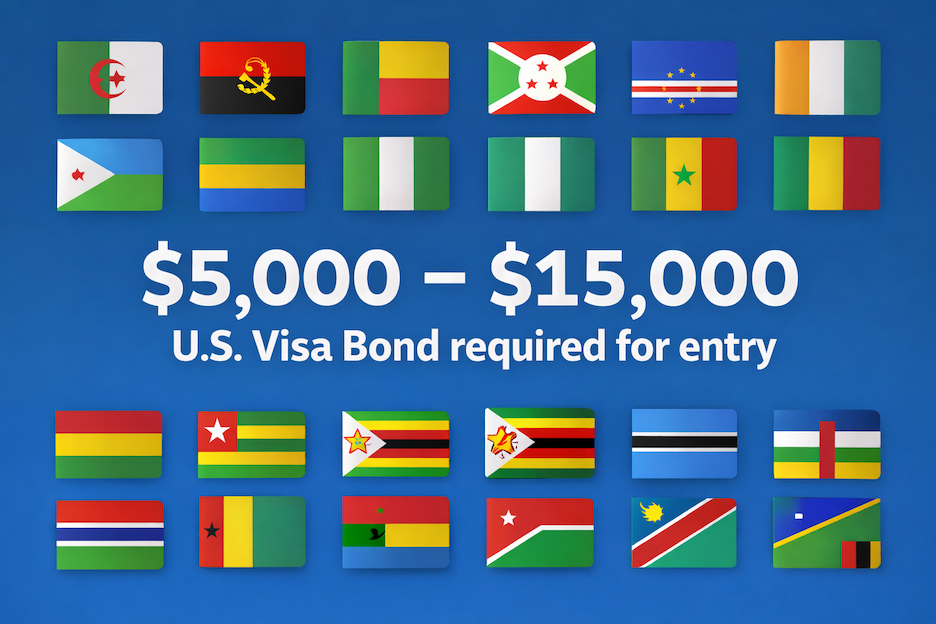
This directive mandates a security bond, ranging from $5,000 to $15,000, for specific non-immigrant visa applicants. The exact bond amount is determined during the visa interview, reflecting an individualized assessment of potential risk. Furthermore, this expansion brings the total number of countries under the visa bond program to approximately 50, with a notable concentration from African nations. This development underscores a proactive stance on immigration management.
Structural Changes: Nations Under the Enhanced Bond Requirement
The recent additions to the list of countries subject to the US visa bond requirement include:
- Cambodia
- Ethiopia
- Georgia
- Grenada
- Lesotho
- Mauritius
- Mongolia
- Mozambique
- Nicaragua
- Papua New Guinea
- Seychelles
- Tunisia
This systematic expansion reflects a broader strategy to recalibrate international travel guidelines.
The Socio-Economic Impact: Calibrating Daily Life for Pakistani Citizens
While Pakistan is not among the newly listed countries, the broader tightening of U.S. immigration policies creates a ripple effect across the global community. For Pakistani students and professionals aspiring to visit the U.S. for education or business, these changes signal an era of heightened scrutiny and potential financial barriers for other nationalities. Consequently, this may influence perceptions of accessibility and necessitate more extensive financial planning for future international travel. Households across Pakistan, especially those with family members considering U.S. visits, must now factor in the increasing complexities of global mobility, leading to potential shifts in educational and professional strategies.

The ‘Forward Path’: Strategic Immigration Management
This development represents a Stabilization Move. The U.S. government is enacting a precision-driven policy to fortify its immigration baseline. The primary objective is to mitigate visa overstays, thereby enhancing the integrity of its border management systems. The data explicitly states that the bond amount is fully refundable upon compliance with visa conditions, demonstrating a strategic approach rather than a punitive one. Ultimately, this structural adjustment aims to optimize national security and resource allocation by ensuring adherence to authorized stay durations. The broader acceleration of immigration policies by the Trump administration since January 2025 further underlines a comprehensive recalibration of both legal and illegal immigration frameworks.
Understanding the Mechanism: How the Visa Bond Operates
U.S. officials assert that the program’s core purpose is to prevent visitors from overstaying their authorized periods. Importantly, the payment of a bond does not guarantee visa approval; it is an additional security layer. Should an application be rejected, or if the traveler departs the U.S. within the stipulated timeframe, the bond amount is fully refunded. This mechanism underscores a precise, outcome-oriented approach to immigration compliance.