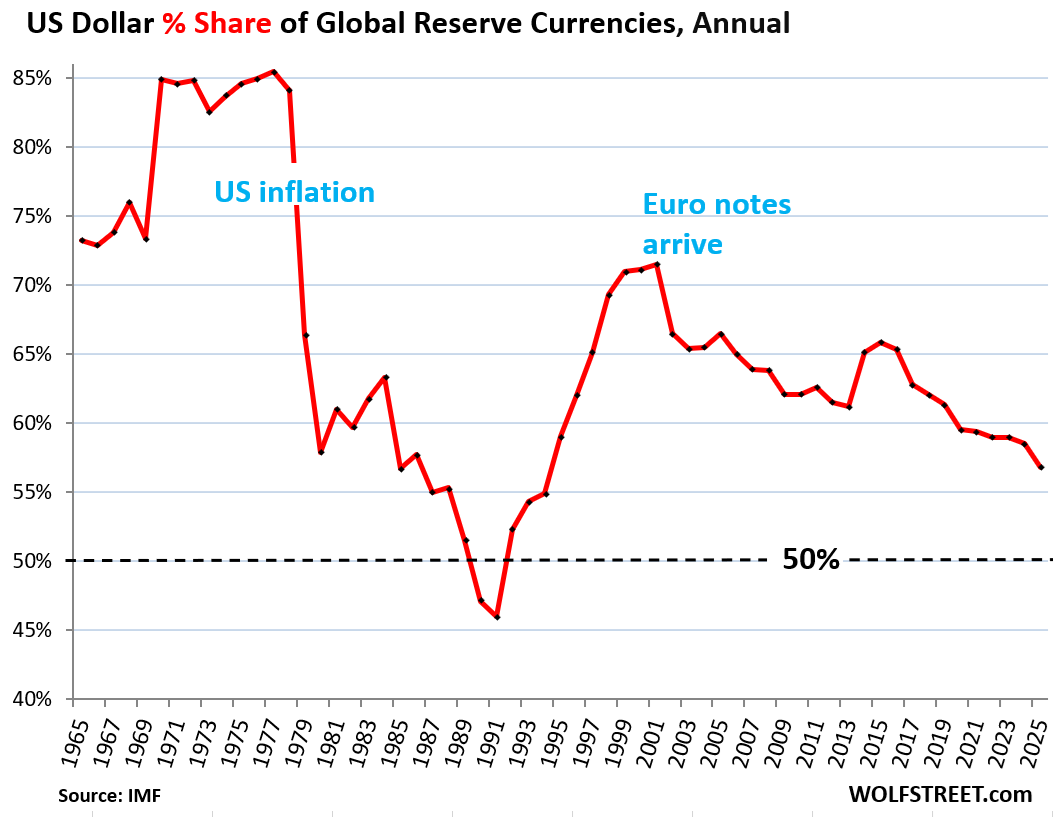
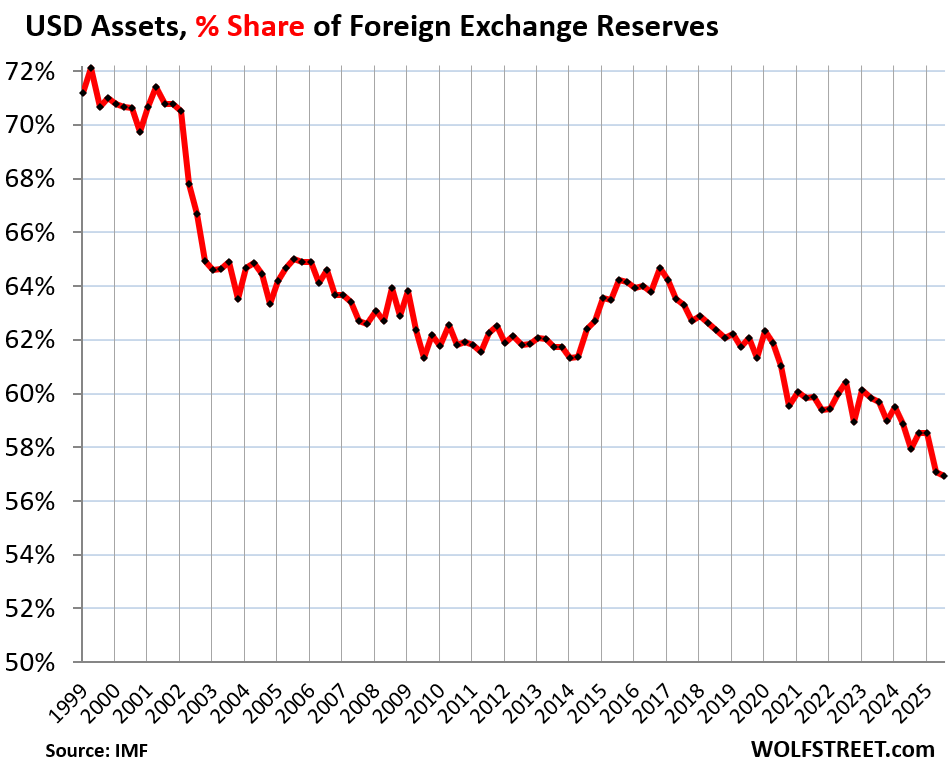
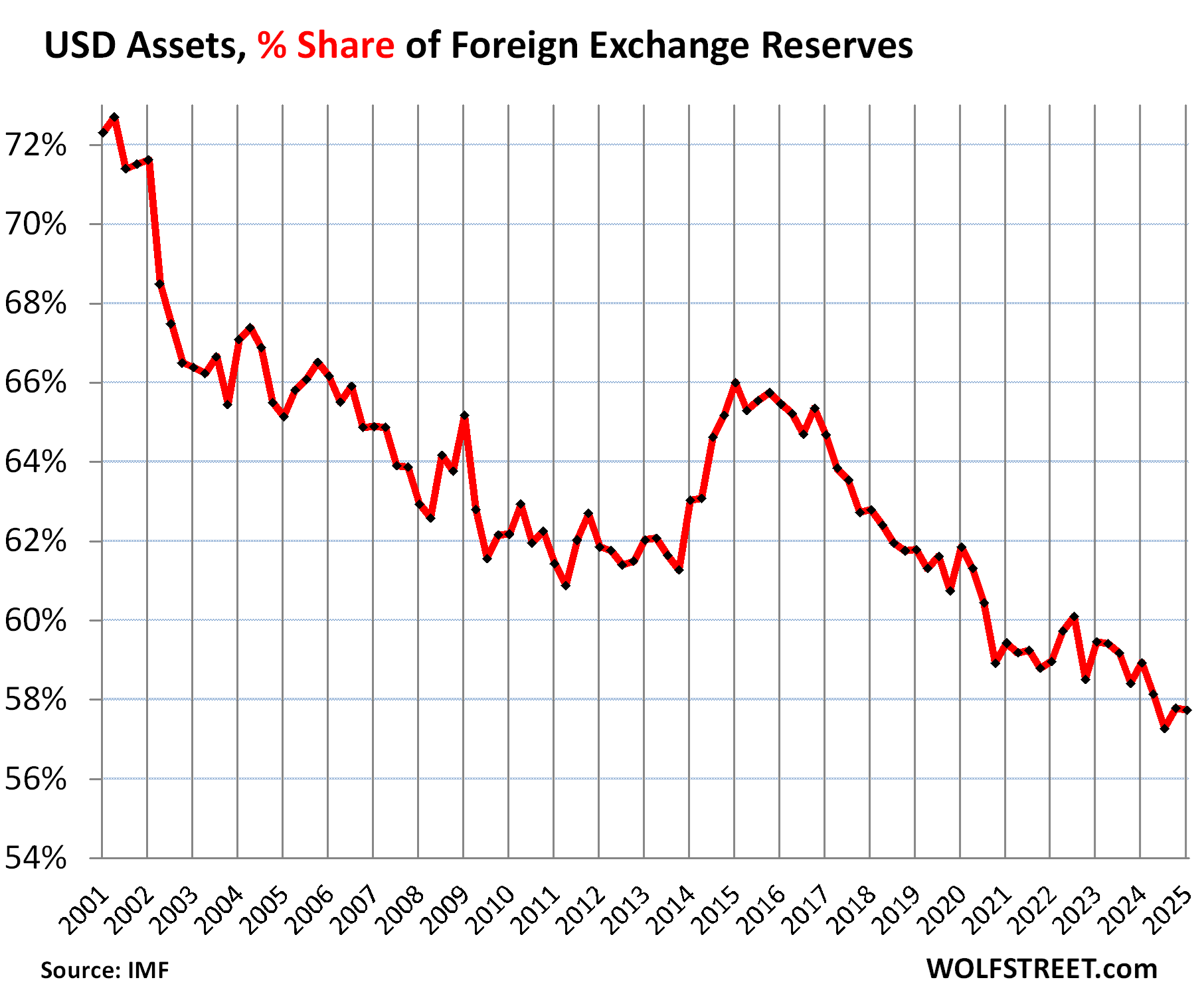
The global financial architecture is undergoing a calibrated global reserve diversification, as the US dollar’s share of international foreign exchange reserves plummets to a 30-year low. Data from the International Monetary Fund (IMF) for Q4 2025 reveals the dollar now accounts for merely 56.8 percent of allocated global reserves, a sharp contraction from 71 percent in 2001. This structural adjustment signals a clear move by central banks worldwide to strategically rebalance their holdings, increasingly favoring precious metals like gold over traditional fiat currencies.
Decoding the New Global Reserve Dynamics
The recent IMF COFER data signifies more than just a statistical shift; it represents a fundamental re-evaluation of sovereign asset management. This sustained global reserve diversification trend means that nations are actively reducing their reliance on any single currency. Instead, they are distributing their wealth across a broader spectrum of assets, primarily due to heightened geopolitical risks and the imperative for economic resilience. This calibrated approach aims to mitigate systemic vulnerabilities inherent in a unipolar reserve system.
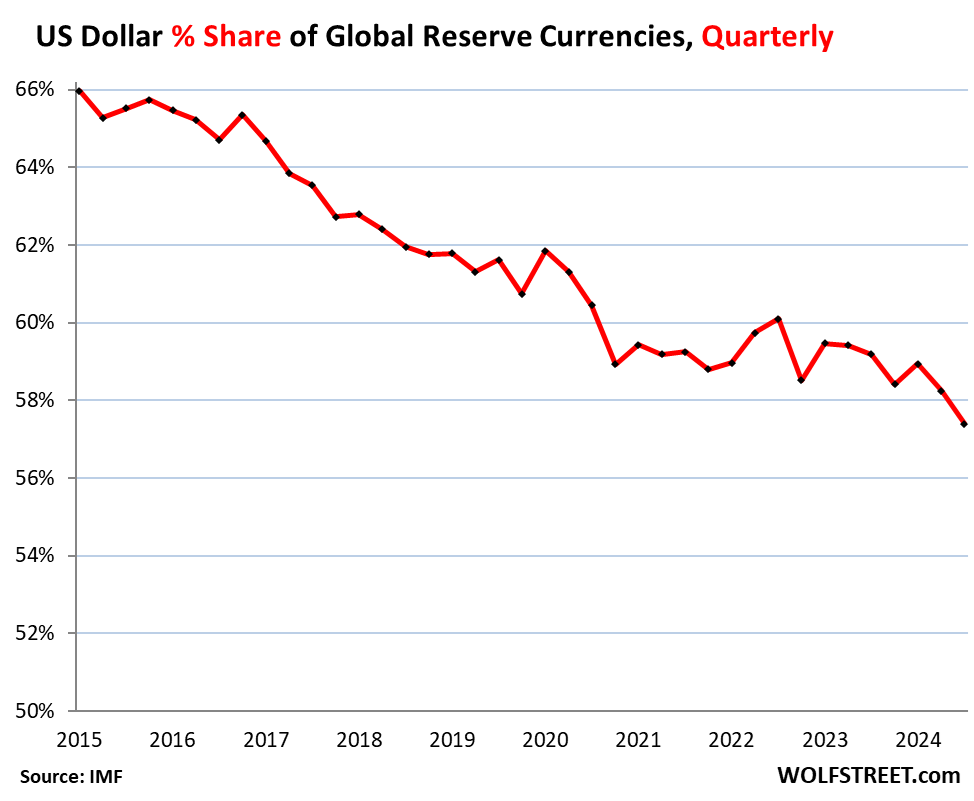
Historically, the dollar’s position was virtually unchallenged. However, this is changing. No single currency has directly replaced the dollar; rather, central banks are strategically diversifying across multiple alternatives. For example, the Euro maintains a significant share around 20-21 percent. Furthermore, other currencies such as the Japanese Yen, British Pound, Chinese Yuan, Canadian Dollar, Australian Dollar, and Swiss Franc have recorded smaller, yet notable, gains.
The Gold Catalyst: A Precision Asset in Global Reserve Diversification
Consequently, this diversification extends beyond fiat currencies. Central banks have sharply increased their gold reserves, positioning gold not as a foreign currency, but as a preferred diversification asset over the past decade. Official global gold purchases by central banks have exceeded an unprecedented 1,000 tons annually for three consecutive years. This sustained acquisition underscores a deliberate strategy to anchor national reserves with tangible, universally valued assets, further driving global reserve diversification.
Socio-Economic Impact: Fortifying Pakistan’s Financial Future Through Strategic Diversification
For the average Pakistani citizen, this macro-economic shift translates directly into considerations for national economic stability. A diversified national reserve portfolio, less susceptible to external currency fluctuations, provides a more robust buffer against imported inflation and currency depreciation. This can, consequently, stabilize prices of essential goods, support local businesses through more predictable import costs, and protect household savings. Furthermore, a strategic pivot towards gold within Pakistan’s reserves can enhance long-term economic security, fostering a more predictable environment for students pursuing education and professionals planning their financial futures, thereby strengthening global reserve diversification at a national level.
The Forward Path: A Momentum Shift Towards Multipolarity
This development unequivocally represents a Momentum Shift for global finance, not merely a stabilization move. The sustained increase in central bank gold purchases, exceeding 1,000 tons annually for three consecutive years, illustrates a decisive, structural pivot. Geopolitical events, particularly the freezing of significant Russian central bank assets in 2022, catalyzed this acceleration. While the US dollar retains substantial influence due to market depth, the trajectory indicates a deliberate construction of a multipolar reserve system. Pakistan must strategically calibrate its reserve management to fully capitalize on this evolving landscape, prioritizing assets that offer intrinsic value and systemic independence and contributing to comprehensive global reserve diversification.