

The United Kingdom has strategically increased the minimum UK PhD Stipend by 4.9% to £21,805 for the 2026–27 academic year, a critical move by UK Research and Innovation (UKRI) to fortify the nation’s research ecosystem. This calibrated adjustment, effective October 1, builds upon an 8% rise in 2025–26, aiming to align doctoral allowances with living wages and enhance support for postgraduate researchers. This structural enhancement directly impacts prospective Pakistani scholars eyeing advanced research opportunities in the UK, signaling a more financially viable pathway to global scientific contributions.
Decoding the Stipend Uplift: A Structural Advancement for Doctoral Research
UKRI’s decision translates to a baseline increase of £1,025 for doctoral students, moving from £20,780 to £21,805. For London-based scholars, the stipend now reaches £23,805, inclusive of an unchanged £2,000 London weighting. This move is not merely an increment; instead, it represents a strategic recalibration, ensuring that the financial conditions for advanced research reflect contemporary economic realities. Previously, the stipend remained largely static since 2006, creating significant financial strain for students navigating rising living costs. This targeted increment therefore aims to alleviate such pressures, allowing researchers to concentrate more effectively on their pivotal work.
Calibrating Opportunities: How the UK PhD Stipend Boost Benefits Pakistani Scholars
This UK PhD Stipend adjustment profoundly affects Pakistani students and professionals aspiring to pursue doctoral studies in the United Kingdom. Firstly, the increased stipend provides a more robust financial foundation, mitigating concerns over daily expenses and living costs. This enhanced economic stability allows scholars to fully immerse themselves in their research, unburdened by excessive financial anxieties. Consequently, it elevates the attractiveness of UK universities, potentially drawing a larger pool of talented Pakistani researchers. Furthermore, professionals considering a return to academia for advanced degrees will find significant incentive in this financial clarity, reducing the opportunity cost associated with pausing their careers.
However, universities still face funding shortfalls. While institutions receive a 4.6% increase in fees, reaching £5,238 for doctoral training, these grants cover less than half of the total costs. Therefore, prospective students must strategically evaluate funding packages and consider comprehensive financial planning. This critical context underscores the importance of a holistic approach to securing doctoral opportunities abroad.

Broader Implications for National Advancement
This increased stipend also carries broader implications for Pakistan’s intellectual capital. A greater number of Pakistani graduates pursuing and completing PhDs in the UK translates into a higher influx of specialized knowledge and research methodologies back into Pakistan. These returning scholars act as catalysts for innovation, strengthening local research institutions, and fostering a culture of advanced scientific inquiry. Consequently, this development aligns with Pakistan’s strategic goal of enhancing its STEM capabilities and participating more vigorously in the global knowledge economy, thereby accelerating our national progress.
Momentum Shift: Propelling Pakistan’s Research Trajectory
This development unequivocally represents a Momentum Shift. The consistent efforts by UKRI to improve PhD funding UK conditions for doctoral students signal a fundamental re-evaluation of the value of advanced research. While challenges persist, particularly concerning the sustainability of university funding and domestic participation, the deliberate increase in the UK PhD Stipend acts as a crucial catalyst. This structural reinforcement ensures that academic pursuits remain competitive and accessible. For Pakistan, this signifies an opportune moment to strategically invest in facilitating our brightest minds towards these enhanced global research platforms, thereby accelerating our own national advancement in critical scientific domains.
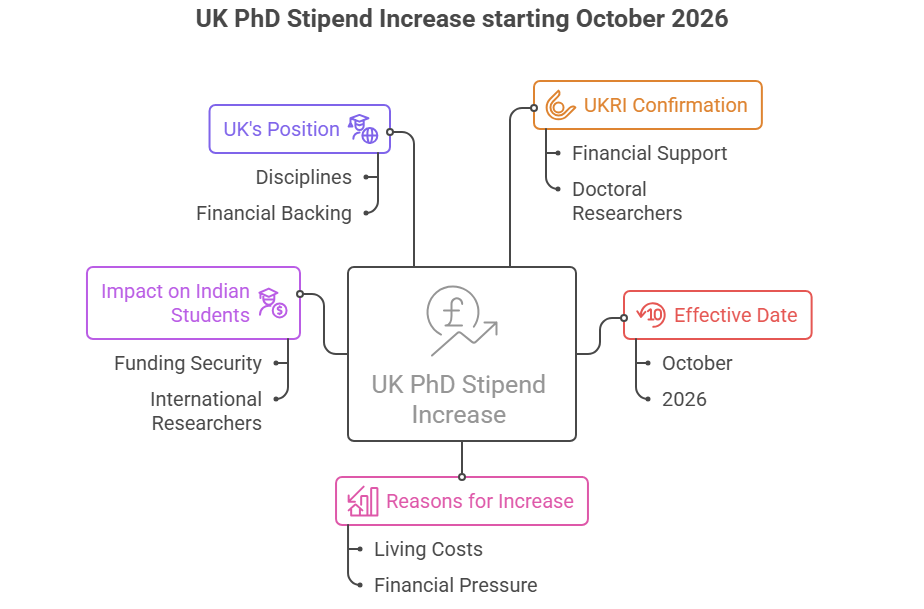









Wow — this is such a welcome update for PhD students! It’s great to see the UK raising the minimum stipend to £21,805 a year starting this academic cycle, especially when the cost of living keeps creeping up. It’s refreshing to see steps being taken to make doctoral study a bit more financially sustainable, whether you’re in science labs, humanities libraries, or anything in between. More money in the pocket means more focus on research and less stress figuring out how to cover rent and bills.
And what’s even better is that this isn’t just a tiny adjustment — it’s another above‑inflation bump that shows UK Research and Innovation is trying to keep pace with real costs, alongside other support changes that matter to students. While there’s always room for more, this kind of increase makes a real difference for anyone thinking about (or already navigating) the ups and downs of a PhD journey. Here’s hoping it encourages even more talented researchers to pursue their ideas without worrying quite so much about making ends meet.