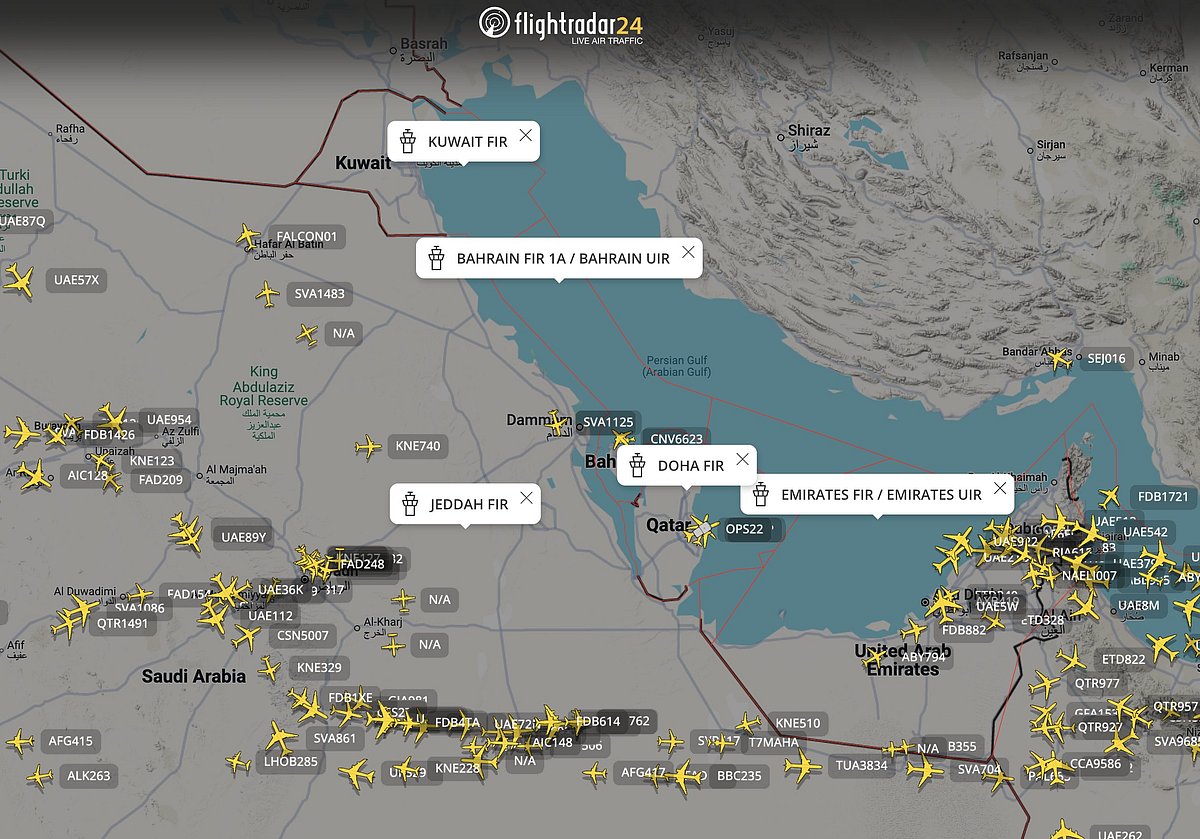
Pakistan’s operational efficiency is directly influenced by regional stability. Consequently, the recent Gulf airspace closure by the UAE, Qatar, and Kuwait marks a critical development, stemming from a sharp escalation in military confrontation involving Iran, the United States, and Israel. This strategic move, implemented on February 28, 2026, reflects a precautionary measure amidst heightened risks of cross-border military activity. Understanding these calibrated responses is essential for anticipating broader geopolitical and economic impacts.
The Translation: Deconstructing Airspace Protocols
On February 28, 2026, the United States and Israel initiated coordinated military strikes across Iran, targeting specific locations in Tehran and other cities. Leaders defined this as a joint operation designed to counter perceived threats emanating from Tehran. This action precisely marked a significant escalation following months of rising tensions and prior confrontations between these nations.
In a rapid, decisive response, Iran’s Islamic Revolutionary Guard Corps (IRGC) reportedly targeted U.S. military bases situated within Kuwait, the UAE, and Qatar. Iranian authorities classified these attacks as a “decisive response” to the strikes against their territory. Furthermore, the decision by Gulf states to implement temporary airspace restrictions is a direct, precautionary protocol. This structural adjustment mitigates risks associated with potential missile or drone activity across borders, prioritizing civilian safety and flight path integrity.

Understanding Regional Security Architecture
This sequence of events underscores the fragile security architecture within the Middle East. The coordinated strikes and subsequent retaliatory actions have necessitated immediate, calibrated responses from neighboring states. Therefore, the Gulf airspace closure functions as a baseline measure to de-escalate potential aerial confrontations, ensuring that civilian aviation remains outside the immediate conflict zone.
Socio-Economic Impact: Navigating Disruption for Pakistanis
How does this change the daily life of a Pakistani citizen? This Gulf airspace closure directly impacts Pakistani students, professionals, and households. Specifically, individuals relying on air travel for business, education, or family visits face significant disruptions. Airlines are actively reviewing and re-routing flight paths, consequently leading to delays, cancellations, and increased travel times. Professionals engaged in regional trade or expatriate workers will experience compounded logistical challenges.
For urban and rural Pakistan, such disruptions have broader economic implications. Supply chains that utilize regional air cargo routes may face delays, potentially impacting the availability and cost of imported goods. Furthermore, the psychological impact of regional instability can deter investment and tourism, affecting economic growth. Proactive measures, such as consulting carrier updates and travel advisories, become paramount for citizens planning international travel.
Adapting to New Travel Paradigms
This evolving security landscape mandates adaptive strategies for Pakistani citizens. Understanding the structural changes in regional air travel is crucial. The need for precise information regarding flight status and alternative routes has become a critical element of travel planning. Government entities and airlines are working to provide clarity, yet individual preparedness remains a key factor in mitigating personal and professional inconveniences.
The Forward Path: Calibrating Regional Stability
This development represents a Stabilization Move. The temporary closure is not a sign of progress but a calculated maneuver to contain an escalating situation. It reflects a strategic pause, implemented to prevent further unintended aerial confrontations. While essential for immediate safety, it highlights underlying vulnerabilities within the regional security framework.
Moving forward, sustained diplomatic engagement and de-escalation protocols are imperative. Pakistan, as a stakeholder in regional stability, observes these developments with a precise understanding of their potential long-term implications. The focus must shift towards structural solutions that preclude such severe reactive measures, ensuring the calibrated advancement of regional peace and security.