The strategic calibration of international travel initiatives is paramount for global engagement. For Pakistani citizens envisioning a European journey in late 2025 or early 2026, understanding the dynamics of the Easiest Schengen Visa application process is a structural imperative. While individual applicant profiles remain critical, data analysis reveals significant variations in visa approval rates among Schengen states, offering a baseline for optimizing application strategy. This article dissects these trends, providing actionable insights for a streamlined approval pathway.
The Translation: Deconstructing Schengen Visa Dynamics
A Schengen visa grants access to 27 European countries for short stays, typically up to 90 days within a 180-day period. Consequently, obtaining this visa is the foundational step for many international travel plans. The reported approval rate serves as a crucial metric, indicating the general receptiveness of a country to visa applicants. In 2024, the overall Schengen area experienced an average approval rate of approximately 52.2%. However, certain nations consistently demonstrated significantly higher rates, signaling a more accessible entry point for applicants.

This variance underscores the importance of a data-driven approach to your visa application. Identifying countries with historically higher approval rates can strategically enhance the probability of a successful outcome. It’s not merely about choosing a destination; it’s about selecting a calibrated pathway based on empirical data, thereby minimizing potential processing inefficiencies.
The Socio-Economic Impact: Empowering Pakistani Global Mobility
Enhanced access to the Schengen area directly translates into tangible benefits for Pakistani citizens. For instance, students gain unprecedented opportunities for academic exchanges and research collaborations, enriching their educational trajectories and bringing diversified knowledge back to Pakistan. Professionals can attend international conferences, participate in skill-development workshops, and forge global partnerships, directly contributing to Pakistan’s economic advancement and technological progress.
Furthermore, simplified visa processes facilitate cultural exchange and tourism, boosting local economies through remittances and showcasing Pakistan’s vibrant heritage abroad. This global mobility bridges the gap between urban professionals seeking specialized expertise and rural communities benefiting from increased exposure and potential investment. Therefore, understanding the Easiest Schengen Visa routes becomes a catalyst for individual growth and national development.
Calibrating Your Application: The Top 10 Easiest Schengen Visa Destinations
Data-Driven Selections for Enhanced Approval Probability
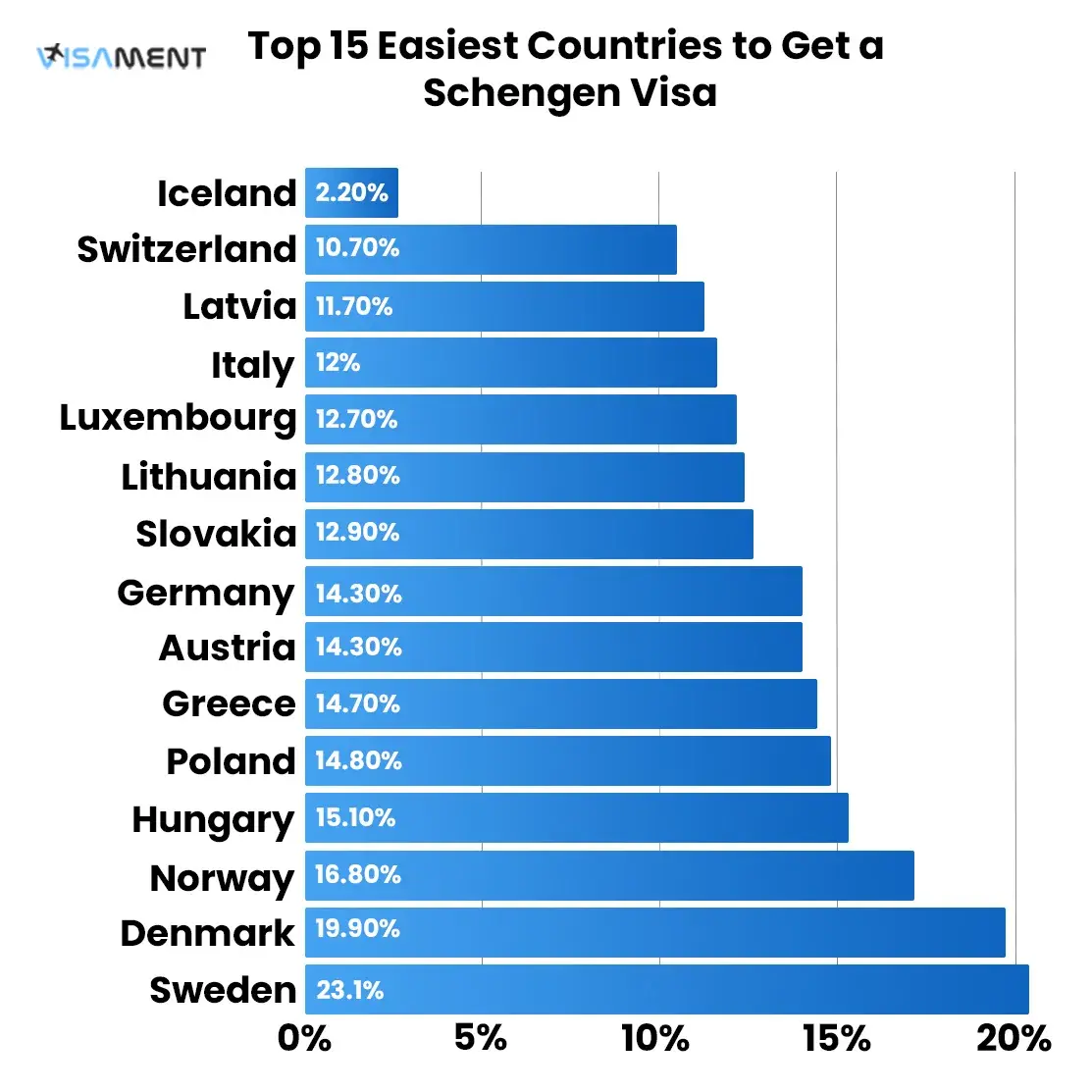
Based on comprehensive analysis of reported approval rates, the following countries exhibited the most favorable outcomes for visa applicants in the most recent periods:
| Country | Visa Approval Rate |
| Iceland | 91.25% |
| Slovakia | 89.25% |
| Italy | 88.72% |
| Romania | 88.36% |
| Switzerland | 88.12% |
| Hungary | 87.23% |
| Norway | 87.20% |
| Greece | 85.86% |
| Austria | 85.78% |
| Luxembourg | 85.65% |
It is structurally important to note that these rankings are not static. For example, previous years saw countries like Germany and Poland among the top performers, highlighting the dynamic nature of visa approval trends. Consequently, always consult the most current data before finalizing your application strategy.
Optimizing Your Schengen Visa Application Strategy
Precision in Application Submission
A critical component of a successful Easiest Schengen Visa application is submitting it to the correct authority. If your travel itinerary involves visiting only one Schengen country, the application must be directed to that country’s embassy, consulate, or designated visa center. Conversely, if your journey includes multiple Schengen nations, the application should be filed with the country where you intend to spend the most time, defined as your “main destination.”
Applications are typically processed through the destination country’s official mission or an authorized third-party center. Submitting your documents to an incorrect authority can lead to significant delays, or, in some cases, the complete rejection of your application without processing. Precision in this initial step is therefore non-negotiable for an efficient outcome.
Navigating Demand and Minimizing Rejection Triggers
The operational landscape for Schengen visas reflects substantial demand, with over 11.7 million applications recorded in 2024. This high volume inherently results in tighter appointment availability, extended processing times, and a more stringent scrutiny of submitted documents, particularly during peak travel seasons. Proactive planning and early submission are therefore strategic necessities.

Even when applying to a country with a high approval rate, a meticulously prepared submission remains paramount. Common triggers for rejection include the absence of required documents, an unclear or inconsistent travel itinerary, contradictory personal information, or insufficient evidence of financial stability and ties to your home country. Thus, comprehensive and accurate documentation forms the bedrock of a successful visa acquisition.
The Forward Path: A Catalyst for Global Connectivity
This analytical approach to the Schengen visa process represents a Momentum Shift for Pakistani travelers. It transcends mere compliance, offering a strategic framework that empowers individuals to navigate complex international regulations with informed precision. By leveraging data on approval rates and adhering to rigorous application protocols, Pakistani citizens can systematically enhance their access to global opportunities.
This structured engagement with international travel requirements fosters greater connectivity, facilitating educational advancement, professional development, and cultural exchange. Consequently, it strengthens Pakistan’s position on the global stage, aligning individual aspirations with national progress through calibrated international mobility.