
Optimizing Campus Security: Understanding the Abbottabad University Protests
The operational stability of educational institutions is a direct metric of national progress. Consequently, the recent **Abbottabad University Protests** have become a critical focal point. Examinations at the Abbottabad University of Science and Technology were abruptly cancelled, and the campus subsequently closed. This decisive action followed widespread student unrest over the tragic killing of student leader Abdullah Khan at the university’s main gate earlier this week. This incident highlights pressing concerns regarding campus security and governance.
The Translation: Unpacking the Campus Unrest
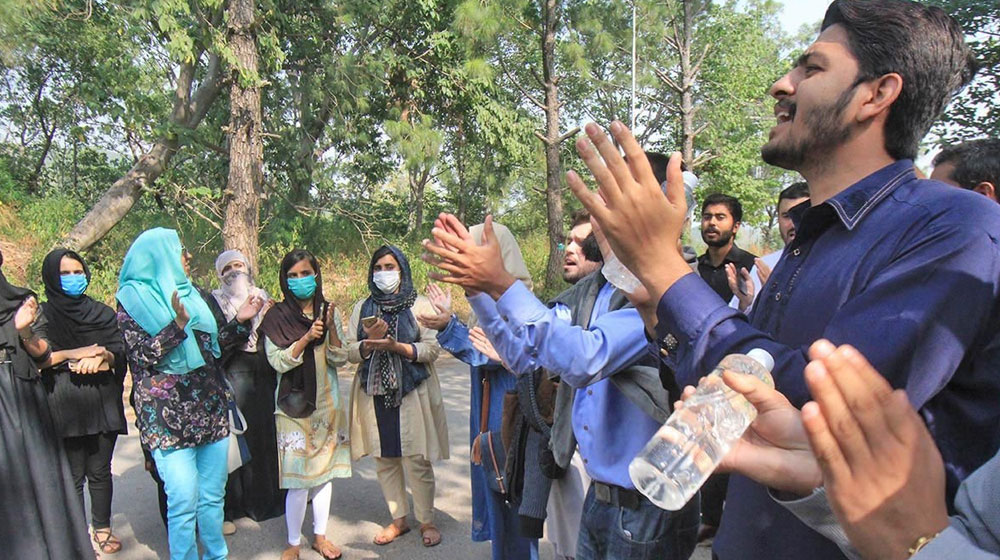
Initially, examination papers had been distributed. However, university administration swiftly halted the process, collecting all materials amidst the escalating tensions. Students, joined by local residents and the deceased’s relatives, organized robust protests. Their collective demand centers on the immediate arrest of individuals responsible for the shooting. Furthermore, reports indicate two other students sustained injuries during a violent clash between rival student factions, underscoring the volatile situation.

Allegations surfaced from protesters, asserting the deceased’s affiliation with Pakistan Tehreek-i-Insaf. Witnesses reported that armed suspects fled the scene following the incident, indicating a planned and rapid execution. This complex situation necessitates a calibrated response from law enforcement and university authorities.
The Socio-Economic Impact: Disruptions and Demands for Justice
How does this pivotal event change the daily life of a Pakistani citizen, particularly students and professionals? Firstly, the cancellation of examinations directly impacts thousands of students, disrupting their academic trajectory and generating significant uncertainty. For urban and rural households, such instability within higher education institutions can erode trust in systemic efficiency and governance.

Secondly, the incident fuels broader societal discussions about student safety and political influence on campuses. Local political figure Uzair Sher Khan joined the demonstrators, issuing a potent warning: protesters could strategically block the Hazara Motorway if arrests were not made promptly. Such actions, while expressing intense grievance, can inflict significant economic disruption through halted trade and transit. Therefore, rapid resolution is paramount to mitigate wider societal costs.
The Forward Path: A Call for Systemic Reinforcement
This development represents a **Stabilization Move**, rather than a momentum shift. The university administration has assured protesters of full cooperation with law enforcement, confirming that concerted efforts are underway to bring those responsible to justice. This response, while necessary, primarily aims to restore baseline order. True momentum toward national advancement requires a more structural approach: enhanced campus security protocols, transparent investigation processes, and preemptive conflict resolution mechanisms. This incident serves as a catalyst for reinforcing educational environments as bastions of learning, free from violence and political factionalism.









