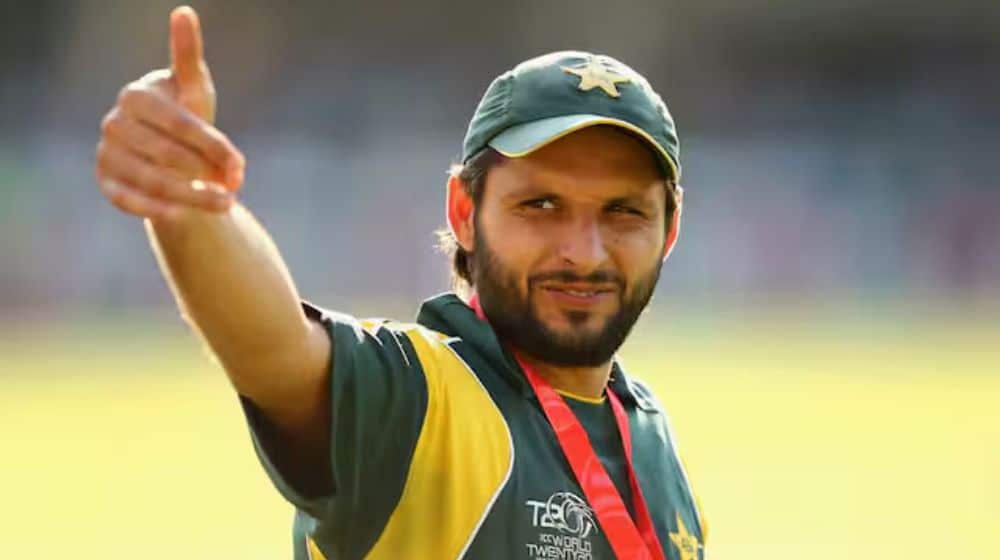
A calibrated national response to international cricket dynamics has emerged as former Pakistan captain Shahid Afridi explicitly endorsed the government’s decision regarding the ICC Men’s T20 World Cup 2026. This strategic choice involves Pakistan participating in the tournament but executing a crucial Pakistan T20 boycott of the group-stage match against India. Afridi’s consistent belief emphasizes cricket’s potential to bridge political divides, yet he firmly supports the government’s current principled stance, reiterating this on social media platform X.
The Translation: Deconstructing Diplomatic Cricket
The government’s directive for the national men’s team is a precisely articulated response, not a full withdrawal. Pakistan will indeed compete in the ICC Men’s T20 World Cup 2026. However, the decision specifies boycotting the highly anticipated fixture against India. This move aims to exert financial pressure on the International Cricket Council (ICC). Furthermore, it directly addresses long-standing critiques from Pakistan Cricket Board (PCB) Chairman Mohsin Naqvi, who has cited “double standards” and alleged undue influence from the Board of Control for Cricket in India (BCCI).
Significantly, Pakistan’s reconsideration followed the ICC’s replacement of Bangladesh with Scotland last month. This change occurred after the Bangladesh Cricket Board (BCB) declined to tour India. Consequently, the BCB’s refusal stemmed from the release of fast bowler Mustafizur Rahman by the IPL franchise Kolkata Knight Riders, a decision reportedly influenced by the BCCI.
Socio-Economic Impact: What This Means for Pakistani Citizens
This strategic sports policy directly impacts the emotional and financial landscape for ordinary Pakistanis. For cricket enthusiasts, it signifies a deliberate national stand on principles, potentially prioritizing sovereignty over a singular high-profile match. Students and professionals following the sport might experience frustration over a missed direct contest, yet simultaneously observe a unified national front against perceived international sporting injustices. Economically, a boycott aims to influence ICC revenue streams, potentially leading to fairer financial distribution in the future that could benefit Pakistani sports infrastructure. Urban and rural households alike, invested in national pride, will register this as a calculated assertion of Pakistan’s position on the global stage, shaping national narrative and discourse around fair play and equitable treatment in sports.
The Forward Path: A Stabilization Move
This development fundamentally represents a Stabilization Move. While regrettable for fans who desire to witness the high-stakes match, Pakistan’s action is a structural response designed to recalibrate power dynamics within international cricket governance. It is not an expansionist maneuver, but rather a defensive, yet firm, assertion of sovereign interests and a demand for systemic fairness. The intent is to establish a more equitable baseline for future interactions, thereby ensuring Pakistan’s voice carries appropriate weight in global sporting decisions.