

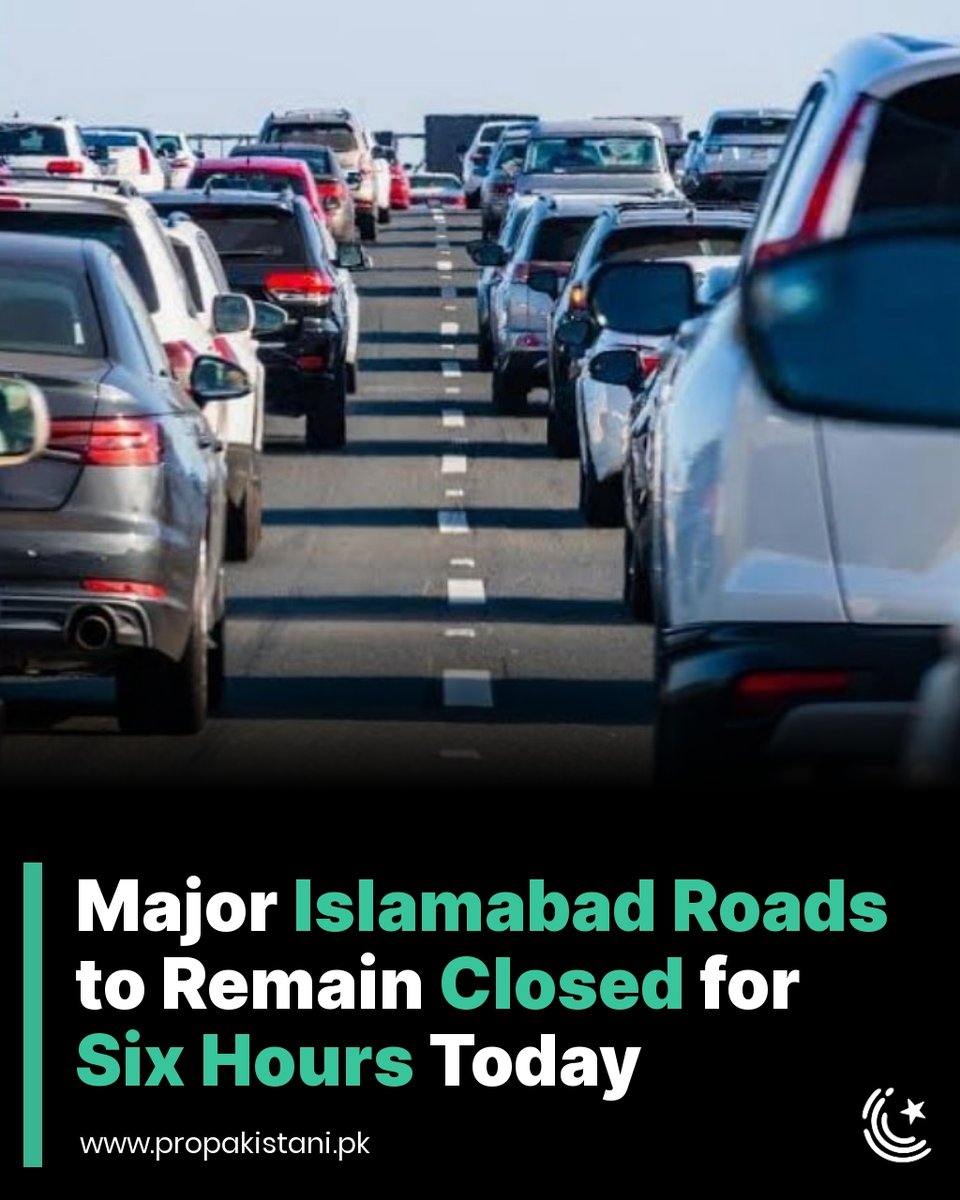
Islamabad is currently implementing strategic Islamabad road closures impacting key arterial routes. The Islamabad Traffic Police (ITP) has issued a calibrated advisory, outlining significant traffic diversions across the federal capital for Friday, March 13. This proactive measure ensures controlled movement, directly affecting access to the Red Zone and several major thoroughfares. Citizens are advised to meticulously plan their commutes to mitigate potential delays.
The Translation: Deconstructing Islamabad’s Traffic Protocol
The core of this directive involves precise rerouting and temporary cessation of specific road segments. Primarily, access to the sensitive Red Zone is exclusively channeled through Margalla Road, with all other entry points strategically sealed. Consequently, all pathways intersecting Iran Avenue are also experiencing full closure. These operational adjustments are designed for specific, often high-level, logistical requirements, ensuring maximum efficiency and security during critical periods.
Furthermore, several other vital links are affected:
- The Chand Tara Flyover, from Srinagar Highway to Serena Chowk, is closed.
- Routes from the Racep Tayyip Erdogan Flyover toward Jinnah Avenue, Kulsum Plaza Chowk, the Seventh Avenue Bridge, and Fazl-e-Haq Road up to GEO Chowk are inaccessible.
- The segment from Haji Camp Chowk to Islamabad Chowk remains closed.
- IJP Road, from Gandam Godam to Faqir Aipee Road, is currently shut.
- The service road from NESCOM towards I-10 is also blocked.
- Traffic movement from I-8 towards IJP Double Road is restricted from both directions.
- Club Road, specifically from Rawal Dam Chowk to Kashmir Chowk, experiences a single-side closure.
- On Park Road, the section spanning Shehzad Town to Musharraf Chowk is closed on one side.
The Socio-Economic Impact: Calibrating Daily Commutes
These temporary Islamabad road closures directly influence the daily operational parameters for thousands of Pakistani citizens. Students facing examinations, professionals navigating to critical appointments, and households managing essential errands will experience modified travel times. In urban sectors, increased pressure on alternative routes will lead to congestion, necessitating earlier departures. For individuals in peri-urban areas accessing the capital, these advisories demand careful logistical recalibration.
Consequently, the ITP strongly recommends utilizing alternative pathways and minimizing non-essential travel. Proactive planning is paramount. Citizens can access real-time updates and support via emergency helpline Pucar-15 or traffic helpline 1915, alongside the Islamabad Traffic Police FM 92.4 broadcast. This systemic communication framework aims to reduce public inconvenience.
The “Forward Path”: A Stabilization Move for System Efficiency
This coordinated traffic management represents a Stabilization Move rather than a transformative momentum shift. It underscores the precision required in managing urban infrastructure, particularly in a federal capital. While not introducing new systemic capabilities, these measures demonstrate a refined capacity for rapid operational adjustments. The structured advisory process, coupled with multiple communication channels, indicates a mature approach to maintaining order and security within established parameters. This reflects an ongoing commitment to urban operational resilience, vital for national functionality.








