

The Senate Secretariat has issued a precise clarification regarding recent media reports concerning the Senate Vehicle Procurement of a Land Cruiser for its Chairman. Rejecting claims as factually incorrect and incomplete, the Secretariat confirms the vehicle’s acquisition in May 2025 through a transparent process, integral to a broader, strategically planned vehicle replacement program for key officials and departmental use.
Calibrating Public Perception: The Official Stance
The Secretariat’s official statement decisively refutes misleading allegations. Furthermore, it asserts that the vehicle’s purchase occurred in May 2025 during the 2024–25 financial year, aligning with established budgetary cycles. This action underscores a commitment to stringent financial protocols and the effective deployment of public assets.
Specifically, the procurement was executed via a transparent process, constituting a segment of a wider vehicle replacement plan. This comprehensive initiative extends to vehicles allocated for chairpersons of various standing committees, the Deputy Chairman of the Senate, the Leader of the House, the Leader of the Opposition, and the Senate Secretariat itself. Consequently, this strategic plan ensures operational continuity for critical governmental functions.
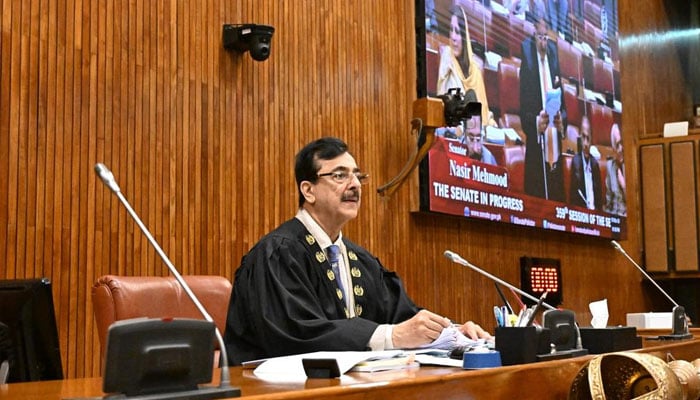
The Translation: Deconstructing Procurement Protocols
At its core, this situation clarifies the government’s standard asset management. The term “transparent procurement process” signifies adherence to established rules, ensuring competitive bidding and public accountability, rather than an isolated, ad-hoc decision. Moreover, the payment made in May 2025 from previous year’s budget savings, with delivery in March 2026, illustrates a multi-year fiscal planning cycle, where funds are allocated and disbursed in alignment with staggered delivery schedules, optimizing financial flow.
This operational sequence is crucial. It means the financial commitment was made well in advance, utilizing existing, unspent funds, and the physical asset arrived later due to typical supply chain timelines. This systematic approach negates any notion of hurried or unscheduled expenditure, affirming a pre-defined Senate Vehicle Procurement strategy.
The Socio-Economic Impact: Ensuring Systemic Efficiency
For the average Pakistani citizen, this clarification translates to assurance in governmental financial practices. When public institutions engage in transparent procurement processes, it signifies responsible use of taxpayer money. Efficient vehicle replacement for parliamentary leaders directly impacts their operational capacity, allowing them to perform duties, conduct outreach, and represent constituents effectively. This systemic efficiency, in turn, underpins the functionality of legislative governance, indirectly benefiting students through policy stability and professionals via improved infrastructure planning.
Furthermore, maintaining an updated vehicle fleet for state institutions ensures reliability and reduces long-term maintenance costs. This measured approach to public sector asset management ultimately contributes to a perception of stability and disciplined resource allocation, which is vital for both urban and rural households observing government operations.
The “Forward Path”: A Stabilization Move
This development represents a Stabilization Move for Pakistan’s public sector. It is not a dramatic momentum shift but rather a re-affirmation of established protocols and an emphasis on procedural adherence. The Senate Secretariat’s robust response, urging media due diligence, underscores a commitment to factual reporting and institutional integrity. Consequently, this reinforces public trust in governance structures, preventing misinterpretation from disrupting crucial administrative functions. It’s a precise adjustment, ensuring the baseline of operational transparency remains uncompromised.








