Optimizing Pakistan’s Economic Trajectory: The SBP’s Calibrated Interest Rate Decision
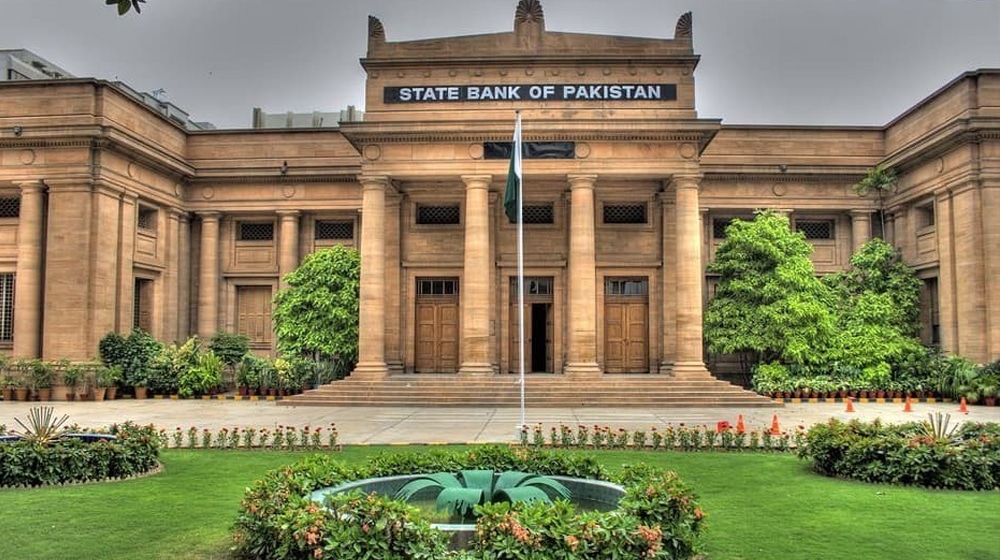
The State Bank of Pakistan (SBP) has strategically maintained the SBP Interest Rate at 10.5 percent, a precision decision by its Monetary Policy Committee on January 26, 2025. This action signals a deliberate pause after a 50-basis-point reduction in December 2025, aimed at anchoring price stability while fostering sustainable economic expansion. Consequently, this calibrated approach is essential for solidifying macroeconomic gains and charting a robust fiscal trajectory for the nation.
The Translation: Decoding SBP’s Policy Rationale
The SBP’s decision to hold the SBP Interest Rate steady is rooted in a meticulous assessment of key economic indicators. While headline inflation registered 5.6 percent year-on-year in December 2025, aligning with initial forecasts, core inflation demonstrated resilience at a higher 7.4 percent. Furthermore, high-frequency indicators (HFIs), such as large-scale manufacturing, reveal an accelerating economic momentum, primarily driven by domestic consumption. This scenario necessitates a cautious monetary stance to prevent inflationary pressures from eroding purchasing power and stability.

The Committee also observed a widening trade deficit, attributed to increased import volumes and a decline in exports. However, strong worker remittances and favorable global commodity prices have effectively contained the current account deficit. Consequently, the SBP’s foreign exchange reserves surpassed targets, reaching $16.1 billion by January 16, largely due to active interbank FX purchases. These structural factors provide a baseline for the current policy calibration.
Socio-Economic Impact: What This Means for Pakistani Citizens
For the average Pakistani citizen, the unchanged SBP Interest Rate signifies both stability and opportunity. Professionals and businesses can anticipate consistent borrowing costs, facilitating predictable investment and expansion plans. For households, this decision aims to stabilize prices of essential goods, mitigating inflationary erosion of savings and income. Students entering the workforce will find a more predictable economic environment, while rural and urban communities benefit from sustained economic growth driven by manufacturing and agriculture, ultimately improving daily economic life through enhanced stability and planned development.
The Forward Path: A Strategic Stabilization Move
This decision by the SBP represents a clear “Stabilization Move.” It is not designed to inject immediate rapid growth, but rather to consolidate existing economic gains and manage inherent risks precisely. The SBP’s focus on aligning inflation within the 5–7 percent target range over the medium term, coupled with its emphasis on a coordinated monetary-fiscal policy mix and structural reforms, suggests a strategic pause. This pause is crucial for building a resilient economic foundation, ensuring that future growth is both sustainable and equitable across all sectors.
Deep Dive: Sectoral Performance and Outlook
Real Sector: Accelerating Growth Trajectories
Pakistan’s real GDP expanded by 3.7 percent year-on-year in Q1-FY26, significantly higher than the 1.6 percent recorded in the previous year. This robust performance indicates a notable acceleration in economic activity. Furthermore, recent high-frequency indicators confirm that this positive momentum continued into the second quarter, demonstrating the resilience of domestic demand. Key drivers include substantial growth in auto sales, cement dispatches, POL sales, and imports of machinery and intermediate goods, reinforcing the ongoing economic recovery.
Specifically, large-scale manufacturing (LSM) recorded an impressive cumulative growth of 6.0 percent during July–November FY26. Prospects for the wheat crop also appear encouraging, promising further impetus for the agriculture and services sectors. Consequently, the growth outlook has significantly improved, with real GDP projected to reach 3.75–4.75 percent in FY26, with further strengthening anticipated in FY27 due to sustained macroeconomic stability.
External Sector: Navigating Global Economic Currents
The external current account registered a deficit of $244 million in December 2025, culminating in a $1.2 billion deficit for H1-FY26. This was primarily a consequence of a widening trade deficit, fueled by a surge in imports and a decline in specific exports, notably food items like rice. Conversely, high-value-added textile exports demonstrated resilience, alongside sustained growth in workers’ remittances and ICT services exports, which collectively helped contain the overall deficit. This dynamic has enabled the SBP to build foreign exchange reserves strategically.

Looking ahead, continued strong remittances and benign global commodity prices are projected to keep the current account deficit within 0–1 percent of GDP for FY26. Supported by planned official inflows, SBP’s FX reserves are anticipated to exceed $18.0 billion by June 2026, approaching the crucial three-month import cover benchmark in FY27. However, the outlook remains susceptible to global trade fragmentation and geopolitical uncertainties, requiring vigilant monitoring.
Fiscal Sector: Anchoring Discipline for Sustainable Growth
FBR tax revenues grew by 9.5 percent in H1-FY26, a deceleration compared to the 26 percent in the same period last year, resulting in a Rs329 billion shortfall. This necessitates a significant acceleration in revenue growth during H2-FY26 to meet the annual FBR target. Nevertheless, fiscal consolidation has played a supportive role in achieving macroeconomic stability, evidenced by contained expenditures and significantly lower interest payments in H1-FY26, which are likely to support the full-year fiscal deficit target. Achieving the annual primary surplus, however, presents a continued challenge.
The Monetary Policy Committee (MPC) underscored the critical need to entrench this fiscal discipline through durable structural reforms. Specifically, broadening the tax base and privatizing loss-making State-Owned Enterprises (SOEs) are paramount for fostering sustainable economic growth and ensuring the long-term health of public finances. These are baseline structural adjustments.
Money and Credit: Fueling Private Sector Expansion
Broad money (M2) growth accelerated to 16.3 percent by January 9, largely propelled by an increase in private sector credit and government borrowing. Private sector credit expanded by Rs578 billion in FY26, driven by easing financial conditions. Major beneficiaries included crucial sectors such as textiles, wholesale and retail trade, and chemicals, with consumer financing also experiencing continued growth. To further stimulate this, the SBP has strategically reduced the average Cash Reserve Requirement (CRR) for banks from 6.0 percent to 5.0 percent, a precise measure expected to bolster private sector credit growth significantly.
Inflation: Calibrated Stability on the Horizon
Headline inflation eased to 5.6 percent in December from 6.1 percent in November, primarily due to moderating food prices, despite an increase in wheat and allied product prices. Conversely, energy inflation saw an uptick. Crucially, core inflation has persisted at approximately 7.4 percent in H1-FY26, following a steady decline in FY25. Despite this, inflation expectations among both consumers and businesses continue to ease, indicating a calibrated market response to policy signals.
Overall, the Committee projects inflation to stabilize within the targeted range of 5–7 percent in FY26 and FY27, even with a temporary exceedance of the upper bound expected for a few months. This outlook is subject to risks from volatile global commodity prices, domestic wheat price fluctuations, unforeseen adjustments in administered energy prices, and a sharper-than-anticipated pickup in domestic demand. Vigilance and proactive measures are therefore essential to maintain this trajectory.