The latest Samsung Galaxy Unpacked event unveils the Galaxy S26 lineup, featuring the S26, S26+, and S26 Ultra. This launch introduces a strategic focus on enhanced AI capabilities and a new chip architecture, influencing the updated Galaxy S26 Pakistan Price structure. Consequently, consumers will observe a revised pricing model primarily driven by software innovation rather than extensive hardware overhauls. This foundational shift mandates a close examination of value proposition for Pakistani users.
The Translation: Unpacking the S26’s Core Upgrades
Understanding the Galaxy S26 series requires a precise assessment of its evolutionary path. While external designs remain largely consistent, the core transformation resides within its digital intelligence. Samsung has integrated advanced AI smarts and a more efficient processing unit, which represents a deliberate move towards a software-defined user experience. This means the S26 is not about revolutionary aesthetics, but rather about refining interactive efficiency through calibrated computational power.
Precision Engineering: Design and Display Architecture

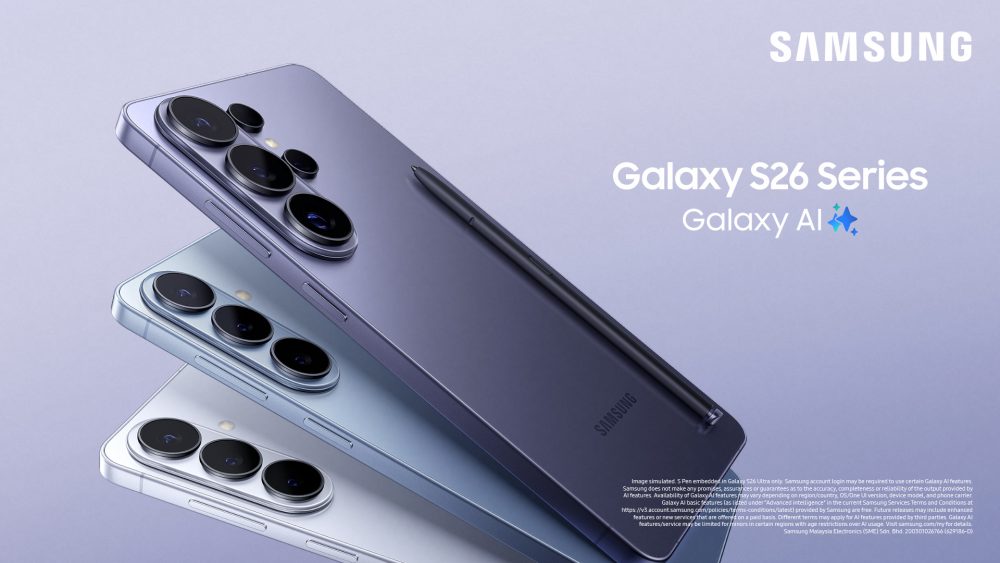
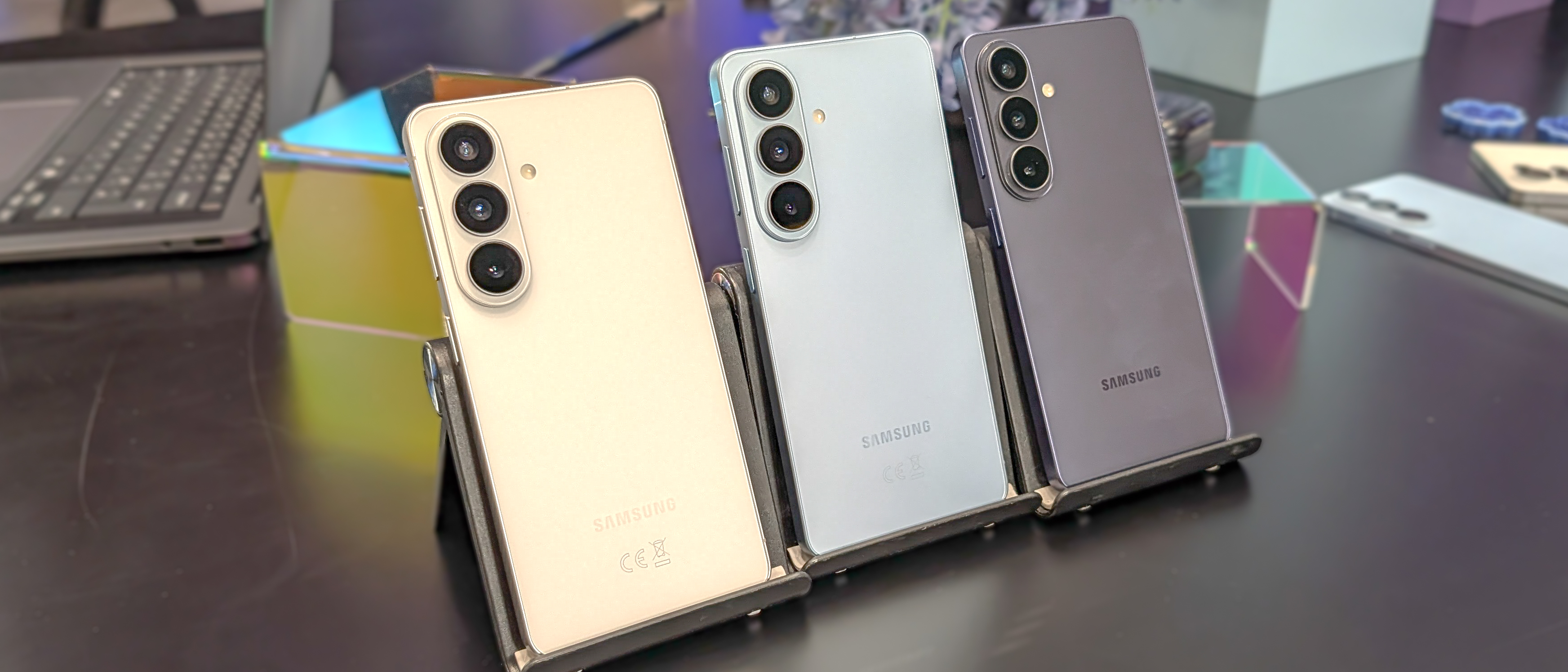
The base Galaxy S26 model features a 6.3-inch Dynamic AMOLED 2X display, delivering Full HD+ resolution with a 120Hz refresh rate. It retains slim bezels and a central hole-punch cutout for the front camera, maintaining a sleek profile at 149.6 × 71.7 × 7.2 mm and a weight of 137 grams. In contrast, the Galaxy S26+ elevates the visual experience with a larger 6.7-inch Dynamic AMOLED 2X panel, offering QHD+ resolution and the identical 120Hz refresh rate. Its dimensions are 158.4 × 75.8 × 7.3 mm, weighing 190 grams. Furthermore, both phones present a refined rear camera module design and are available in White, Blue, Black, and Purple color variants, providing aesthetic choice without fundamental structural redesigns.
Propelling Performance: Internals and Software Catalysts

Samsung strategically equips the Galaxy S26 series with diverse chipsets based on regional market requirements. Specific markets will receive the Exynos 2600 processor, fabricated on a 2nm process, while others benefit from the Snapdragon 8 Elite Gen 5 platform. Samsung states that both Snapdragon and Exynos chips significantly enhance CPU, GPU, and notably, NPU performance. Consequently, these improvements are designed to optimize the onboard AI features, ensuring a fluid and responsive user interface. Both devices operate on Android 16, integrated with Samsung’s One UI 8.5 interface. Baseline configurations initiate with 256GB of storage paired with a robust 12GB of RAM, establishing a solid operational foundation. The expanded Galaxy AI platform now supports multiple AI assistants, including Bixby, Google Gemini, and Perplexity AI, enabling AI-driven control over phone settings.
Intelligent Integration: Advanced AI Features Redefining Interaction
The upgraded chips facilitate substantial advancements in AI functionality. Samsung reports that voice commands process almost twice as fast, while tasks like call transcription and AI Eraser functions complete in approximately half the time. This accelerated processing underlines Samsung’s commitment to “agentic AI,” embedding intelligent assistance across the entire user interface. For example, “Nudge” can proactively remind users of prior commitments during chats and suggest pertinent photos for sharing. Moreover, “Now Brief,” powered by the Personal Data Engine, meticulously analyzes notifications, messages, and emails to identify appointments even if they lack manual calendar entries. One UI’s latest iteration also streamlines content organization; it automatically categorizes screenshots into eight distinct groups, including shopping, boarding passes, and events. The enhanced built-in document scanner now preserves intricate formatting and images during the copying process. Furthermore, Samsung has refined its Call Screening feature, which autonomously answers unknown calls, ascertains caller intent, and displays live on-screen transcriptions. The Audio Eraser, designed for noise reduction and dialogue enhancement, now extends its utility to third-party applications such as YouTube, Netflix, and Instagram, marking a significant structural improvement in media consumption.
Optimized Optics: Camera System Advancements
The Galaxy S26 and S26+ feature a triple rear camera system. This calibrated setup comprises a 50MP primary sensor, a 12MP ultrawide camera, and a 10MP telephoto lens with 3x optical zoom. For front-facing captures, both devices integrate a 12MP selfie camera. Camera functionalities also benefit from AI-centric upgrades. “Auto Framing” dynamically crops 8K video in real-time to generate precisely framed 4K footage. Simultaneously, “Super Steady Video” introduces a 360-degree horizontal lock, ensuring videos remain level irrespective of phone movement. For selfies, Samsung has incorporated an enhanced AI image signal processor with an “Object-Aware Engine” to consistently elevate image quality, ensuring superior photographic output.
The Socio-Economic Impact: Daily Life in a Connected Pakistan
These technological refinements in the Galaxy S26 series translate directly into tangible benefits for Pakistani citizens. For students, the accelerated AI features mean quicker research, more efficient note-taking through advanced transcription, and seamless organization of academic materials via improved content sorting. Professionals will experience enhanced productivity with faster voice commands, intelligent meeting scheduling, and refined communication through advanced call screening and noise cancellation during virtual conferences. Households, particularly those in urban centers, will find daily digital interactions more intuitive and less time-consuming. The structural efficiency derived from faster processing and agentic AI means less frustration and more time for productive engagement, even with the revised Galaxy S26 Pakistan Price. This shift promotes a more integrated digital lifestyle across various demographics.
The “Forward Path”: Momentum Shift or Stabilization Move?
From an architectural perspective, the Galaxy S26 series represents a Stabilization Move rather than a radical Momentum Shift. While the advancements in AI and chip efficiency are significant, they build upon existing frameworks, optimizing performance and user interaction within a mature mobile ecosystem. The higher Galaxy S26 Pakistan Price reflects the integration of these sophisticated software and processing improvements. It is a strategic decision to consolidate Samsung’s leadership in the AI-driven smartphone segment, reinforcing its baseline capabilities. This approach ensures consistent, predictable advancements, which are crucial for maintaining market stability and customer loyalty in a competitive landscape, albeit with a higher entry cost for the Pakistani market.
Strategic Investment: Battery and Pricing Framework
The Galaxy S26 incorporates a 4,300 mAh battery supporting 25W wired charging, while the Galaxy S26+ features a larger 4,900 mAh battery with wireless charging and Wireless PowerShare capabilities. These specifications provide robust power management for sustained use. The Galaxy S26 Pakistan Price for the vanilla S26 256GB is Rs. 299,999, and the 512GB variant is Rs. 356,999. For the Galaxy S26+, the 256GB model costs Rs. 364,999, and the 512GB option is Rs. 409,999. These calibrated price points reflect the integrated technological enhancements and refined user experience, marking a clear value proposition for the next generation of Samsung users in Pakistan.
Comprehensive Overview: Samsung S26 Series Specifications
| Galaxy S26 | Galaxy S26+ | |
|---|---|---|
| Chipset | Snapdragon 8 Elite Gen 5/Exynos 2600 | Snapdragon 8 Elite Gen 5/Exynos 2600 |
| CPU | Snapdragon: Octa-core (2×4.74 GHz Oryon V3 Phoenix L + 6×3.62 GHz Oryon V3 Phoenix M) Exynos: 10-core (1×3.80GHz C1-Ultra & 3×3.25GHz C1-Pro & 6×2.75GHz C1-Pro) | Snapdragon: Octa-core (2×4.74 GHz Oryon V3 Phoenix L + 6×3.62 GHz Oryon V3 Phoenix M) Exynos: 10-core (1×3.80GHz C1-Ultra & 3×3.25GHz C1-Pro & 6×2.75GHz C1-Pro) |
| GPU | Snapdragon: Adreno 840 Exynos: Xclipse 960 | Snapdragon: Adreno 840 Exynos: Xclipse 960 |
| OS | Android 16, up to 7 major Android upgrades, One UI 8.5 | Android 16, up to 7 major Android upgrades, One UI 8.5 |
| Supported Networks | 2G, 3G, 4G LTE, 5G | 2G, 3G, 4G LTE, 5G |
| Display | 6.3 inches, 1080 x 2340 pixels, Dynamic LTPO AMOLED 2X, 120Hz, HDR10+, 2600 nits (peak) | 6.7 inches, 1440 x 3120 pixels, Dynamic LTPO AMOLED 2X, 120Hz, HDR10+, 2600 nits (peak) |
| RAM | 12 GB | 12 GB |
| Storage | 256 GB, 512 GB | 256 GB, 512 GB |
| Card Slot | No | No |
| Main Camera | 50 MP, f/1.8, 24mm (wide), 1/1.56″, 1.0µm, dual pixel PDAF, OIS 10 MP, f/2.4, 67mm (telephoto), 1/3.94″, 1.0µm, PDAF, OIS, 3x optical zoom 12 MP, f/2.2, 13mm, 120˚ (ultrawide), 1/2.55″ 1.4µm, Super Steady video | 50 MP, f/1.8, 24mm (wide), 1/1.56″, 1.0µm, dual pixel PDAF, OIS 10 MP, f/2.4, 67mm (telephoto), 1/3.94″, 1.0µm, PDAF, OIS, 3x optical zoom 12 MP, f/2.2, 13mm, 120˚ (ultrawide), 1/2.55″ 1.4µm, Super Steady video |
| Front Camera | 12 MP, f/2.2, 26mm (wide), 1/3.2″, 1.12µm, dual pixel PDAF | 12 MP, f/2.2, 26mm (wide), 1/3.2″, 1.12µm, dual pixel PDAF |
| Colors | White, Blue, Black, Purple | White, Blue, Black, Purple |
| Battery | Li-Ion 4300 mAh 25W wired, PD3.0 25W wireless (Qi2.2) 4.5W reverse wireless | Li-Ion 4900 mAh 45W wired, PD3.0 25W wireless (Qi2.2) 4.5W reverse wireless |
| Price | Rs. 299,999 | Rs. 364,999 |