\n
\n
The highly anticipated Samsung Galaxy A57 teardown video has emerged, providing a precision-guided look into its internal architecture before its official launch. This crucial pre-release examination unveils significant structural enhancements, notably an advanced thermal management system. Consequently, the device demonstrates an impressive repairability score, signaling a strategic focus on user experience and product longevity. This deep dive offers critical insights for potential users and industry analysts alike.
\n
\n\n
The Translation: Unpacking Core Device Mechanics
\n
Understanding smartphone internals is pivotal for evaluating a device\’s true engineering. The recent Galaxy A57 teardown, meticulously conducted by PBKreviews, illustrates a standardized, yet carefully considered, repair process. Initially, technicians remove the SIM tray, then carefully heat the glass back panel to disengage its adhesive. This initial phase sets the baseline for component access, ensuring that routine maintenance procedures are systematically approachable.
\n\n
Internal Architecture & Repairability Protocols
\n
Further deconstruction reveals that eighteen Phillips screws secure the phone\’s primary components. Subsequently, additional screws and various connector cables must be detached to gain access to the mainboard. This structural organization indicates a calibrated design for technician efficiency. The mainboard itself strategically houses the triple camera system on one side, while the central chipset and other vital components are precisely located on the reverse. This structured layout contributes directly to the device\’s high repairability rating.
\n
\n
\n \n
\n\n
Core Specifications Confirmed
\n
The meticulous disassembly unequivocally confirms a robust triple camera configuration. This array comprises a 50MP main sensor with optical image stabilization, a 12MP ultrawide camera, and a 5MP macro lens, offering versatile photographic capabilities. Furthermore, the teardown precisely identifies the device\’s propulsion system: the Exynos 1680 processor. This aligns with earlier data leaks, validating the projected performance baseline for the new model. Precision in component identification is crucial for evaluating actual device capabilities.
\n 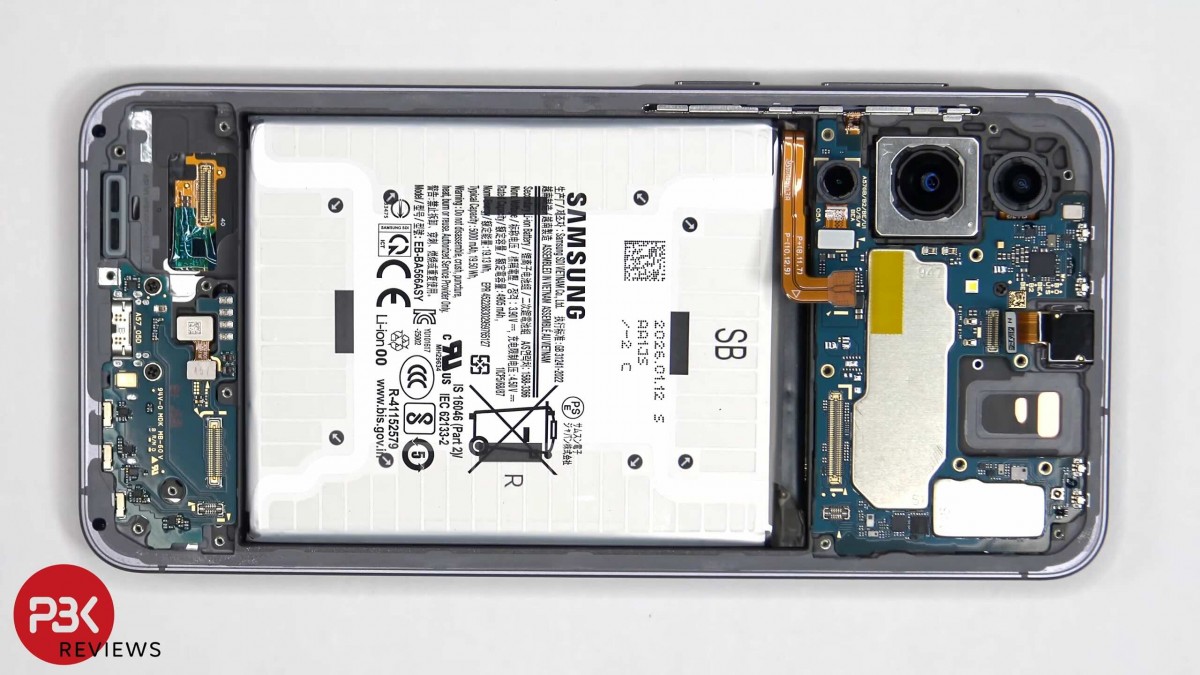 \n\n
\n\n
Advanced Thermal Management and Power Efficiency
\n
A key structural innovation within the Galaxy A57 is its 5,000mAh battery, efficiently secured with an adhesive pouch. This design choice simplifies removal during service, enhancing overall maintenance efficiency. Crucially, a larger vapor chamber is strategically positioned beneath the battery, marking a significant upgrade from the Galaxy A56\’s thermal solution. This augmented vapor chamber is engineered to substantially improve thermal management, ensuring optimal performance under demanding conditions. Improved cooling directly contributes to device longevity and sustained processing power.
\n 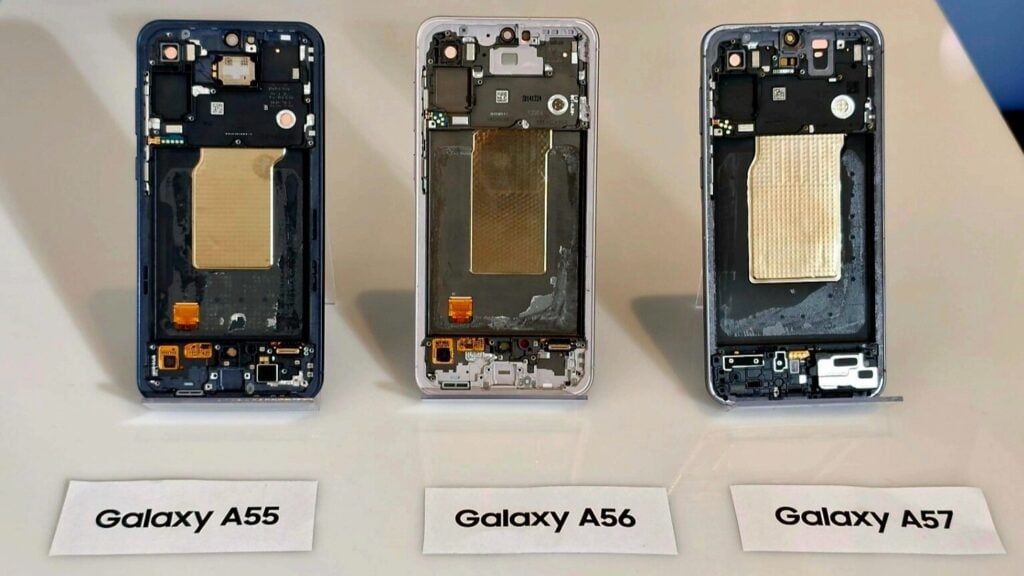 \n
\n
The collective design considerations, from component accessibility to advanced cooling, culminate in a remarkable repairability score of 9 out of 10 for the Galaxy A57 teardown analysis. This reflects a strategic design philosophy prioritizing long-term usability and serviceability. Such a high score is a positive indicator for sustainable device ownership.
\n  \n
\n
\n\n
The Socio-Economic Impact: Device Longevity in Pakistan
\n
For Pakistani citizens, particularly students and professionals reliant on mobile technology, the high repairability of the Galaxy A57 represents a tangible economic benefit. Devices that are easier and more affordable to repair directly reduce the financial burden of replacements. Furthermore, improved thermal management translates to more reliable performance, especially critical in regions with fluctuating environmental conditions or for demanding professional applications. This extended device lifespan means households and small businesses can optimize their technology investments, minimizing downtime and maximizing utility. Consequently, it supports digital inclusion by making advanced technology more sustainable for the average user.
\n
\n\n
The “Forward Path”: A Momentum Shift in Device Design
\n
This detailed Galaxy A57 teardown analysis firmly indicates a “Momentum Shift” in smartphone design philosophy. Samsung has moved beyond mere incremental upgrades, strategically integrating features that enhance both performance and product lifecycle. The focus on improved repairability and advanced thermal solutions suggests a long-term vision for device sustainability and user satisfaction. This is not merely a stabilization move; it is a calculated step towards engineering devices that offer greater enduring value and operational efficiency, thereby setting a new baseline for consumer electronics in developing markets like Pakistan.
\n