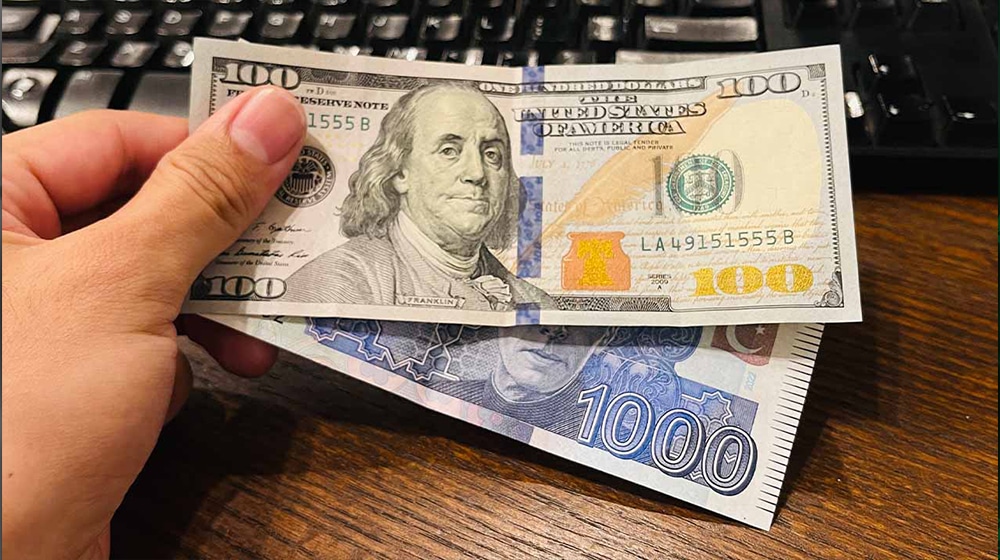
The consistent appreciation of the Pakistani Rupee against the US Dollar signals a calibrated initiative, reflecting a structural shift in economic fundamentals. The Pakistani Rupee (PKR) achieved its 94th consecutive day of gains against the US Dollar (USD), closing at 279.72 after a three-paisa increase. This sustained Pakistani Rupee Stability is a critical indicator of national economic resilience, impacting currency exchange rates across the interbank market and signifying a potential shift in Pakistan’s financial trajectory.
Precision in Pakistani Rupee Stability: The Data
On Wednesday, the PKR consistently demonstrated strength, not only against the US Dollar but also across a spectrum of other major currencies within the interbank market. Specifically, the PKR recorded a precise gain of three paisas against the USD, settling at a closing rate of 279.72. Furthermore, it posted a marginal, yet strategically significant, one-paisa increase against the UAE Dirham (AED) and maintained a positive close against the Saudi Riyal (SAR). This consistent performance underscores a foundational improvement in Pakistan’s currency valuation.
Interbank Market Performance: A Detailed Analysis
While the PKR demonstrated robust gains against key regional currencies, a detailed analysis of the interbank market reveals a nuanced performance against certain global benchmarks. The Rupee experienced a calibrated depreciation of 53 paisas against the British Pound (GBP) and 40 paisas against the Euro (EUR). Conversely, it secured a three-paisa gain against the Australian Dollar (AUD) but recorded a 33-paisa decline against the Canadian Dollar (CAD). These varied movements provide a comprehensive baseline for understanding the broader dynamics influencing Pakistan’s currency strength.

Key Currency Exchange Rates (PKR)
- USD: Closed at 279.7235, gaining 0.0283 (PKR)
- EUR: Closed at 330.9549, losing 0.4001 (PKR)
- GBP: Closed at 383.6967, losing 0.5346 (PKR)
- AUD: Closed at 196.8554, gaining 0.0339 (PKR)
- MYR: Closed at 71.2037, gaining 0.0616 (PKR)
- CNY: Closed at 40.3257, gaining 0.0032 (PKR)
- CAD: Closed at 205.1887, losing 0.3324 (PKR)
- AED: Closed at 76.1567, gaining 0.0160 (PKR)
- SAR: Closed at 74.5909, gaining 0.0076 (PKR)
The Translation: Deconstructing Currency Dynamics
When financial reports state the PKR “closed in green” or gained “paisas,” it signifies an increase in its value relative to another currency. For instance, the PKR’s gain against the US Dollar means fewer Pakistani Rupees are now required to purchase one US Dollar. The “interbank market” is the wholesale market where banks exchange currencies with each other, setting the baseline rates that influence consumer and business transactions. This mechanism directly impacts national purchasing power and trade balances, making Pakistani Rupee Stability a crucial metric for economic health.

Socio-Economic Impact: Calibrated Benefits for Citizens
This sustained period of Rupee strength directly influences the daily economic realities for every Pakistani citizen. For households, a stronger rupee can translate into lower import costs, potentially reducing the prices of essential goods, fuel, and imported raw materials. Students pursuing international education or professionals with overseas financial obligations may experience reduced financial burdens due to more favorable exchange rates. Furthermore, businesses that rely on imported components can anticipate more predictable and potentially lower operational costs, fostering a more stable economic environment across urban and rural Pakistan.
The Forward Path: A Momentum Shift for Pakistan
The remarkable 94-day streak of gains for the Pakistani Rupee represents a definitive Momentum Shift rather than merely a stabilization move. This consistent upward trajectory indicates underlying structural improvements and strategic economic management. It establishes a new baseline of confidence for both domestic and international investors. This is a critical catalyst for national advancement, reinforcing Pakistan’s position in the global financial architecture and fostering sustained economic resilience. Maintaining this precision in fiscal policy will be paramount for long-term growth.