

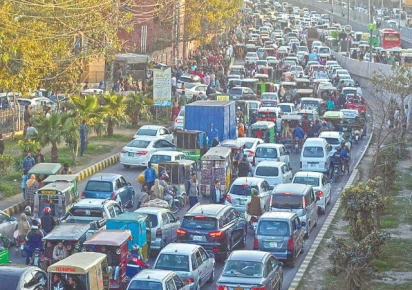
During the recent Basant festival, Lahore experienced an unprecedented surge in Lahore Basant traffic, with nearly 900,000 vehicles entering the city over three days. Simultaneously, public transport systems efficiently moved approximately 1.4 million passengers within just two days. This remarkable logistical achievement, detailed in a Punjab Chief Minister-chaired meeting, underscores the calibrated efforts in urban mobility management and public safety during major cultural events.
The Translation: Calibrating Urban Mobility
The recent Basant festival saw an unprecedented influx, critically impacting Lahore Basant traffic. Punjab Chief Minister Maryam Nawaz Sharif meticulously reviewed the operational dynamics, where Senior Minister Maryam Aurangzeb provided a comprehensive two-day assessment of festival arrangements. This strategic oversight involved a multi-departmental briefing, including officials from the Home Department, Lahore administration, Health Department, Parks and Horticulture Authority, Police, and various security agencies.
These entities collaborated to calibrate traffic flow, ensure public safety, and optimize transport operations. Consequently, their precision planning facilitated the movement of nearly 900,000 vehicles entering the city over three days. Furthermore, the public transport infrastructure demonstrated its immense capacity, successfully managing approximately 1.4 million passengers within just two days.
Strategic Role of Mass Transit
A critical component of this logistical success was the strategic deployment of public transport. The data reveals a significant reliance on mass transit, particularly the Orange Line Metro Train. Specifically, it transported over 600,000 passengers free of charge during the first two days of the festival, with Friday seeing around 299,000 commuters and Saturday accounting for 305,000. This structural utilization of the Metro underscores its pivotal role in urban crowd management during high-density events.
Socio-Economic Impact: Enhancing Citizen Experience
This efficient management of Lahore Basant traffic directly impacts the daily life of Pakistani citizens, particularly in Lahore. For students and professionals, reduced congestion signifies less time spent commuting, thereby improving productivity and access to educational or work opportunities. Households, both urban and rural, benefited from the seamless access to the city’s cultural events, fostering community engagement without the typical stress of heavy traffic.
The provision of free public transport, especially on the Orange Line Metro Train, represents a significant economic relief. This initiative allowed broader participation in the festivities, making cultural events more accessible across socio-economic strata. Ultimately, it elevates the quality of urban life, demonstrating how strategic infrastructure deployment can support both economic activity and social cohesion.
The Forward Path: A Stabilization Move for Urban Systems
This development represents a Stabilization Move rather than a complete Momentum Shift. While the volume of Lahore Basant traffic and public transport usage was unprecedented, the management framework successfully maintained operational baselines. The robust coordination and the pivotal role of mass transit, particularly the Orange Line, prevented systemic breakdown. This indicates a maturity in urban planning and emergency logistics for large-scale public gatherings.
Further calibrated investments in smart traffic management systems and expanded public transport routes could transform future events into true Momentum Shifts, showcasing predictive rather than reactive capabilities. This current success provides a strong baseline for future infrastructural enhancements, ensuring higher efficiency and citizen satisfaction.








