

The Punjab government has strategically initiated a significant procurement plan for Punjab Luxury Vehicles, earmarking Rs. 1.14 billion for 108 new vehicles intended for ministers, bureaucrats, and VIPs this fiscal year. This calibrated decision aims to enhance official mobility and security protocols, ensuring operational efficiency across various government departments. The proposed fleet includes a diverse range of vehicles, from high-end SUVs to standard sedans, reflecting a calculated investment in state infrastructure and executive transport.
Decoding the Procurement Matrix: The Translation
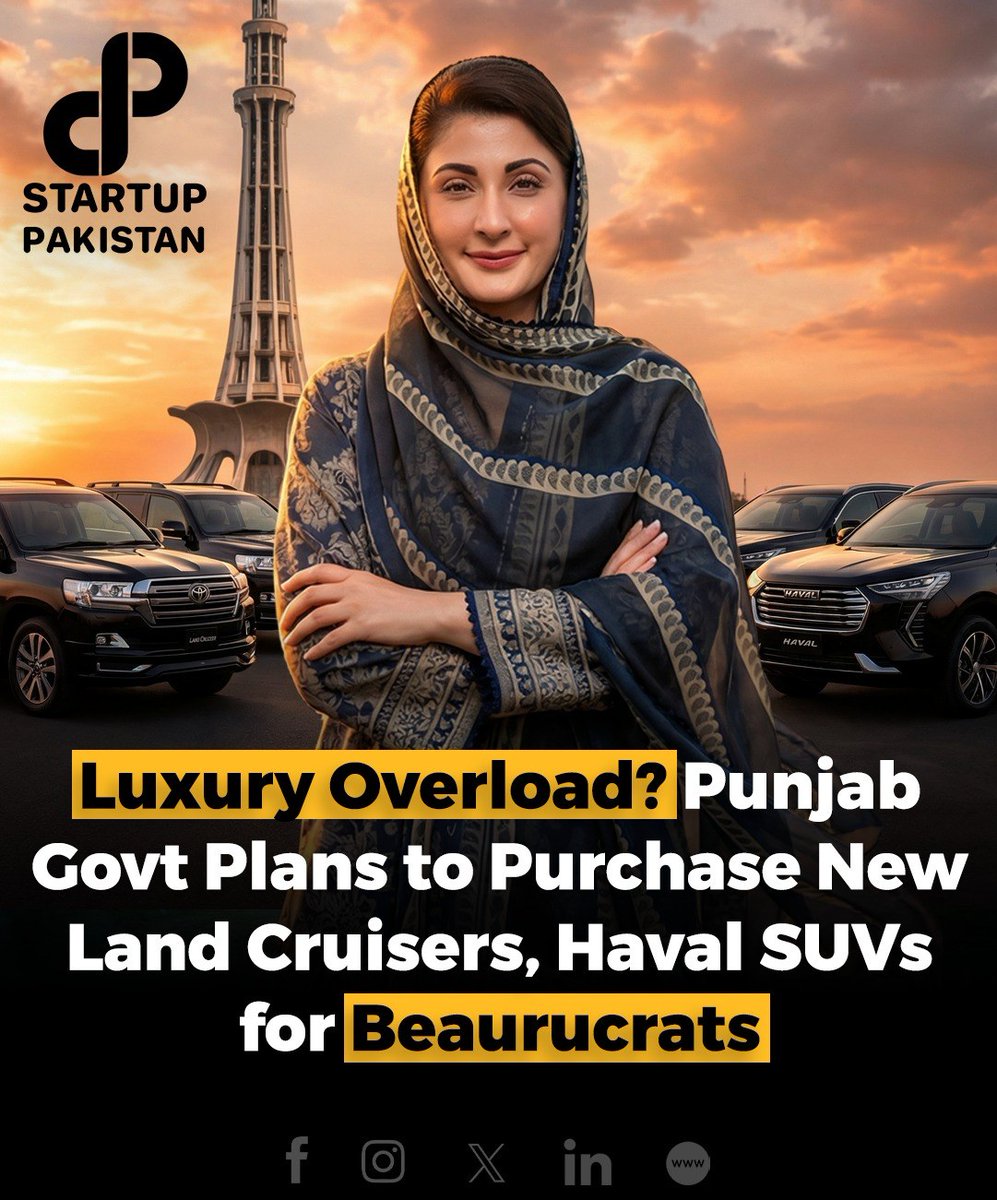
This initiative involves the acquisition of specific vehicle types distributed across key government functions. Essentially, the Transport Wing has submitted a comprehensive proposal for cabinet endorsement. For instance, the Punjab Cabinet itself is slated to receive 28 new Punjab Luxury Vehicles, valued at Rs. 300 million. This allocation includes a Land Cruiser, two Haval 1.5 vehicles, five Grand Altis cars, ten Toyota Altis vehicles, and ten Toyota Yaris cars, as meticulously detailed in official documentation. Furthermore, two bulletproof four-by-four vehicles, costing Rs. 40 million, have already secured approval for designated ministers, underscoring a priority for enhanced security.

Consequently, VIP security protocols will also see an upgrade, with 25 vehicles worth Rs. 270 million sanctioned. Structurally, the Chief Minister’s Inspection Team is poised to acquire vehicles valued at Rs. 530 million. This segment comprises 30 double-cabin vehicles, eleven Toyota Yaris cars, three Toyota Altis vehicles, various Suzuki Cultus cars, and a fleet of motorcycles. The procurement process is set to commence once these recommendations receive final official approval, establishing a clear path for implementation.
Socio-Economic Impact: Calibrating Public Services and Perception
How does this investment in Punjab Luxury Vehicles affect the daily life of a Pakistani citizen? This significant expenditure, while framed as an operational necessity for government functionaries, directly impacts public perception and resource allocation. For urban professionals, particularly those reliant on public services, the sight of enhanced government fleets might evoke questions regarding expenditure priorities versus direct public welfare projects. Conversely, improved mobility for inspection teams could lead to more efficient oversight of development projects, potentially benefiting rural households through expedited infrastructure delivery.
Moreover, the acquisition of high-end and security-enhanced vehicles for VIPs signifies a commitment to ensuring the safety and unimpeded functioning of leadership. However, this also presents a dual narrative: while crucial for governance stability, it simultaneously prompts a dialogue on fiscal prudence. Students and budding entrepreneurs often view government spending through the lens of investment in human capital or technological infrastructure. Therefore, this strategic move demands transparent communication regarding its long-term benefits and its calibrated role within broader national development objectives.
The Forward Path: A Stabilization Move for Operational Baseline
In my expert opinion, this development represents a Stabilization Move rather than a dramatic “Momentum Shift.” It appears to be a structural adjustment designed to maintain or restore the baseline operational efficiency and security standards for key government personnel. While the scale of procurement is substantial, it primarily focuses on enhancing existing systems of mobility and protection, which are critical for an effective administrative apparatus. This is not a radical re-imagining of governance, but rather a methodical upgrade of essential tools.
Consequently, the government’s focus should now pivot towards demonstrating how these enhanced assets directly translate into improved public service delivery and more impactful governance. The true measure of this investment will be its calibrated contribution to overall systemic efficiency and the tangible benefits it brings to the citizens of Pakistan, rather than solely on the vehicles themselves. It sets a new operational baseline, demanding subsequent advancements in policy execution and public engagement.








